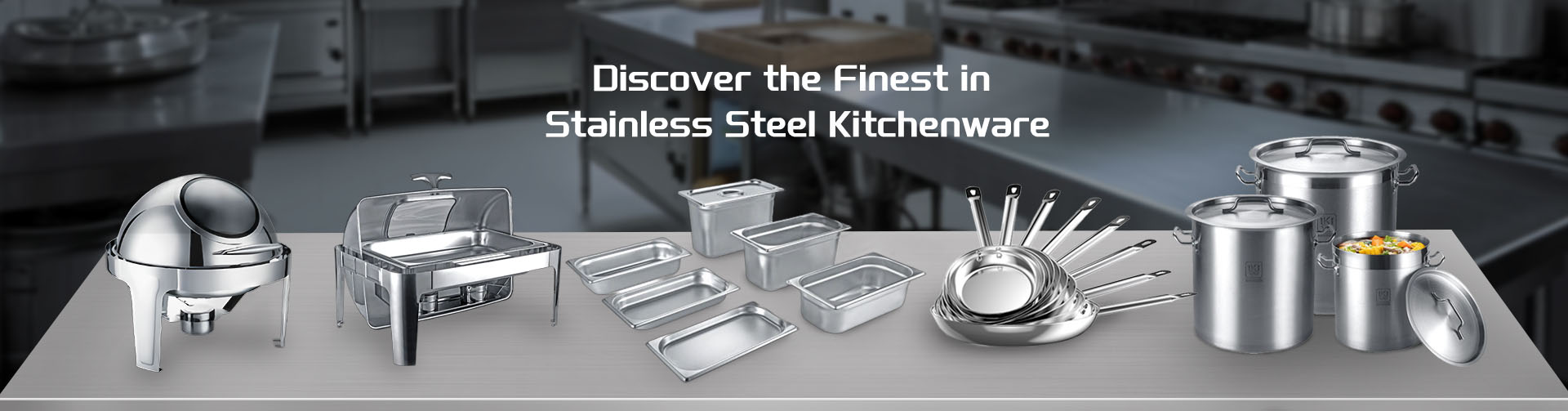
Containers can be classified in many ways depending on the industry. In foodservice, the most useful categories are containers for storage, cooking, transport, warming, serving, dispensing, and waste collection.
Chafing dishes work by using indirect heat to keep prepared food warm for buffet and catering service. The heat source warms a water pan below the food pan, and the heated water transfers gentle, steady warmth upward.
The amount of water needed in a chafing dish depends on the water pan size, service time, heat source, and food type. In most cases, the water pan should be filled with enough hot water to cover the bottom and create even heat below the food pan, but it should not be filled so high that water touches the food pan too aggressively or spills during service.
Chafing dishes are food-warming containers used to keep prepared dishes hot during buffet service, catering events, hotel breakfasts, banquets, and self-service dining.
Food trucks depend heavily on where customers are and how willing they are to wait outdoors. Weather, daylight, school terms, tourism, festivals, and local events can change sales even when the menu remains the same.
Most people make their own eating decisions, but those decisions are shaped by the food available around them. Manufacturers decide how products are formulated. Retailers influence which items are visible and affordable. Restaurants determine portion size, preparation methods, and menu combinations.
A food business usually begins with a product idea, but the idea alone is not enough. A popular dish can still become an unprofitable business when portions are inconsistent, preparation takes too long, or the kitchen cannot handle the busiest service period.
A traditional chafing dish generally needs enough hot water to cover the bottom of the water pan by approximately 1 to 2 inches, or about 2.5 to 5 centimeters.