kelley@u-kitchenwares.com
+86-15819924651
+86-0750-3719388

Chafing Dishes keep prepared food warm during service, but the best model depends on menu type, serving volume, available space, heating method, and cleaning routines. Commercial buyers should evaluate the complete setup rather than capacity alone.
A traditional chafing dish uses indirect heat to maintain warmth during buffet service.
Cooked food sits in a food pan, which is supported above a water pan. A burner below the water pan heats the water, and the warmed water transfers heat toward the food pan.
The water pan helps distribute heat more gently than placing the food pan directly over a small flame. The lid helps retain warmth and protect the food during service.
Electric models use a different heating arrangement, so operating instructions vary by product.
A chafing dish is primarily intended to hold prepared food rather than replace a stove or oven. Food should be cooked properly before being transferred into the holding equipment.
For a closer look at the operating principle, see MEIJIN's guide to how chafing dishes work.
The right configuration depends on the menu and how the serving area operates.
Hotel breakfast buffets: Roll-top models can provide convenient access when many guests serve themselves. Capacity and the ease of refilling are particularly important during peak breakfast periods.
Wedding and banquet catering: Coordinated rectangular or oblong models can help create an orderly serving line. Appearance, lid operation, and transport requirements may all influence the decision.
Mobile catering: Foldable models can help reduce storage space and make equipment easier to transport between venues.
restaurant buffets: The choice between round and rectangular units depends on the menu, counter layout, and portioning requirements.
Institutional foodservice: Practical maintenance, pan compatibility, replacement parts, and the ability to handle repeated service are important considerations.
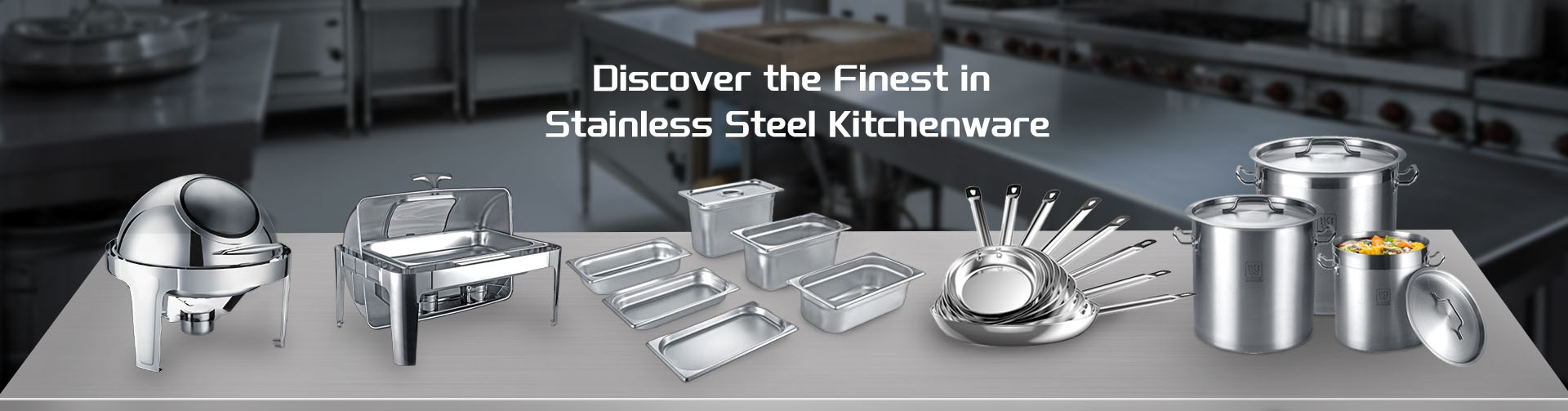
MEIJIN offers a 9 Liter Foldable Chafing Dish for buyers considering storage and transport, as well as a 6L Commercial Round Chafing Dish for round buffet arrangements.
The appropriate capacity depends on portion size, menu type, the number of guests, and how frequently staff can replenish the food.
A large-capacity dish is not always the most efficient choice. If a menu item sells slowly, an oversized pan may hold more food than necessary and occupy valuable counter space.
Smaller units can offer more flexibility when a buffet contains several side dishes. Larger units may be more practical when one popular item needs to be served continuously.
When estimating capacity, consider:
Expected guest count during each service period.
Approximate serving size.
Menu popularity.
Replenishment frequency.
Number of dishes served at once.
Available buffet counter space.
Nominal capacity should be treated as a starting point. The actual working fill level depends on the food, pan shape, and safe handling requirements.
For commercial buyers, it is useful to review both the product's stated capacity and its dimensions before deciding how many units are needed.
The lid affects how easily food can be accessed, replenished, and protected during service.
A roll-top lid can remain attached while opening, reducing the need to find a separate place to put it. A lift-off lid may provide straightforward access for refilling and cleaning but needs suitable handling and storage.
The right design depends on how frequently the food is served and how much space is available around the buffet.
Buyers should also check whether the lid opens smoothly, stays in the intended position, and can be cleaned without unnecessary disassembly.
For high-volume service, these details affect staff workflow. A dish that holds heat adequately but is awkward to refill can still slow down the buffet line.
MEIJIN's Chafing Dish range includes different product configurations for buyers comparing lid styles, shapes, and serving requirements.
Stainless steel is widely used for chafing dishes because it offers a practical combination of corrosion resistance, cleanability, and a professional appearance.
However, buyers should not evaluate a product on the material name alone.
The actual steel specification, component thickness, frame construction, surface finish, and quality of the connections all affect the finished product.
A polished surface may look attractive in a showroom, but commercial buyers should also check whether the finish remains consistent and whether the product is easy to maintain.
Important inspection points include:
Body and lid alignment.
Frame stability on a level surface.
Smooth edges and handles.
Secure burner holders or compatible heating components.
Food pan fit and ease of removal.
Consistent surface finish.
Packaging protection for polished components.
For a bulk order, approve a sample and document the material and construction requirements before production begins.
Cleaning requirements influence the long-term practicality of a chafing dish.
Removable pans and accessible components can make routine washing easier. Crevices, difficult-to-reach joints, and complicated lid mechanisms may increase cleaning time if the design is not well considered.
Operators should follow the manufacturer's instructions for cleaning and maintenance. Heating components must be handled according to the relevant safety guidance, and the equipment should be allowed to cool as directed before cleaning.
A chafing dish also does not replace food-temperature monitoring. Operators need to maintain the required food temperatures under the rules applicable to their location and foodservice operation.
For commercial purchasing, it is useful to ask the supplier about removable components, replacement parts, compatible cleaning methods, and the recommended inspection routine.
Comparing products is easier when the same criteria are used for each quotation.
| Evaluation Factor | Questions to Ask |
|---|---|
| Capacity | Does the working capacity suit the menu and replenishment plan? |
| Dimensions | Will the unit fit the counter and allow the lid to open fully? |
| Pan arrangement | Is one large pan or a divided configuration more practical? |
| Heating method | Is the unit fuel-heated or electric, and what is included? |
| Material | What steel specification and thickness are used? |
| Lid and frame | Are they stable, easy to operate, and practical to clean? |
| Maintenance | Are replacement pans, lids, and other parts available? |
| Packaging | Is the product protected against scratches and deformation during shipping? |
A lower unit price does not always translate into lower total cost. If a product is difficult to clean, occupies too much storage space, or requires replacement components that are hard to obtain, those issues can affect operating expenses.
The best chafing dish is the one that suits the menu, service volume, buffet layout, and maintenance routine of the intended customer.
MEIJIN supplies chafing dishes for hotel, restaurant, catering, and distribution applications. Buyers can review the available chafing dish models and provide their required capacity, shape, lid style, heating method, and target quantity for further evaluation.