kelley@u-kitchenwares.com
+86-15819924651
+86-0750-3719388

A commercial kitchen normally needs both stock pots and sauce pots. Stock pots are better for large volumes of liquid, long simmering, blanching, and bulk preparation, while sauce pots provide wider access for stirring, reduction, braising, and recipes that need more evaporation.
Although the names sound similar, the difference between a stock pot and a sauce pot is primarily their geometry. That geometry affects capacity, evaporation, utensil access, burner use, and handling.
The fastest way to choose between stock pots vs sauce pots is to ask what the kitchen cooks, how much it produces, and how often staff need to stir or reduce the food.
A central kitchen preparing broth for hundreds of portions needs a different vessel from a restaurant finishing several liters of sauce. Buying solely by nominal capacity can lead to an inconvenient shape even when the stated volume is correct.
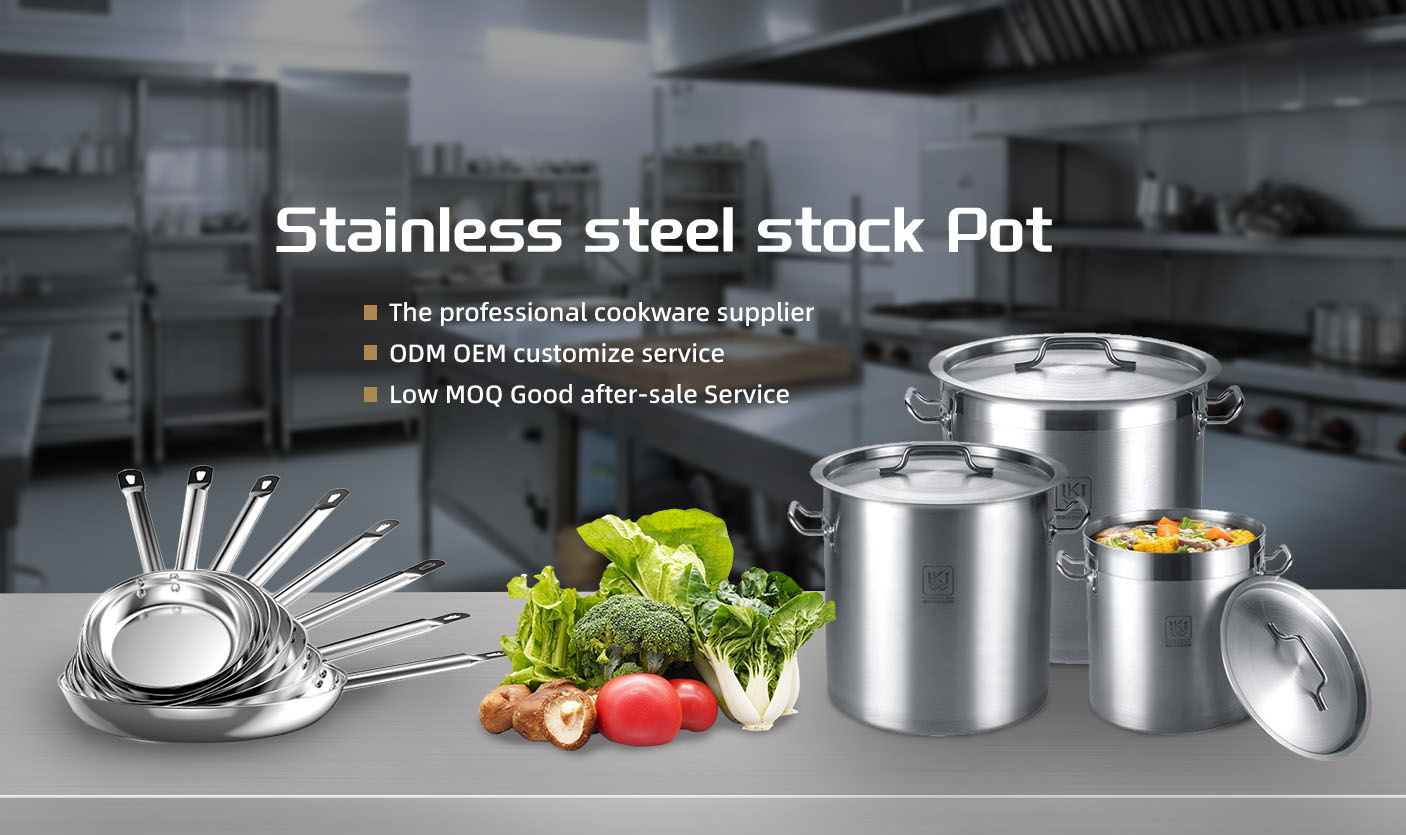
A stock pot typically has tall sides and a relatively narrow footprint compared with its height. This shape provides substantial volume while limiting the amount of liquid exposed at the surface.
Meat, poultry, vegetable, or seafood stock
Soup and broth
Pasta and noodles
Blanching vegetables
Boiling seafood
Large-batch stews
Brewing or ingredient processing, where the configuration is appropriate
The deeper body helps contain splashing and can reduce evaporation compared with a much wider vessel. However, reaching and stirring the bottom becomes more difficult as capacity increases.
The pot should not be filled to its geometric limit. Operators need headspace for boiling, stirring, ingredients, and safe movement.
A sauce pot generally has a wider opening relative to its height. The increased surface area encourages evaporation and gives cooks easier access to the contents.
Sauces and gravies
Reductions
Curries
Custards
Braised dishes
Reheating prepared food
Smaller batches of soup or stew
Because more product is exposed, a sauce pot can reduce liquid faster. That advantage also means moisture loss must be monitored carefully when a slow, covered simmer is required.
Batch volume is the main priority
The recipe contains a large amount of water
Slow simmering is required
Reduced evaporation is helpful
The kitchen needs to boil or blanch in volume
Tall storage is available
Staff must stir frequently
Rapid reduction is desirable
Ingredients need broad utensil access
A shallow working depth improves control
The recipe is prone to catching at the base
The finished product is portioned directly from the pot
Two pots can have similar stated capacities but perform differently because of their diameter and height.
A wide 20-liter sauce pot occupies more burner area and exposes more liquid than a tall 20-liter stock pot. It may reduce sauce efficiently but consume more horizontal stove space. The taller stock pot may conserve space across the cooking line but be harder for shorter operators to inspect.
Before ordering, compare:
Internal diameter
Body height
Working fill level
Empty and filled weight
Burner diameter
Hood clearance
Sink and dishwasher access
Shelf height
Doorway and trolley clearance
Commercial kitchens often choose stainless steel pots for durability and cleanability. Because stainless steel alone is not the most even conductor of heat, the base design becomes important.
A composite base may use a conductive aluminum layer to distribute heat more evenly across the bottom. This can reduce severe hot spots, although cooking technique and burner adjustment remain important.
The base should sit flat on the intended cooking surface. For induction cooking, verify magnetic compatibility rather than assuming that every stainless steel pot will work.
One liter of water weighs approximately one kilogram before the weight of the pot and ingredients is included. A large stock pot can therefore become too heavy for one person to move safely.
Commercial buyers should inspect:
Handle size and clearance
Attachment method
Weld or rivet consistency
Sharp edges
Balance while lifting
Space for heat-resistant gloves
Compatibility with carts or lifting procedures
Operational policies may require large vessels to be emptied in place or moved by more than one person.
A fitted lid reduces contamination and slows moisture loss. It should sit securely without becoming difficult to remove when hot.
Stock pots may also be paired with strainer baskets for pasta, vegetables, or other foods. The strainer reduces working volume and adds lifting weight, so the complete configuration must be evaluated.
Sauce pots may use lids during simmering and operate uncovered during reduction. Buyers should specify whether lids are included rather than treating them as automatic accessories.
A commercial kitchen rarely benefits from buying every pot in the same size. A more effective inventory might include:
Large stock pots for broth and batch boiling
Medium stock pots for soups and pasta
Wide sauce pots for curries and reductions
Smaller sauce pots for gravies and reheating
Strainer-equipped pots for products requiring drainage
Backup pots for peak service and cleaning cycles
Order quantities should reflect menu frequency, simultaneous recipes, washing turnaround, and replacement planning.
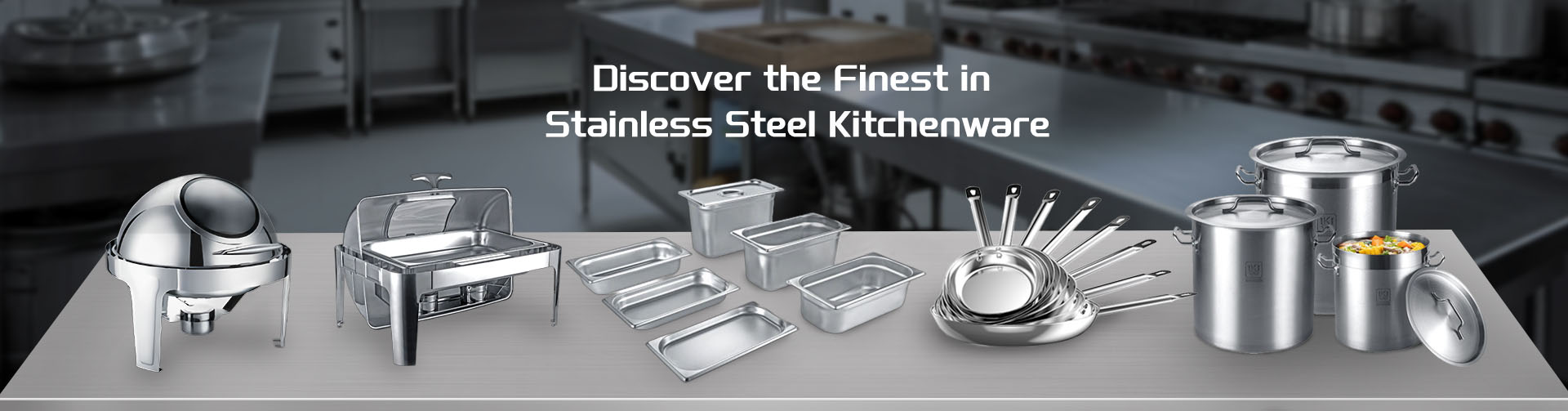
Our factory manufactures Stainless Steel Stock Pots and sauce pots in multiple diameters, heights, and capacities. Our broader range also includes soup pots, strainers, brewing pots, food containers, Chafing Dishes, and foodservice trolleys.
For buyers sourcing commercial-grade stainless steel stock pots and sauce pots, our team can review the material, thickness, composite base, handle structure, lid, surface finish, capacity marking, branding, and export packaging.
Representative samples should be tested on the actual heat source and through the kitchen’s normal washing process. A meaningful test includes heating, simmering, stirring, pouring or portioning, filled handling, cleaning, drying, and storage.
A stock pot is the better choice for high-volume liquid cooking. A sauce pot is more effective when surface access, stirring, and evaporation control matter. Most restaurants, hotels, cafeterias, and catering kitchens need a planned combination of both.
Map each pot size to a real menu task before placing the order. This avoids overspending on unused capacity and prevents cooks from using an inconvenient vessel simply because it is the only one available.