kelley@u-kitchenwares.com
+86-15819924651
+86-0750-3719388

For most demanding commercial cookware applications, 304 stainless steel is generally the better choice because it offers stronger corrosion resistance than 201 stainless steel. However, 201 stainless steel can be appropriate for selected products and controlled environments where cost is a major consideration and exposure to salt, acids, moisture, and aggressive cleaning chemicals is limited.
The choice between 201 vs 304 stainless steel cookware should be based on the food, kitchen environment, product construction, maintenance routine, and expected service life—not on grade name alone.
201 and 304 are stainless steel grades with different alloy compositions. Both rely on chromium to form a thin passive layer that helps resist corrosion.
Grade 304 typically contains more nickel and offers dependable corrosion resistance for many foodservice environments. Grade 201 uses a different alloy balance, including more manganese and less nickel, which can reduce cost but generally provides less resistance in demanding wet or chloride-rich conditions.
Neither grade should be described as completely rustproof. Stainless steel can stain, pit, or corrode when it is exposed to unsuitable chemicals, surface contamination, prolonged moisture, or poor cleaning practices.
Commercial cookware is repeatedly exposed to water, steam, food residue, and washing. Grade 304 provides a stronger margin of corrosion resistance where equipment remains wet or is used continuously.
Salt solutions, brines, tomato products, and acidic sauces can be more demanding than plain water. The effect depends on concentration, temperature, contact time, and cleaning frequency, but 304 is normally the more suitable starting point.
restaurant cookware may be washed several times per day. Detergent concentration, rinse quality, and drying conditions all influence the surface. Grade 304 generally tolerates routine foodservice exposure better than 201 when maintained correctly.
For hotels, central kitchens, and restaurant groups, consistency over repeated orders can be more important than the lowest unit price. Specifying 304 stainless steel can simplify material expectations across a long-term commercial cookware program.
Grade 201 can provide a cost-effective solution for cookware components or products used under less corrosive conditions. It may suit dry applications, limited-duty equipment, or projects where the product is thoroughly cleaned and dried after use.
The decision should consider the entire construction. A product may use different stainless steel grades in its inner layer, outer body, lid, base, or accessories. Buyers should request a clear material breakdown rather than assuming every component uses the same grade.
Material grade cannot compensate for unsuitable construction.
Insufficient thickness can contribute to distortion, denting, or unstable handling. Excessive thickness adds weight and may increase cost without solving the relevant performance problem.
Thickness should be matched to diameter, height, filled weight, and intended use.
Stainless steel is durable, but it does not distribute heat as evenly as highly conductive materials such as aluminum. Many commercial pots therefore use a composite base that incorporates a conductive layer.
Base flatness, bonding, thickness, and heat-source compatibility affect cooking performance. Buyers using induction equipment must verify that the exterior base is magnetically compatible.
A large pot may become extremely heavy when filled. Handles, welds, rivets, and attachment areas need to withstand the operating load.
Inspectors should check alignment, sharp edges, looseness, and visible defects. Safe handling also requires operators to respect lifting procedures and pot capacity.
A uniform finish makes inspection and cleaning easier. Scratches do not automatically make cookware unsafe, but deep damage and rough joints can trap residue.
Decorative polish should never conceal inconsistent forming, unfinished edges, or poor weld quality.
Choose 304 stainless steel when:
The cookware faces daily commercial use
Moisture exposure is frequent
Salty or acidic food is common
Long service life is a priority
The destination market specifies 304
Corrosion-related complaints would be costly
Consider 201 stainless steel when:
The application is less corrosive
Budget sensitivity is high
Cleaning and drying can be controlled
The material is approved for the intended market and food-contact application
Samples pass the buyer’s relevant evaluation
Material selection must also comply with applicable laws and customer specifications in the destination market.
A professional procurement process should include:
A written grade requirement for each component
Supplier material documentation
An approved production sample
Dimensional and thickness checks
Appropriate material verification where required
Surface and workmanship inspection
Functional testing under representative conditions
Traceable batch and packaging records
A simple magnet test cannot reliably identify every stainless steel grade. Material composition should be confirmed using appropriate documentation or analytical testing when the distinction is contractually important.
As a stainless steel cookware OEM/ODM manufacturer, our factory can review product drawings, capacities, material options, wall thickness, base construction, handles, lids, finishes, logos, and packaging for commercial cookware projects.
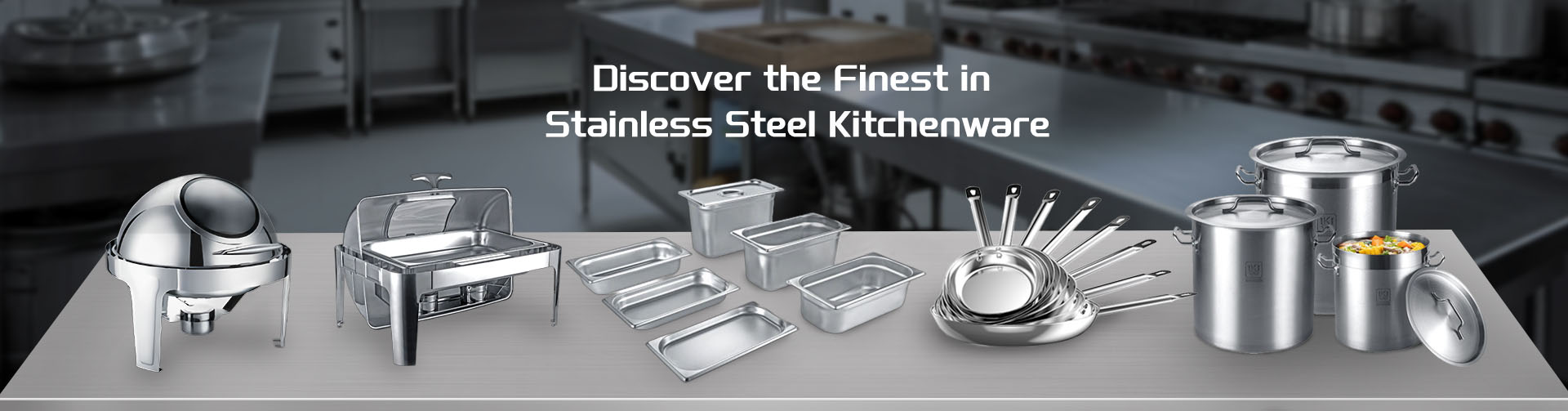
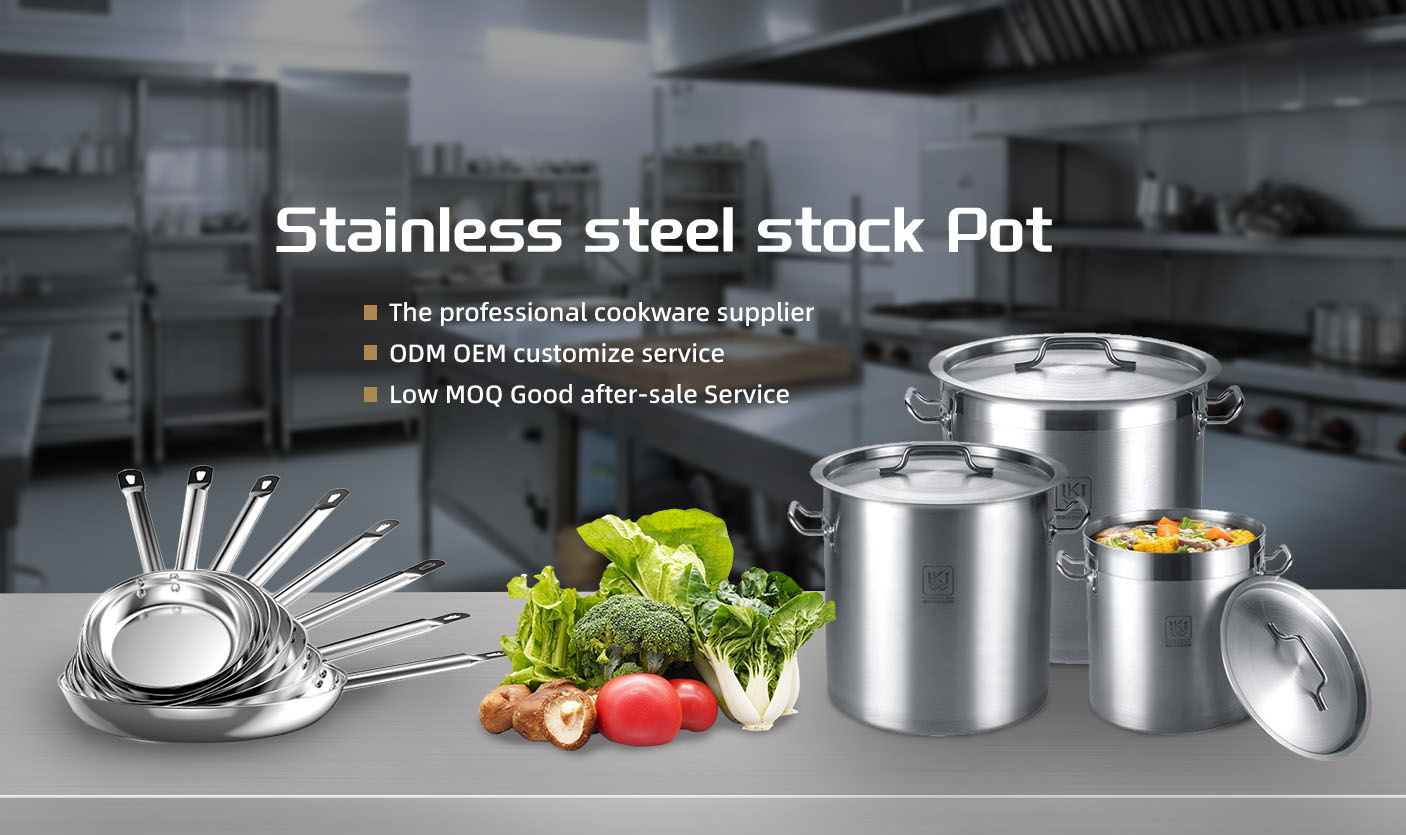
Our production range includes stock pots, soup pots, sauce pots, strainers, Stainless Steel Barrels, gn pans, and related foodservice equipment. Product development, mold preparation, forming, assembly, surface inspection, and final checking are coordinated around the approved specification.
For buyers comparing 201 and 304 stainless steel cookware, our team can help translate the operating environment into a clearer product brief. The final grade should always be confirmed in the quotation, sample approval, and purchase specification.
Correct maintenance extends the service life of both 201 and 304 cookware.
Remove food residue promptly
Use cleaning chemicals at the instructed concentration
Avoid prolonged contact with chloride-rich solutions
Do not leave concentrated salt deposits on the surface
Rinse thoroughly after washing
Dry before stacking or storage
Avoid carbon-steel wool that can contaminate the surface
Investigate recurring rust-colored marks instead of merely polishing them away
“Stainless” describes corrosion resistance, not freedom from maintenance.
For heavy commercial use, 304 stainless steel cookware is usually the more dependable investment. Its better corrosion resistance is particularly valuable in wet kitchens, high-frequency washing, and salt- or acid-exposure conditions.
Grade 201 can still be practical where exposure is moderate and cost control is essential. The best purchasing decision combines the right grade with suitable thickness, base engineering, safe handles, consistent fabrication, and disciplined maintenance.