kelley@u-kitchenwares.com
+86-15819924651
+86-0750-3719388

gn pans and steam table pans are both standardized foodservice containers used for preparing, storing, heating, holding, and serving food. The main difference is the dimensional system behind them: GN pans follow the metric Gastronorm system, while steam table pans are commonly associated with North American hotel-pan dimensions and terminology.
Because the two products look similar, buyers sometimes assume they are fully interchangeable. That assumption can cause poor fit, uneven support, lid incompatibility, or gaps in a steam table.
| Factor | GN pans | Steam table pans |
|---|---|---|
| Primary sizing convention | Metric Gastronorm system | North American hotel-pan convention |
| Common full-size reference | GN 1/1, nominally 530 × 325 mm | Commonly described as a full-size 12 × 20-inch pan |
| Fraction terminology | GN 1/2, 1/3, 1/4, 1/6, 1/9 | Full, half, third, quarter, sixth, and other sizes |
| Typical markets | Europe and many international foodservice markets | United States and other markets using hotel-pan equipment |
| Main compatibility risk | Rim, radius, depth, and equipment tolerances | Rim, radius, depth, and equipment tolerances |
Nominal descriptions are useful for classification, but procurement should be based on drawings and actual equipment dimensions.
A GN pan is a food container manufactured around the Gastronorm modular system. A full-size GN 1/1 pan forms the basic footprint, while fractional pans divide that space into smaller modules.
For example, a compatible station may accommodate one GN 1/1 pan, two GN 1/2 pans, or several smaller pans in an appropriate arrangement. This modularity helps kitchens reorganize menus without replacing the entire preparation or holding system.
GN pans are frequently used in:
Refrigerated preparation counters
Commercial ovens and steamers, where the specific pan is rated for use
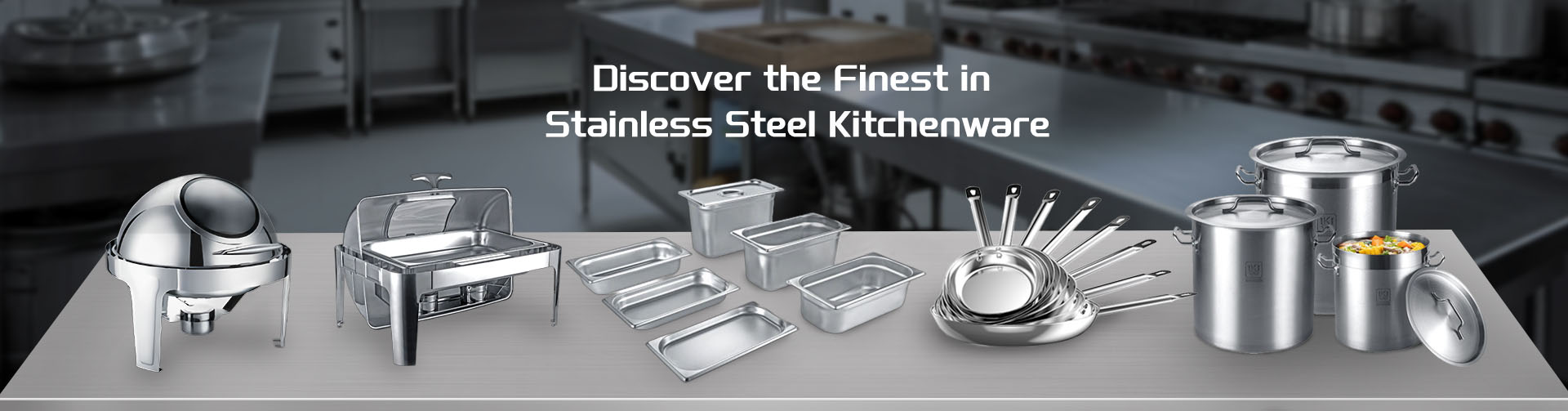
Buffet and chafing equipment
Storage racks
Food transport systems
Ingredient stations
Catering operations
Our GN container range includes several fraction sizes, depths, and solid or perforated configurations.
A steam table pan—also called a hotel pan in many kitchens—is designed to sit in compatible food wells, preparation stations, warmers, and serving equipment.
Steam table pans are generally categorized as full-size, half-size, third-size, quarter-size, sixth-size, or ninth-size. As with GN pans, several depths may be available.
The term “steam table pan” describes a common application, but it does not mean the pan itself produces steam. The pan holds food within a compatible system that may use heated water, steam, refrigeration, or another temperature-control method.
A GN 1/1 pan and a full-size US steam table pan may appear nearly identical when viewed separately. Small differences can nevertheless affect installation.
The rim rests on rails, frames, counters, or equipment openings. A slightly different rim width or rolled edge can determine whether the pan sits securely.
Two pans with similar length and width may use different corner shapes. A pan with a tighter or broader radius can bind inside an opening or leave an unwanted gap.
Sidewall angle affects how empty pans nest. It can also influence internal capacity and the ease of separating stacked pans.
Depth is not determined by fraction size. Two GN 1/2 pans may have the same top footprint but very different depths and capacities.
A lid designed for one rim profile may rock, leave gaps, or fail to engage with another pan. This is especially important for notched lids, handled lids, and Silicone Covers.
Sometimes they appear to fit, but interchangeability should be verified rather than assumed. The safest method is to compare dimensional drawings or test a representative sample in the actual equipment.
Check the pan with:
Steam-table wells
Refrigerated counters
Holding cabinets
Racks and trolleys
Lids and covers
Transport boxes
A pan that enters the opening but does not rest correctly should not be considered compatible.
Both GN and steam table systems may include solid and perforated pans.
Solid pans are suitable for sauces, cooked foods, ingredients, and liquids. Perforated pans support draining and steaming applications. They may also be paired with a solid pan underneath to collect liquid.
When ordering perforated pans, specify the hole diameter, pattern, coverage area, and required blank area near the rim or base. “Perforated” alone is not a complete production specification.
Stainless steel food pans are widely used because they can support repeated washing and commercial handling. Buyers should confirm the material grade and thickness instead of relying only on a polished appearance.
Thickness should match pan size, depth, load, and handling frequency. A deep pan carrying dense food needs different structural consideration from a shallow condiment pan.
Edges should be smooth, corners should be consistently formed, and rims should sit flat. These details affect user handling as well as equipment fit.
A GN pan and steam table pan bulk supply program should begin with a model-by-model specification sheet. Include:
Regional dimensional standard
Fraction size
Depth and working capacity
Material grade
Material thickness
Solid or perforated body
Rim and edge style
Lid requirement
Surface finish
Packaging quantity
Carton labeling
Equipment reference
Our factory produces European-style GN pans, us steam pans, perforated standard pans, and compatible covers. For bulk orders, our team can coordinate mixed sizes, depths, packaging, logo requirements, and recurring production specifications.
Inspection should include material verification, overall dimensions, rim flatness, surface condition, nesting, cover fit, and compatibility with the approved sample.
Use GN pans when the project is designed around Gastronorm equipment. Choose US steam table pans when the kitchen uses North American hotel-pan dimensions.
International distributors serving several markets may need both product lines, but they should keep specifications and packaging clearly separated. Similar appearance is not enough to identify the correct system.
The difference between GN pans and steam table pans lies mainly in their regional sizing standards and detailed geometry. Both can perform similar food preparation, storage, holding, and serving tasks, but they are not automatically interchangeable.
Confirm the standard, footprint, depth, rim, corners, lid, and equipment fit before ordering. A physical sample test remains the most dependable way to prevent compatibility problems in a commercial kitchen.