kelley@u-kitchenwares.com
+86-15819924651
+86-0750-3719388

Building a catering container starts with six engineering questions: what food it holds, how much it carries, which temperatures it faces, how it will be lifted, what equipment it must fit, and how it will be cleaned. Every design detail—from wall geometry to the lid—should answer one of those questions.
A catering container is not merely a folded or drawn sheet of stainless steel. Its rim, corners, depth, handles, base, surface, stackability, and transport behavior determine whether it works in a professional kitchen.
Before creating a drawing, define:
Food type
Nominal capacity
Working fill level
Solid or perforated body
Operating temperature
Heating method
Holding duration
Cleaning method
Required standard
Target unit weight
Stacking and nesting needs
Expected order quantity
The working capacity may be lower than the total geometric volume because space is needed for movement, lids, and safe handling.
A gn pan needs standardized top dimensions so it can fit compatible racks, refrigeration, cooking equipment, and buffet openings. Depth can change while the modular footprint remains consistent.
Custom dimensions may solve one unique installation but reduce compatibility with replacement lids, racks, and serving equipment. Where possible, retain a recognized standard and customize depth, surface, branding, or accessory configuration instead.
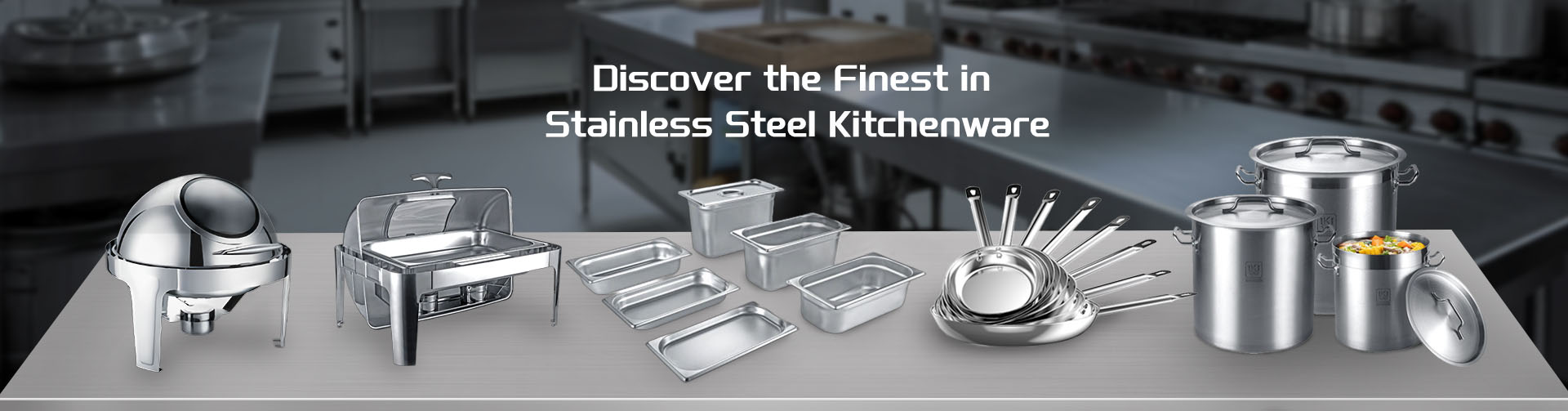
Our factory produces European-style GN pans, US steam pans, solid pans, perforated pans, and Silicone Covers. Buyers should identify the regional pan system during the design stage because similar-looking products may not interchange.
Stainless steel grade influences corrosion behavior, formability, appearance, and cost. Thickness affects stiffness, forming difficulty, weight, rim strength, and resistance to handling damage.
Deep containers may experience different forming stresses from shallow trays. The manufacturing method should therefore be reviewed with the dimensions rather than selecting material from a generic catalog.
For insulated food barrels, the inner and outer structures, insulation space, lid, tap where fitted, base, and handles must work together. The filled weight can be substantial, so lifting points need suitable attachment.
Rounded internal corners are generally easier to clean than sharp internal angles. Corner geometry also affects how food can be removed with a utensil and how containers nest.
Very tight corners may create forming difficulties or concentrate stress. Excessively large radii reduce usable volume. The final radius should balance hygiene, capacity, tooling, and structural performance.
The rim gives the user a lifting surface and helps the pan rest in compatible equipment. It may also support a lid or stacking relationship.
Poorly finished edges can be uncomfortable or hazardous. Inconsistent rims can prevent pans from sitting flat, create gaps in buffet equipment, or make stacked containers unstable.
Empty catering containers often need to nest to save storage and shipping space. However, excessive nesting can cause units to jam together.
The wall angle, rim, embossing, and stacking features should allow staff to separate pans without damaging them. Covered filled containers need a different stacking strategy from empty nested pans.
Perforated pans can support steaming, draining, rinsing, and separation from liquid. The hole size and layout should reflect the food.
Small food pieces can escape through large holes, while holes that are too small may drain slowly and take longer to clean. Edge distance and pattern also influence panel strength.
A useful prototype program should examine:
Fit with equipment
Lid compatibility
Filled lifting and handle comfort
Rim flatness
Drainage
Nesting and separation
Cleaning access
Temperature exposure
Carton protection
Appearance after repeated handling
A sample that looks correct while empty may behave differently when hot, filled, stacked, or transported.
Our factory manufactures stainless steel food containers, GN pans, steam pans, stock pots, sauce pots, heat-preserving barrels, Chafing Dishes, Soup Kettles, buckets, and catering carts. We support the development process from product design and mold making through forming, assembly, surface inspection, packaging, and shipment.
As a stainless steel catering container OEM/ODM manufacturer, we can work with drawings or application requirements to review dimensions, depth, material, thickness, lid, handles, perforation, finish, logo, and packaging. Our quality inspection covers incoming material and production stages through the finished product, helping maintain repeatability during bulk supply.
The best catering container is easy to fill, lift, cover, stack, transport, empty, wash, dry, and store. Ignoring any one of those actions can create a recurring operational problem.
A complete design brief, representative prototype, and equipment-fit test turn a simple metal container into a dependable part of a commercial catering system.