kelley@u-kitchenwares.com
+86-15819924651
+86-0750-3719388

A food business usually begins with a product idea, but the idea alone is not enough. A popular dish can still become an unprofitable business when portions are inconsistent, preparation takes too long, or the kitchen cannot handle the busiest service period.
Before renting a location or purchasing equipment, define how the business will operate. A restaurant, takeaway shop, food truck, catering company, bakery, and central kitchen may serve similar customers, but each one needs a different workflow, budget, and equipment plan.
Start with a simple description of what the business will sell, who will buy it, and how the food will reach the customer.
For example, a lunch-delivery kitchen may focus on fast batch preparation and secure transport. A hotel buffet needs reliable hot holding and frequent replenishment. A catering company must consider off-site setup, food transportation, and equipment that can be packed efficiently.
The clearer the model is, the easier it becomes to calculate staffing, production space, utilities, and daily capacity.
A temporary stall, small catering order, weekend market, or limited delivery menu can provide useful information before a large investment is made.
A practical test should answer questions such as:
Which dishes sell first?
How long does each order take?
Which ingredients create the most waste?
Does the packaging protect the food?
Are customers willing to pay the planned price?
Can the team maintain the same quality during busy periods?
Feedback from real orders is usually more useful than opinions collected from friends or family.
A menu should be designed with production in mind. Too many unrelated dishes increase ingredient inventory, training difficulty, preparation time, and equipment requirements.
Look for ingredients that can be used across several products without making the menu repetitive. A stock prepared for soup may also support sauces or braised dishes. Roasted vegetables may be used in hot meals, salads, and side dishes.
Core dishes should be easy to repeat, cost accurately, and prepare with the available team. Seasonal or limited items can then add variety without making the full operation unnecessarily complicated.
The menu should be finalized before the main equipment list. Otherwise, the kitchen may end up with large pots that do not fit the cooking volume, buffet pans that do not match the serving counter, or warmers that cannot hold the required number of portions.
Ingredient cost is only part of the selling price.
A complete calculation should include:
| Cost Area | Examples |
|---|---|
| Food ingredients | Meat, vegetables, sauces, seasoning and garnish |
| Packaging | Containers, lids, bags, labels and cutlery |
| Labor | Preparation, cooking, cleaning and service |
| Operating costs | Rent, power, water, gas and waste removal |
| Sales costs | Delivery commission, payment fees and promotion |
| Product loss | Trimming, spoilage, overproduction and returned food |
Portion control is essential. When staff serve by sight rather than using standard ladles, pans, or weighing methods, the food cost can change significantly from one order to another.
Food-business requirements differ by location and activity. A takeaway kitchen may need different approvals from a food factory or mobile food truck.
Before committing to a property, confirm whether the site can legally support food preparation. Check the requirements for drainage, ventilation, fire protection, waste storage, refrigeration, handwashing, and food-contact surfaces.
The cost of correcting an unsuitable building can be much higher than choosing the right location at the beginning.
Ingredients should move through the kitchen without repeatedly crossing between clean and dirty areas.
A practical sequence is:
Receiving
Storage
Washing and preparation
Cooking
Holding or cooling
Portioning
Service or delivery
Dishwashing and waste handling
Frequently used tools should remain close to the relevant workstation. Heavy stock pots should not need to be carried across narrow walkways, and clean GN pans should not be stored beside food waste.
Daily averages can be misleading. A restaurant may sell 150 meals in one day, but 70 of them could be ordered within two hours.
Equipment capacity should therefore be based on the busiest realistic service period. Consider batch size, heating time, recovery time, holding space, and cleaning time between uses.
A Commercial Kitchen Equipment Supplier should be able to provide more than a product photo and basic dimensions.
Before ordering, confirm:
Stainless steel material
Product capacity
Pan and lid compatibility
Handle and frame construction
Packaging protection
Replacement components
Custom branding options
Production lead time
Inspection process
Shipping requirements
For commercial kitchens, consistent sizing is especially important. A replacement food pan or lid should fit the equipment already in service.
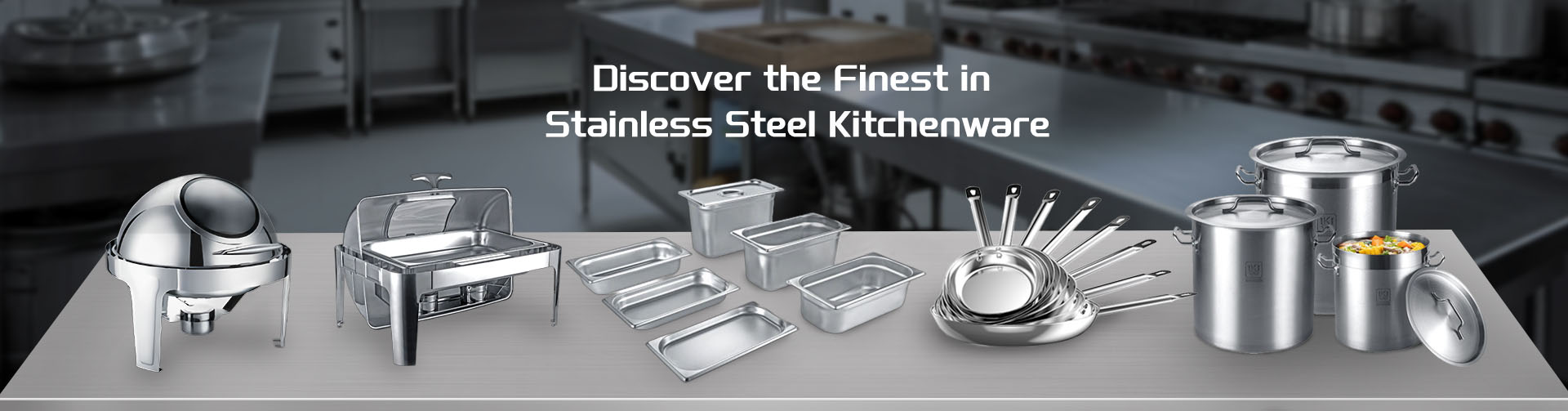
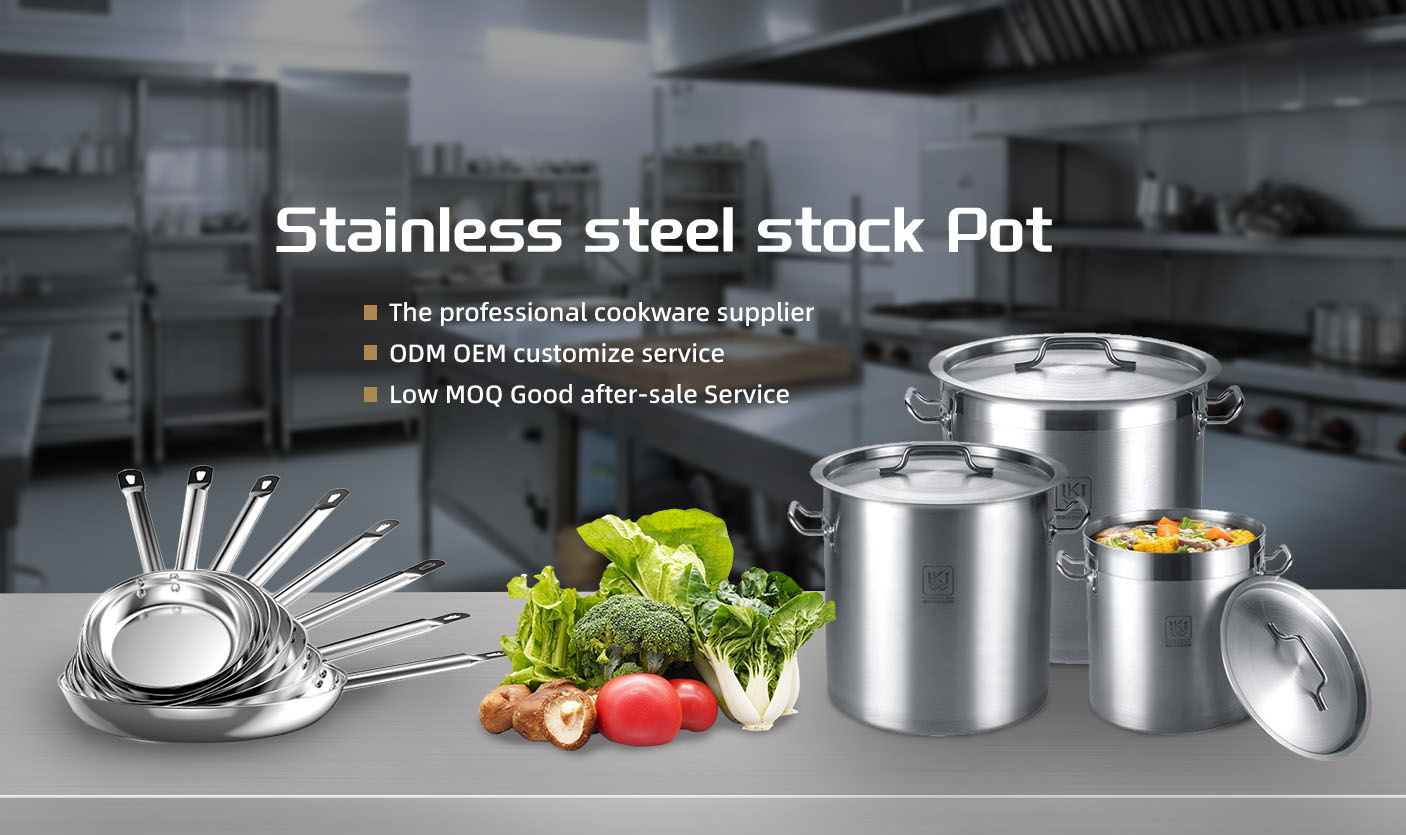
We manufacture stainless steel stock pots, sauce pots, GN Containers, Chafing Dishes, soup kettles, BBQ griddles, beverage dispensers, tray trolleys, serving carts, Buffet Holders, and Stainless Steel Buckets.
These categories cover several stages of food preparation and service, allowing buyers to coordinate cooking, storage, hot holding, transport, and buffet presentation through one supply channel.
Our production process includes product design, mold development, forming, assembly, inspection, and packaging. Dimensions, capacity, finishes, handles, logos, and cartons can be reviewed for OEM and ODM orders.
A useful quotation request should include the menu type, estimated daily meals, peak-hour output, available kitchen space, energy supply, required capacities, destination market, and order quantity.
This information allows our team to recommend equipment that suits the operation rather than simply offering the largest or lowest-priced model.