kelley@u-kitchenwares.com
+86-15819924651
+86-0750-3719388

A traditional Chafing Dish generally needs enough hot water to cover the bottom of the water pan by approximately 1 to 2 inches, or about 2.5 to 5 centimeters.
This is a starting range rather than a universal rule. The correct amount depends on the water-pan depth, food-pan position, heating method, service duration, and product instructions.
The food pan should sit above the water without floating or being pushed upward.
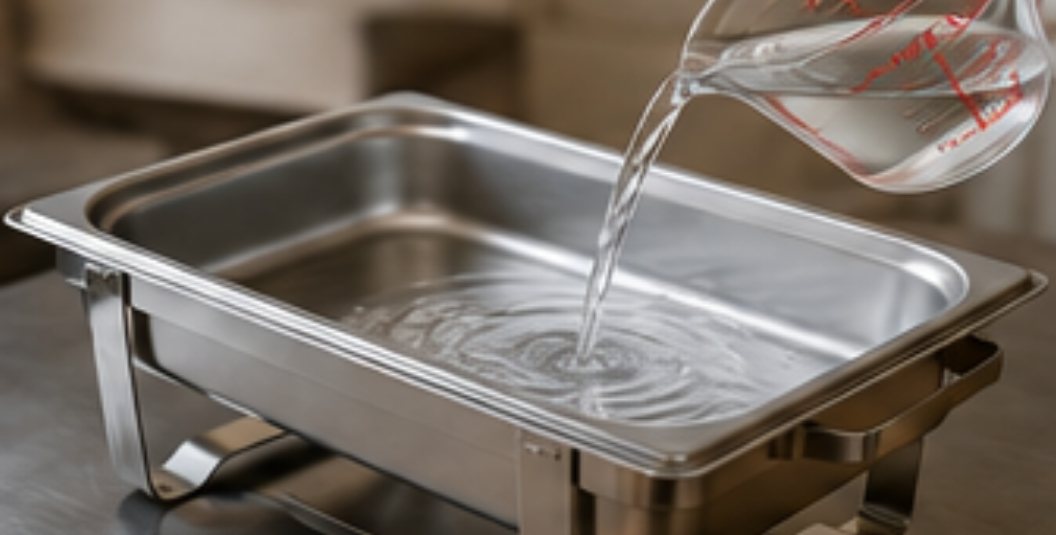
The water creates an indirect heating layer between the flame or electric heater and the food.
It helps:
Distribute heat more evenly
Reduce direct scorching
Maintain moisture
Limit severe hot spots
Stabilize buffet temperature
Protect the bottom of the food pan
A chafer with too little water may boil dry. Too much water may overflow when the food pan is inserted.
Place the frame on a stable, level, heat-resistant surface.
Confirm that the fuel holders or electric element are correctly positioned.
Set the water pan into the frame before adding water.
This makes it easier to judge the depth and reduces the risk of carrying a full pan across the service area.
Use hot water to reduce preheating time.
Add approximately 1 to 2 inches, then insert the empty food pan and check whether the water rises too close to the edge.
Light the approved fuel or switch on the electric heater according to the product instructions.
Allow the water to become hot before placing prepared food into the chafer.
Transfer fully cooked, properly reheated food into the food pan.
Cover the chafer until service begins.
The water level is excessive when:
Water spills over the edge
The food pan floats
Water enters the food
The pan becomes unstable
Water drips onto the burner
The frame is difficult to move safely
Remove excess water carefully before the heating source is activated.
A low water level can lead to:
Uneven heating
Rapid evaporation
Scorching at the pan bottom
Damage from heating an empty water pan
Reduced holding performance
Increased fuel consumption
Check the water periodically during long service.
When more water is required, add hot water slowly to the water pan.
Avoid pouring cold water into a very hot pan because the sudden temperature change may affect heat recovery and create steam.
Use protective gloves and keep water away from the fuel flame.
No.
Some products use:
Dry electric heat
Induction heating
Built-in heating plates
Specialized thermal bases
Direct electric food pans
Always follow the model instructions. Do not add water to equipment that is designed for dry heating.
| Chafing Dish Type | Water-Level Consideration |
|---|---|
| Full-size oblong chafer | Needs even coverage across the long pan |
| Round chafer | Water should surround the lower food-pan area evenly |
| Half-size chafer | Requires less total water |
| Deep food-pan setup | Check that the food pan does not displace too much water |
| Roll-top chafer | Monitor condensation and evaporation |
| Electric dry-heat model | May require no water |
The shape of the water pan matters as much as the total volume.
The water pan supports heat transfer but does not confirm food safety.
Use a calibrated food thermometer and follow the local hot-holding rules. Under the FDA Food Code model, applicable hot food is generally held at 135°F or 57°C or above.
Reheat chilled food before placing it into the chafer. A chafer is not intended to rapidly heat a cold, dense pan of food.
Allow the unit to cool before handling.
Drain the water, wash the pan with suitable detergent, rinse it, and dry it fully. Mineral deposits may form when hard water repeatedly evaporates inside the pan.
Do not use abrasive tools that can scratch polished stainless steel.
A Commercial Chafing Dish should combine a stable frame, correctly sized water pan, smooth food pan, secure lid, suitable handles, and reliable heating support.
Buyers should compare:
Food-pan capacity
Water-pan depth
Stainless steel construction
Frame stability
Fuel or electric system
Lid opening style
Replacement accessories
Cleaning access
Packaging protection
Service environment
We supply round, oblong, roll-top, economy, foldable, and electric chafing dishes, along with replacement water pans, lids, and fuel holders for selected models.
Our factory supports customized capacities, finishes, handles, lid structures, logos, cartons, and accessory sets for distributors and project buyers.
Send us your required capacity, shape, food-pan depth, water-pan structure, heating method, lid style, finish, accessories, packaging, and purchasing quantity. We will prepare a Commercial Chafing Dish quotation for your buffet program.