kelley@u-kitchenwares.com
+86-15819924651
+86-0750-3719388

Most people make their own eating decisions, but those decisions are shaped by the food available around them. Manufacturers decide how products are formulated. Retailers influence which items are visible and affordable. Restaurants determine portion size, preparation methods, and menu combinations.
The food industry therefore affects nutrition long before a meal reaches the table.
Consumers are more likely to eat foods that are easy to find, reasonably priced, and convenient to prepare.
When fresh ingredients, balanced meals, and suitable portion sizes are readily available, healthier choices become easier. When oversized meals and heavily processed products dominate the market, it may become more difficult to control salt, sugar, fat, and total energy intake.
This does not mean all processed food is unhealthy. Freezing vegetables, pasteurizing milk, canning beans, and drying grains can improve storage life and availability. The nutritional result depends on the ingredients and process used.
A small amount of extra salt or sugar in one meal may appear unimportant. The effect becomes more significant when similar products are eaten frequently.
Food manufacturers and commercial kitchens influence nutrition through decisions about:
Salt and seasoning levels
Cooking oils
Added sugar
Fiber content
Protein sources
Sauce quantity
Ingredient substitutions
Portion weight
Beverage size
Reformulation does not always require a dramatic recipe change. Gradually reducing salt, increasing vegetables, or changing the balance between sauce and solid ingredients can improve a product while preserving its identity.
Customers do not always stop eating at the same point regardless of what is served. The amount presented on the plate, in the package, or inside the buffet pan can influence the amount consumed.
Food-service operators can improve consistency by using standard ladles, scoops, pans, and serving utensils. Standard portions also help control purchasing costs and reduce disagreements between kitchen and service staff.
Large buffet pans may look abundant, but they can encourage overproduction and keep food on display longer.
Using smaller batches can support more frequent replenishment. This can improve appearance and texture while reducing the quantity left at the end of service.
Ingredients with similar nutritional value can produce very different meals depending on preparation.
Steaming vegetables adds little fat, while deep frying changes their energy content. A soup can provide vegetables and protein, but large amounts of cream or salt can change its nutritional profile. A grilled product may still contain significant sugar or sodium when it is served with a concentrated sauce.
Commercial kitchens should therefore review the complete dish rather than classifying an ingredient as healthy or unhealthy on its own.
A balanced option may receive little attention when it is more expensive, difficult to find on the menu, or excluded from meal promotions.
Placement and pricing can influence demand through:
Menu position
Product photographs
Combination meals
Portion upgrades
Delivery-platform rankings
Limited-time discounts
Checkout displays
Beverage bundles
Restaurants and retailers do not need to remove indulgent products, but they can make balanced choices easier to understand and order.
Nutrition cannot be separated from safe handling.
A meal with suitable ingredients can still cause harm when it is stored at the wrong temperature, contaminated by raw food, or handled with unclean equipment.
Food-service operations need clear controls for receiving, refrigeration, cooking, holding, allergen separation, cleaning, and staff hygiene.
A pan, warmer, or refrigerator only performs correctly when it is used within its intended capacity and maintained properly.
Staff still need to monitor temperatures, rotate stock, clean food-contact surfaces, and avoid mixing raw and ready-to-eat products.
A Stainless Steel GN Pan helps kitchens organize ingredients and prepared food through multiple stages.
The same standardized format can be used for:
Ingredient preparation
Refrigerated storage
Cooking in compatible equipment
Hot holding
Buffet presentation
Portioning
Transport in suitable carriers
This reduces unnecessary transfer between containers and can make the workstation easier to organize.
A deep pan is useful for high-volume products such as soup, rice, or sauce. A shallow pan may be better for food that needs more surface visibility, faster cooling, or frequent replenishment.
The correct choice depends on the food rather than the amount of space available in the counter.
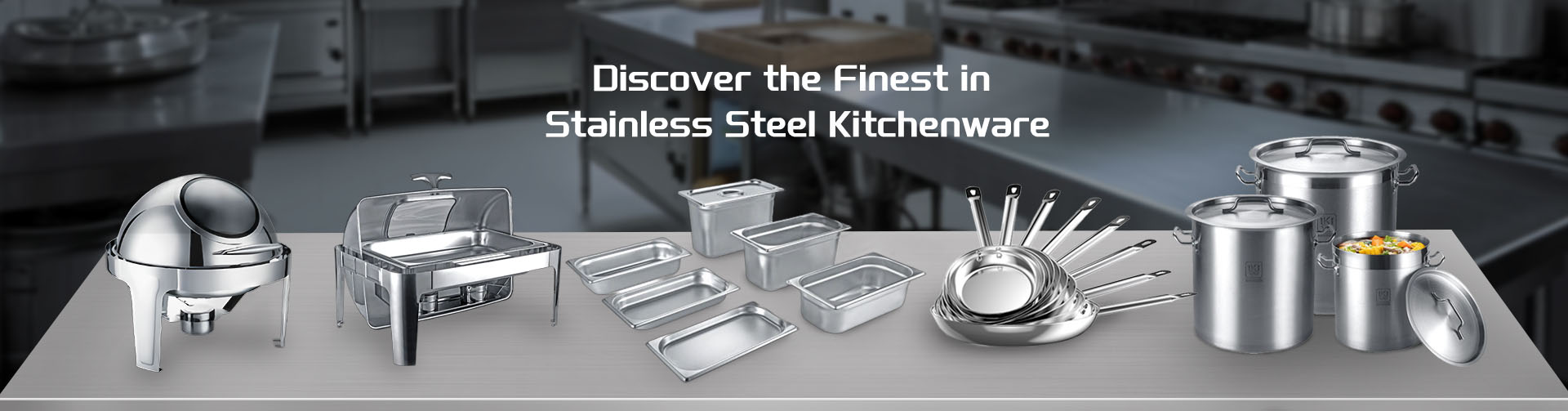
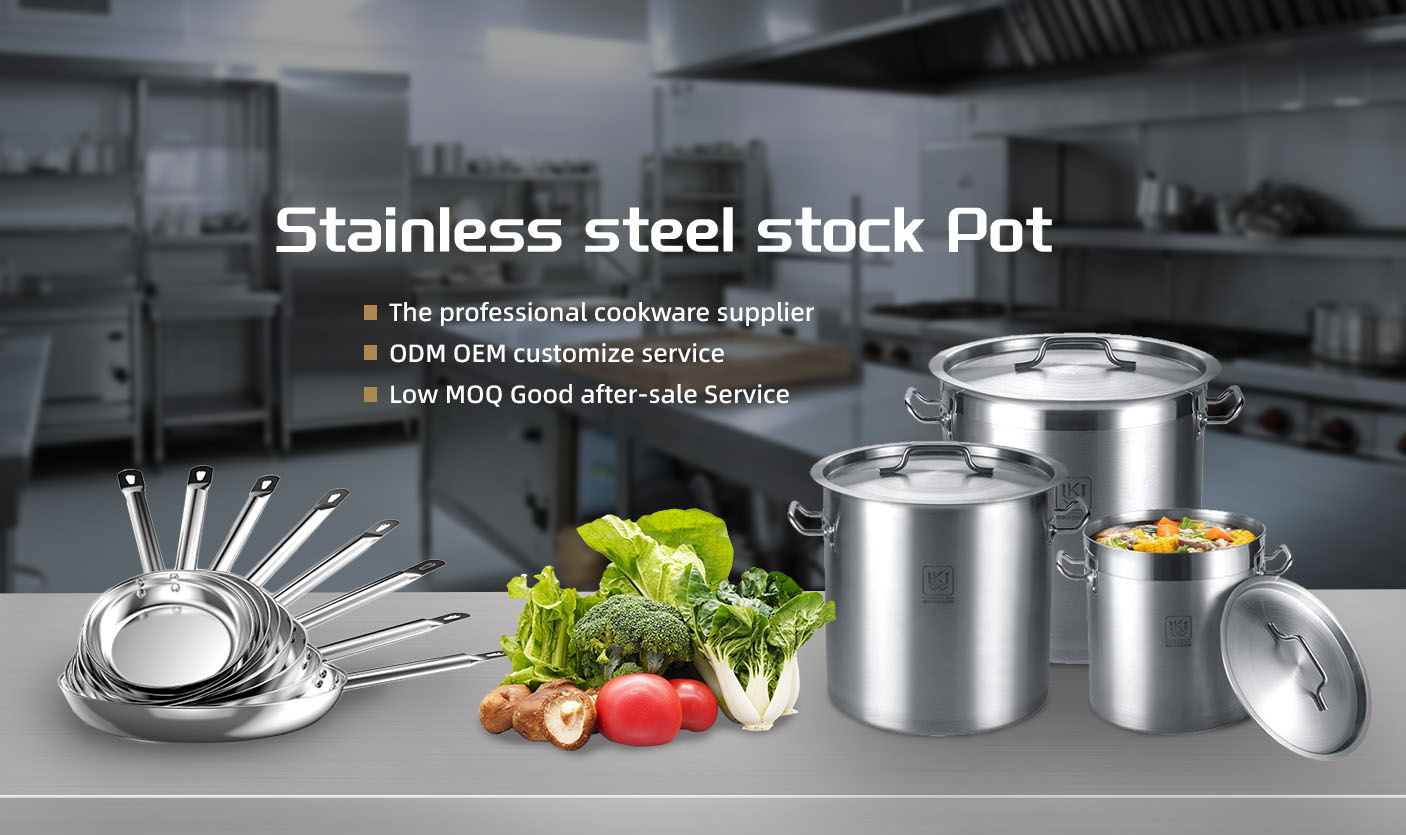
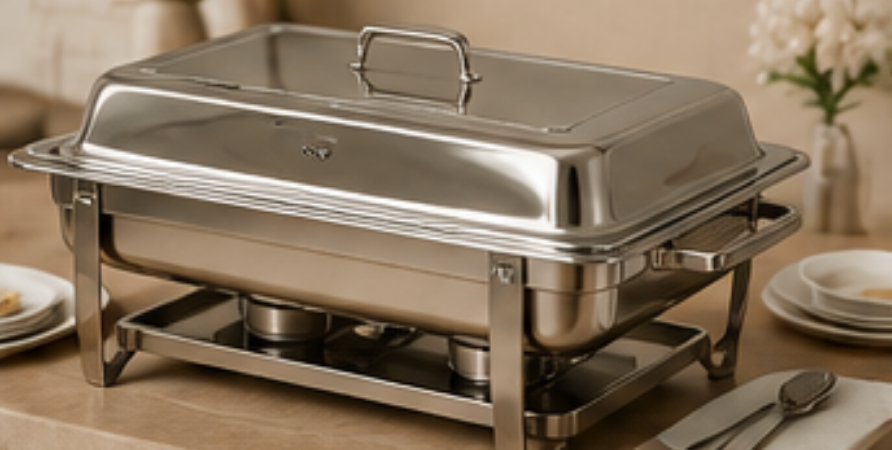
Our GN Container range includes European-style GN pans, us steam pans, perforated pans, and Silicone Covers. We also supply stock pots, Chafing Dishes, soup kettles, beverage dispensers, and serving carts.
Our team can review pan size, depth, lid structure, material, surface finish, handle design, logo, and packaging for different commercial markets.
From raw materials to finished products, inspection is carried out throughout production to help maintain dimensional consistency across repeat orders.
Hospitals, schools, hotels, cafeterias, and catering companies each have different serving patterns.
Provide us with the menu categories, batch sizes, GN format, required pan depths, lid types, hot-holding method, trolley requirements, and purchasing volume. We can then prepare a coordinated GN pan and food-service equipment plan.