kelley@u-kitchenwares.com
+86-15819924651
+86-0750-3719388

In buffet service, catering events, hotel breakfast lines, and banquet halls, Chafing Dishes are moved, filled, heated, cleaned, stacked, and reused every day. A weak unit may look acceptable during the first inspection, but repeated commercial use quickly exposes the problem: warped pans, loose lids, leaking water trays, unstable frames, or stained surfaces around the heating area.
For buffet equipment distributors, restaurant supply wholesalers, hotel purchasing teams, and catering service providers, chafing dish supplies should be selected around real operating pressure. The key is not only whether the dish can keep food warm, but whether the structure can stay stable after repeated heat, water, cleaning, and handling.
The water pan carries both water weight and heating pressure. If the stainless steel body is too thin or the bottom structure is weak, the pan may slowly deform after repeated heating. Once the base is no longer flat, the food pan may sit unevenly, and the lid may no longer close properly.
For hotel and catering buyers, this can create more than a visual problem. An uneven water pan can make heat distribution less stable and increase the risk of water spilling during service.
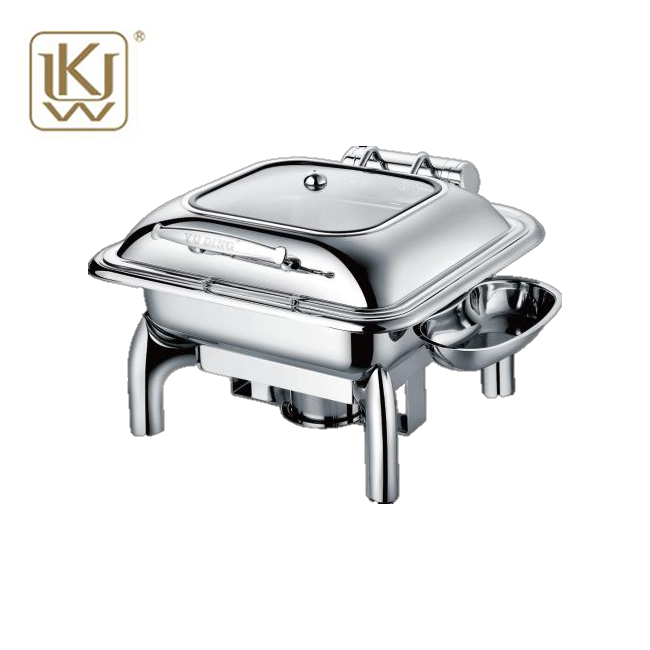
The stainless steel restaurant supply chafing dish uses a 6L capacity with a square structure. This size direction can suit buffet stations, restaurant service, and banquet food holding. But buyers still need to match capacity with real usage: breakfast buffet, wedding banquet, school dining, outdoor catering, or corporate canteen service.
A chafing dish that is too small requires frequent refilling. A unit that is too large but poorly supported can increase deformation risk during handling.
A chafing dish lid should reduce heat loss and keep food presentation clean. If the lid warps, sits loosely, or no longer matches the pan edge, steam escapes too quickly and condensation may drip into unwanted areas.
In commercial use, this creates extra work for service staff. They may need to adjust lids repeatedly, wipe surrounding tables, or replace units that no longer hold heat properly.
Some chafing dish designs use sealing strips to improve closure. If the sealing area becomes loose, aged, or deformed, leakage and heat loss become more likely. Buyers should not check sealing only when the product is new. The better test is whether the lid and pan still fit after repeated heating, washing, and stacking.
For distributors, this is where after-sales complaints often begin.
Foodservice equipment faces water, salt, sauce, detergent, heat, and frequent cleaning. 304 stainless steel is widely used because it offers better corrosion resistance and a cleaner surface for catering environments.
For chafing dish supplies, material choice affects both appearance and service life. If the steel rusts, stains, or bends too soon, the customer may not reorder even if the first purchase price was attractive.
Catering teams often move chafing dishes between kitchens, trucks, banquet rooms, outdoor tents, and storage areas. A weak frame or unstable support can bend during this movement. Once the frame changes shape, the pan may no longer sit safely.
For wholesalers serving catering rental companies or event suppliers, frame strength should be reviewed together with pan material, not treated as a separate detail.
Buffet equipment must be cleaned quickly after service. If the corners are poorly finished or the edges are rough, grease, sauce, and food residue can stay in small gaps. Over time, those areas become harder to clean and easier to stain.
A smoother stainless steel surface helps kitchen teams clean faster and keeps the chafing dish more presentable for the next event.
The bottom heating area is exposed to fuel, heat, water vapor, and occasional spills. If this area is weakly built, damage appears faster than on the visible outer body. Buyers should check the heating area, support points, lid contact, and pan base before bulk purchasing.
This is especially important for buffet operators and event caterers that use the same equipment several times each week.
A chafing dish that deforms or leaks after repeated use creates hidden cost for distributors and foodservice buyers. The buyer does not only lose one unit. They also face customer complaints, replacement pressure, delayed service, and weaker repeat orders.
Before ordering, review the actual service scene: buffet volume, moving frequency, cleaning method, heating type, storage method, and expected replacement cycle. A stronger stainless steel body, stable water pan, reliable lid fit, and better packing can reduce avoidable losses.
If your business needs restaurant chafing dishes for buffet supply, hotel catering, wedding banquets, school dining, or foodservice wholesale, come to us to prepare this order properly. Send the target service scene, capacity requirement, material preference, packing method, and order quantity. Our team can help match chafing dish options that are stronger for repeated commercial use and less likely to create deformation or leakage complaints.