kelley@u-kitchenwares.com
+86-15819924651
+86-0750-3719388

Chafing Dishes look similar at a glance, but their real size is determined by two things: the food pan format they hold and the volume they are designed to keep warm during service. If you choose the wrong size, you will either run out of food too quickly, waste heat and fuel on oversized equipment, or struggle with buffet table space and lid clearance.
This guide breaks down the most common chafing dish sizes, what they typically hold, and how to match size to your menu and service style. When you are ready to compare real product options, you can reference UKW’s range of chafing dish models for buffet, catering, and event service.
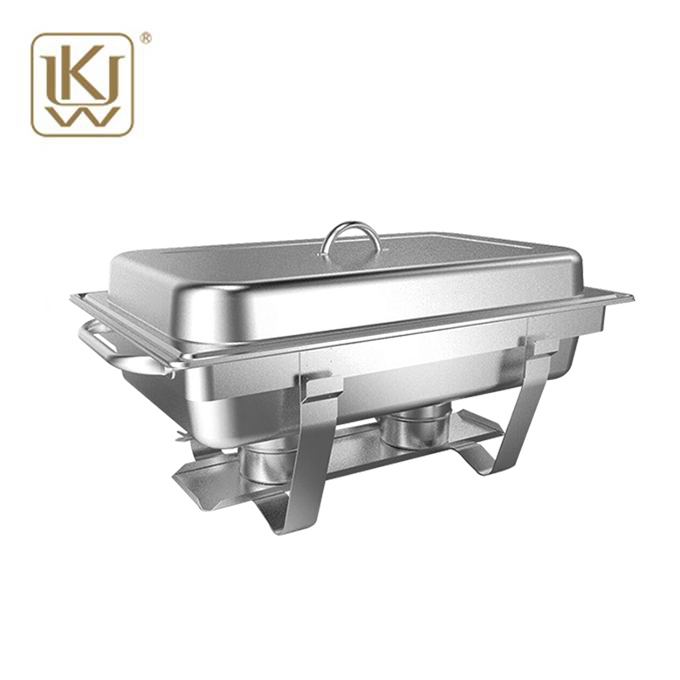
A chafing dish is usually described by its pan size and its capacity. In practical buffet use, capacity matters more than exterior dimensions because it determines how long you can serve before refilling. Exterior size still matters for transport, table planning, and choosing the correct number of units per buffet line.
A useful way to think about chafing dish size is in layers:
The outer frame size decides how much table space you need and whether lids can open safely without hitting a wall or décor.
The inner food pan size decides how much food you can hold and how quickly it heats evenly.
The water pan depth and heat source decide how stable the holding temperature will be through service.
Most buffet chafing dishes fall into full size, half size, and round formats. Capacities can vary by brand and pan depth, but the following ranges are widely used in catering and hotel operations.
| Chafing Dish Format | Typical Food Capacity Range | Typical Serving Range | Best For |
|---|---|---|---|
| Full size rectangular | 8–9 qt | 8–12 servings | High-volume mains, rice, pasta, roasted vegetables |
| Half size rectangular | 4–5 qt | 4–7 servings | Side dishes, smaller events, faster rotation items |
| Round | 6–8 qt | 6–10 servings | Soups, stews, chili, curry, saucy dishes |
| Mini | 1–3 qt | 1–4 servings | Sauces, toppings, premium small-batch items |
Serving ranges depend heavily on portion size. A pasta side portion may be larger than a vegetable side portion, so a full-size dish can behave like a 10-serving unit or a 15-serving unit depending on the menu.
Chafing dishes are designed to hold standard hotel pans, so exterior size generally scales with pan footprint plus a frame and handles. That means full-size units take noticeably more table width, while half-size units are easier to fit into tighter buffet layouts.
Typical planning guidance is more reliable than exact measurements because table setups vary. You will get better results if you plan using buffer spacing for safe lid opening, serving spoon movement, and guest traffic flow.
Practical buffet space rules:
Plan extra clearance behind the dish so the lid can open without hitting a wall or riser.
Leave space between dishes so guests can serve without bumping handles and causing spills.
If your buffet is narrow, half-size dishes often reduce congestion better than squeezing full-size units too close together.
Two quick layout tips:
Full-size dishes are best placed on the main line where traffic is steady and refills are less frequent.
Half-size or round dishes work well on secondary lines, soup stations, or limited-space corners.
The correct size is the one that matches your refill rhythm. In buffet service, food quality improves when you can refresh pans before they dry out, overcook at the edges, or lose texture. That is why many caterers prefer running multiple half-size units rather than one full-size unit for certain dishes.
Menu behavior matters because different foods react differently to hot holding. Sauces and stews hold well, while crispy foods lose texture, and creamy foods can form a skin if not stirred.
When deciding between full and half size, focus on:
Guest count and expected re-serve behavior
How quickly the dish is consumed in the first 20 minutes
Whether the dish needs frequent stirring or careful texture control
A practical approach that works for many events is to serve the highest-demand item in a full-size dish and use half-size dishes for the remaining items so you can rotate fresher batches.
A full-size chafing dish is not automatically better. It is better when you truly need the volume and the serving line can handle a larger footprint. Half-size dishes are often easier to manage, easier to transport, and reduce waste when guest flow is uncertain.
Key differences you will feel during service:
Full size reduces refill frequency but increases the risk of quality decline if food sits too long.
Half size increases refill frequency but supports fresher presentation and better portion control.
Two selection notes:
If your menu includes multiple mains, half-size can help you present variety without overcrowding the buffet.
If you run staff-free buffets, full-size may reduce labor demand because refills are less frequent.
Round chafing dishes are not only about style. Their shape supports soups and liquids because ladling is easier and guests can access the center without scraping corners. Heat distribution is often more even for liquid-based foods because the geometry reduces cold corners.
Round units are commonly used for:
Soup, chowder, stew, chili
Curry and braised dishes
Saucy noodles or beans
Two practical checks for round units:
Confirm lid opening angle and steam management so condensation does not drip onto the service area.
Use a stable ladle rest strategy so guests do not place wet ladles on tablecloths.
Many chafing dishes are built around standard pan footprints, which is one reason catering equipment can be mixed across systems. When your chafing dish fits standard pans, you can swap food pans between prep and service more smoothly and reduce the need for special inserts.
This matters because buffet operations rarely run only chafing dishes. You also use prep containers, storage pans, and transport setups. When systems align, it reduces handling time and keeps service consistent.
If you want product options built for catering workflows and consistent buffet presentation, UKW’s
chafing dish
selection is designed for common professional service scenarios, including buffet lines that require stable setup and repeatable operation.
Guest count planning is not only math. It is timing. The same 100-guest event can require different equipment if it is a 30-minute serving window or a 2-hour open buffet.
A realistic planning method is to size dishes by refresh cycles:
For 50 guests, half-size units often cover sides and secondary items with better freshness control.
For 100 guests, full-size for the top-selling item plus a mix of half-size units usually reduces bottlenecks.
For 200 guests, multiple full-size units or duplicated lines are often better than a single line with oversized dishes.
Two operational pointers:
If guests serve themselves quickly at the start, you need more capacity on the line even if total consumption is moderate.
If you can stage backup pans and refill smoothly, slightly smaller dishes can improve food appearance and reduce waste.
Chafing dish size is best understood through capacity, pan format, and buffet space needs, not just exterior measurements. Full-size rectangular units typically hold about 8–9 qt and serve high-volume items efficiently, half-size units typically hold about 4–5 qt and support fresher rotation, and round units commonly hold about 6–8 qt and work especially well for soups and saucy dishes.
If you choose size based on refill rhythm, menu behavior, and table layout, your buffet runs cleaner, guests move faster, and food quality stays more consistent from the first plate to the last. For professional options that fit common catering workflows, explore UKW’s chafing dish range to match your event type and service volume.
Previous: How To Set Up Chafing Dishes?