kelley@u-kitchenwares.com
+86-15819924651
+86-0750-3719388

Cooking with a stockpot and a steamer insert gives you the flexibility of traditional boiling and the health-benefits of gentle steaming in one vessel. Whether you’re preparing steamed vegetables, whole fish, dumplings, or even one-pot meals, mastering this method can elevate your kitchen game. In this guide we’ll walk through what a stockpot + steamer insert setup is, how to prepare and use it step by step, key considerations to get the best results, and how premium stainless steel models — such as those offered by UKW — make the process smoother, more reliable and longer-lasting.
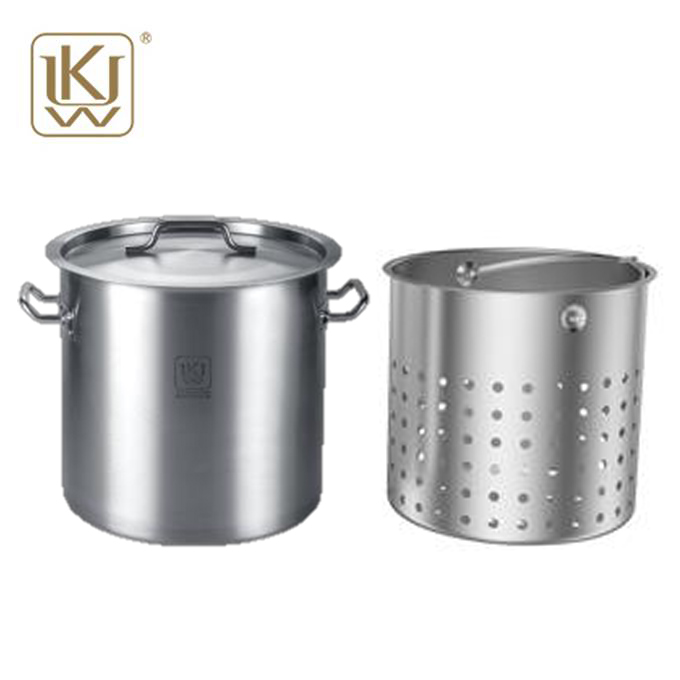
A stockpot with a steamer insert essentially combines two cooking methods: the large capacity and versatility of a stockpot for boiling or simmering liquids plus a perforated or slotted insert that holds food above the water level, exposing it to steam rather than direct boiling.
The steamer insert sits safely in the pot above the liquid, allowing steam to circulate around the food so that it cooks gently, retains moisture, preserves nutrients and avoids being waterlogged or splashed. According to The Wok of Life, a proper steamer setup requires the food to be suspended above the rolling water so that steam—not bubbling water—does the cooking.
The advantages are manifold:
Steaming preserves flavor, texture and color better than boiling.
A large stockpot gives you enough volume to steam large batches, multiple foods at once, or whole items like fish or corncobs.
Combining boiling capacity and steaming capability in one pot means less equipment, fewer pans, and easier cleanup.
When you select a high-quality stainless steel stockpot with a well-designed steamer insert, you get durability, ease of cleaning, consistent heat performance and compatibility with induction, gas or electric stoves. Looking at the range from UKW, their Stainless Steel Stockpots are an excellent choice for this multifunction use.
Choose a stockpot whose diameter accommodates the steamer insert snugly and whose height allows the lid to close securely with the insert in place. The insert should sit above the maximum water level but below the lid so steam can flow freely.
For example, if your insert has a rim of 1 cm, ensure the water level won’t touch it. A high-quality stainless steel pot with wide base and tall sides ensures that steam circulates well and there’s enough clearance around the insert.
Fill the pot with water — enough to generate plenty of steam, but not so much that it reaches the bottom of the steamer insert. As a rule of thumb, add about one to two inches (2.5 – 5 cm) of water or enough so that when the insert is placed in, the water comes up near (but not touching) the insert floor.
Make sure the water level stays below the insert to prevent food from boiling rather than steaming, which would defeat the steam-cooking benefit and could cause food to become messy or uneven.
Before placing food in the insert, bring the water to a gentle rolling boil. Once steam is rising consistently, place the steamer insert into the pot. Some suggest placing the insert in from the start and waiting for the boil; others prefer to bring water up first then insert. The key is to maintain stable steam.
Once the insert is in place, reduce the heat slightly so that the steam is sustained but the water isn’t violently bubbling up and touching the insert. You want gentle movement — steady steam, not spatter.
Place the food you wish to steam in a single even layer in the steamer insert. Items should be roughly the same size to allow uniform cooking. Denser or harder items (like carrots or potatoes) should go toward the bottom of the insert or have more space so they receive more steam.
Avoid overcrowding; steam must circulate freely around each piece of food. If you stack too much food, the bottom layer may overcook or produce condensation that collects on the lid and drops back onto the food.
Once the food is arranged, cover the pot with a tight-fitting lid to trap the steam. A secure lid helps ensure the steam works efficiently. If the lid is loose, steam will escape and cooking will take longer or unevenly.
Check recommended cooking times for the food you are steaming — vegetables may need only a few minutes, while fish, shellfish or whole poultry may require longer. Resist the temptation to lift the lid frequently; every time you open it, steam escapes, lowering temperature and lengthening cooking time.
Since steam is generated from the water in the pot, monitor the water level during longer steaming sessions. If water evaporates too much, refill with boiling water to maintain steam production. This is especially important for longer steaming sessions or large volumes of food.
When done, carefully remove the steamer insert — use oven mitts or tongs as steam and hot surfaces pose burn risks. Turn off the heat, lift the lid away from you to avoid a rush of hot steam, and transfer the food to a serving dish.
After use, allow the pot and insert to cool slightly, then wash with warm, soapy water. Stainless steel interiors handle steaming and boiling well but benefit from gentle cleaning to maintain shine and remove any mineral deposits from water. Dry thoroughly to prevent water spots. Store with lid off or ajar so moisture doesn’t accumulate inside.
Ensure the insert has a stable fit in your stockpot. If it wobbles or is mis-sized, it can tip or cause uneven cooking. A good stockpot has flat base and straight sides; this helps the insert sit evenly and the lid fit well. Many guides stress that whatever you use for steaming, making sure the rack or insert allows steam flow and keeps the food elevated is crucial.
Too much water can cause the food to submerge or splash, resulting in boiling rather than steaming. Too little water can lead to dry bottom, burning or finish before the food is properly cooked. Maintaining the balance matters.
When steaming different ingredients simultaneously, place the slower-cooking items lower (closer to the steam source) and the quicker ones higher up. If your insert allows stacking, use the lower tier for larger cuts of meat or dense vegetables, and upper tier for lighter items like greens or buns.
A tight-fitting lid ensures steam stays inside. However, steam will condense on the lid and drip. To avoid water forming and dropping onto the food, you can wrap the lid’s underside with a clean towel or use lids designed with condensation-channels. The Woks of Life advises placing a dish towel under the lid rim to catch drops.
Use pot holders or oven mitts as handles and lids will become hot.
Open the lid away from yourself to avoid a rush of steam.
Never let the pot run dry; steaming without water can damage the pot and insert, and is a fire hazard.
Ensure the pot is stable on the burner, and the insert is secure.
Stainless Steel Stockpots bring several advantages for this style of cooking: corrosion resistance (steam, water, minerals won’t degrade the material quickly), even heat distribution when properly constructed, compatibility with induction or gas, and easy cleaning/maintenance. The durability means you can steam, boil, braise and store using the same pot surface over time.
Steaming with a large stockpot opens up creative possibilities beyond just veggies. Here are some ideas:
Whole fish with ginger and scallions: Place the fish on the insert, steam 8-12 minutes depending on size.
Seafood boil with corn, clams and shrimp: Steam in layers; heavier corn on the bottom insert, lighter shrimp on top.
Layered vegetable medley: Carrots and potatoes on the bottom tier, broccoli/green beans top tier for consistent doneness.
Dumplings or bao: Use parchment-lined insert, stack two levels, steam 10-15 minutes.
Chicken thighs with herbs: Season and place directly in the insert, cover and steam until internal temp reaches safe levels (~74 °C/165 °F).
For each of these, adjust water amount, time and insert placement accordingly.
When you invest in a quality stainless steel stockpot from UKW, you’re choosing equipment that will excel in both boiling and steaming tasks. Their models often feature:
Thick encapsulated bases for even heat distribution.
Tall, straight sidewalls which suit steamer inserts well.
Durable stainless interiors and exteriors that resist corrosion from steam and water.
Compatible lids and accessory options to optimise steaming.
Using such a pot means you’re less likely to face hot-spot-burning, warping or handle failure — all of which can undermine steaming success.
When accessory steamer inserts (perforated trays or dedicated racks) are matched with a well-engineered pot, the performance improves: reliable steam generation, efficient cooking, easier cleaning and better results.
If your steaming results aren’t ideal, consider the following issues and fixes:
| Problem | Likely Cause | Solution |
|---|---|---|
| Food is soggy or watery | Too much water, or lid opened too often | Reduce water level; keep lid closed throughout cooking |
| Bottom items are under-cooked or dry | Food too close to water or not enough steam | Raise insert slightly or use more water; ensure steam flow is consistent |
| Lid condensate dripping onto food | Lid too cool or lacks insulation | Use a towel under lid or upgrade to a lid designed for steaming |
| Water evaporates too quickly during long steaming | Insufficient water initial fill or high heat | Start with more water; reduce heat to maintain steady steam |
| Insert not fitting well, wobbles | Pot or insert size mismatch | Use properly fitting pot/insert or secure insert with appropriate rack |
Using a stockpot with a steamer insert is a versatile, efficient method that bridges boiling and steaming in one vessel. It empowers you to cook healthier meals, expand your repertoire, and manage larger batches with ease. The key steps — choosing the right pot and insert, setting the correct water level, arranging food appropriately, maintaining a tight lid and monitoring steam — all contribute to great results.
If you’re looking for equipment that supports this approach, consider investing in a stainless steel stockpot from UKW. Their durable design, compatibility with steam inserts and quality construction make them ideal for steaming applications and general cooking alike.
With the right setup and practice, you’ll find yourself steaming vegetables, seafood, meat and even dumplings with confidence — and knowing the equipment you use is up to the job will make all the difference. Happy steaming!