kelley@u-kitchenwares.com
+86-15819924651
+86-0750-3719388

Evaluating a stainless steel kitchenware manufacturer requires evidence of relevant production experience, clear specifications, sample control, repeatable workmanship, and export-ready packaging. A broad claim such as “high quality” does not tell a buyer whether the factory can maintain the same dimensions, finish, and construction across a commercial order.
Importers and hospitality suppliers should begin with product relevance. A manufacturer experienced with decorative household items may not understand the structural, capacity, and workflow requirements of commercial catering equipment.
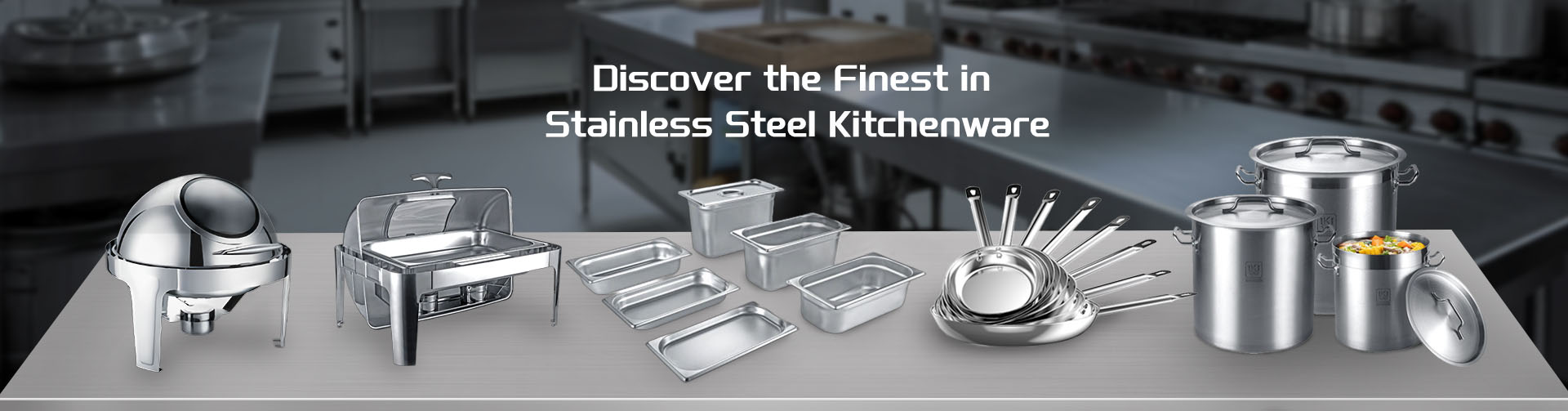
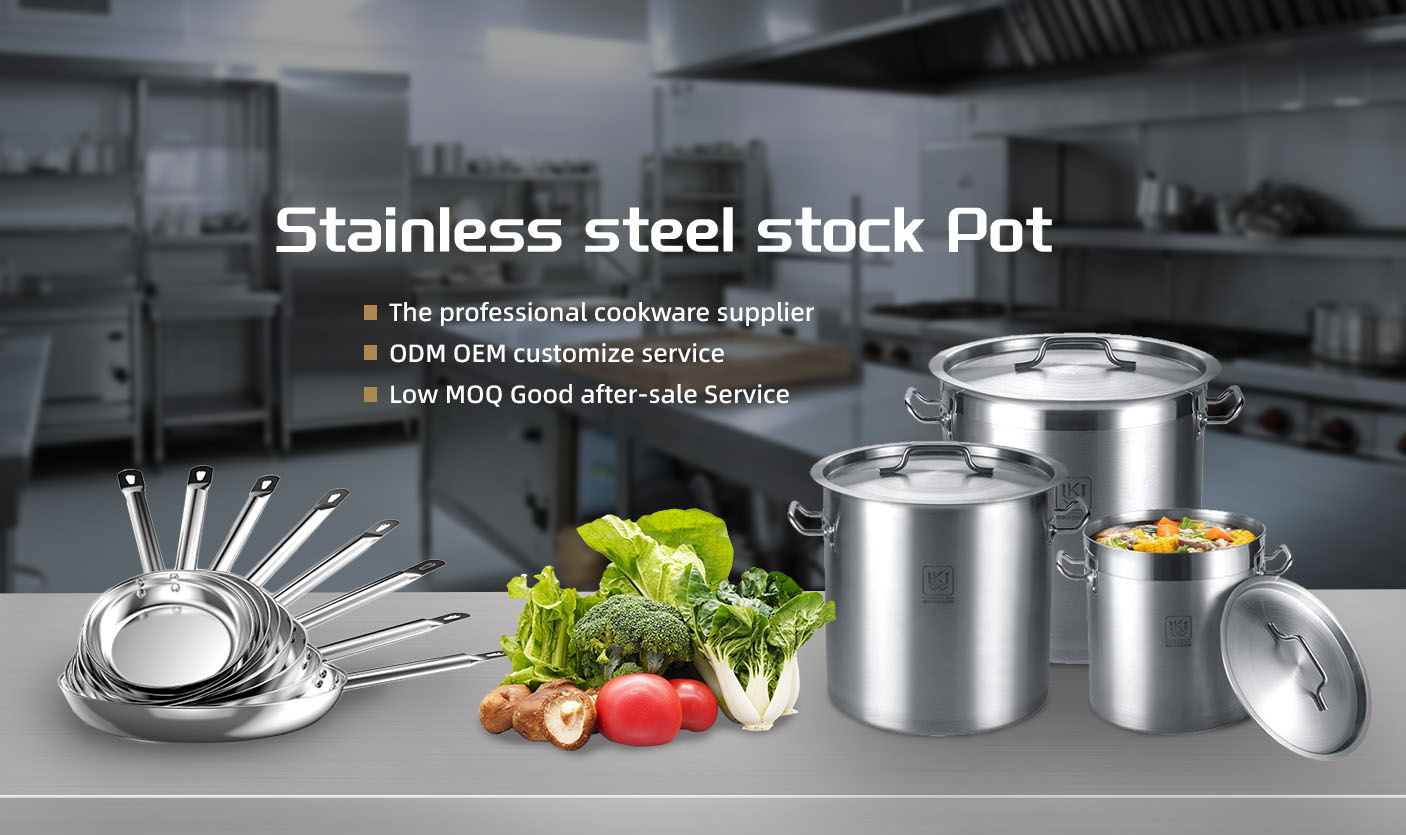
Our factory specializes in general kitchen equipment and buffet products, including Stainless Steel Stock Pots, GN pans, Chafing Dishes, trolley carts, juicer dispensers, and Stainless Steel Barrels.
This combination matters because commercial buyers often source products that work together. GN Containers may move through preparation, holding, transport, and buffet service. Tray trolleys need to accommodate the selected tray format. Chafing dishes must accept their corresponding food and water pans.
A manufacturer familiar with the complete workflow is better positioned to discuss compatibility between those items.
Reliable evaluation starts with a written specification. Depending on the kitchenware category, it should identify:
Product dimensions
Capacity
Main material
Body and lid thickness
Base construction
Surface finish
Handle and lid details
Included accessories
Packing method
Quantity per carton
The specification must refer to the chosen model. One stock pot may differ from another in capacity, body thickness, or composite-base construction. The same principle applies to chafing dishes and trolleys.
Buyers should be cautious when a supplier gives one vague description for an entire product category.
A sample should be handled, cleaned, assembled, loaded, and measured. Looking at it on a meeting-room table is not enough.
For stock pots, inspect the rim, lid fit, handle attachment, base, interior finish, and balance when lifted. For chafing dishes, check the frame stability, pan fit, lid movement, burner position, and ease of cleaning. For tray trolleys, test the runners, wheels, turning behavior, and overall stability.
The approved sample should become a production reference. Photos and written records should identify any final revisions.
Our factory is located in Hetang Town, Jiangmen City, Guangdong Province. It covers around 10,000 square meters and can support approximately 150 people. The location is part of a region known for stainless steel products.
An experienced engineering and R&D team supports the development of new and functional kitchenware. OEM and ODM services are available for buyers developing their own designs or adapting existing models.
Factory scale alone does not guarantee a successful order, but it helps buyers understand whether production space, staffing, product experience, and development support are aligned with the planned volume.
A stainless steel kitchenware OEM ODM manufacturer should explain how a custom request moves from concept to production. Buyers may require changes to dimensions, capacity, material, thickness, handles, lids, surface finish, logo, accessories, or packaging.
A controlled customization process should include:
Requirement review
Feasibility confirmation
Drawing or specification approval
Sample development
Sample testing
Revision confirmation
Mass-production approval
Inspection and shipment
Every modification can affect tooling, cost, lead time, packing, or product performance. Those effects should be discussed before the order is placed.
Producing one strong sample is different from producing hundreds or thousands of consistent units. Buyers should ask how the factory controls material use, forming, welding, polishing, assembly, and packing.
Surface finish deserves particular attention because stainless steel can show scratches, uneven polishing, welding marks, or handling damage. Items packed inside one another need protective layers to prevent abrasion during transport.
Dimensional consistency also affects compatibility. A small variation may cause lids, pans, racks, or trolley runners to fit poorly even when each part appears acceptable on its own.
Export quality includes more than the item itself. Carton identification, packing protection, accessory counts, assembly guidance, and shipping documents all influence whether the order reaches the buyer ready for distribution.
A capable manufacturer should provide a clear communication channel throughout sampling, production, inspection, and delivery. It should also retain confirmed specifications so repeat orders can follow the same reference.
Buyers can review our stainless steel kitchenware categories and company information before requesting model-specific documents. A final sourcing decision should then be based on product fit, verified samples, production communication, and agreed inspection criteria.
Have a current kitchenware design, sample, or sourcing list to evaluate? Click here to request a manufacturing quotation. Share the product category, dimensions, quantity, material requirements, logo, packaging, and destination, and our team will review the project around those details.