kelley@u-kitchenwares.com
+86-15819924651
+86-0750-3719388

GN size is a standardized sizing system used for food pans and containers in professional kitchens. When people ask what is GN size, they are usually referring to the length and width of a Gastronorm container, such as GN 1/1, GN 1/2, or GN 1/3. The reference gn pan size is GN 1/1 at 530 × 325 mm, while smaller formats divide this footprint into modular sections.
This standardization is valuable for restaurants, hotels, catering kitchens, and buffet operations because compatible containers can move between preparation, storage, refrigeration, transport, and service equipment. For buyers sourcing from a GN pan wholesale supplier, matching the correct GN size is therefore more important than simply selecting a pan by capacity.
GN 1/1 is commonly called a full-size Gastronorm pan. Its standard footprint is 530 × 325 mm.
Other GN pan sizes are based on fractions or multiples of this reference format. Common options include:
GN 2/1 for larger equipment
GN 1/1 for full-size applications
GN 1/2 for dividing a full-size space into two sections
GN 1/3 for smaller food portions
GN 1/4 for ingredients and side dishes
GN 1/6 for sauces, toppings, and preparation stations
GN 1/9 for small ingredients and condiments
GN 2/4 for narrow service layouts
Because these formats are modular, several smaller containers can often occupy the same equipment area as a larger container.
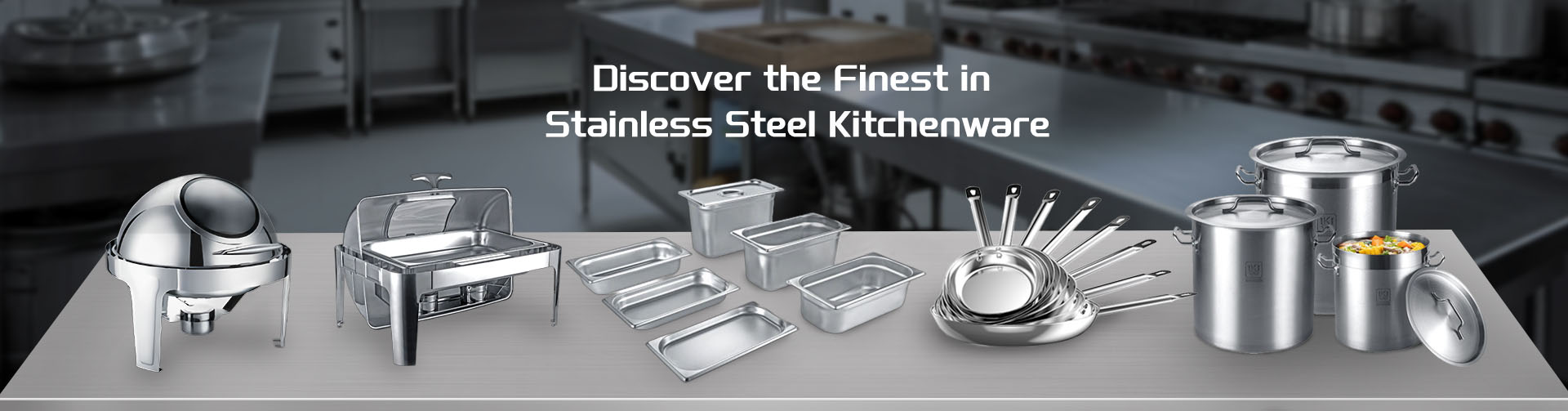
Buyers can review our stainless steel GN Container range for different Gastronorm configurations used in commercial foodservice.
Knowing what is GN size also requires understanding pan depth.
Two GN 1/1 pans may have identical 530 × 325 mm footprints but very different capacities because one is shallow and the other is deep.
Common depths can include 20 mm, 40 mm, 65 mm, 100 mm, 150 mm, and 200 mm depending on the product line.
Shallow pans can make food presentation and access easier. Deeper containers are useful when larger quantities of soups, sauces, prepared ingredients, or batch food need to be stored.
This means buyers should specify both footprint and depth when preparing an order.
A standardized GN pan size helps reduce unnecessary food transfers.
Food can be prepared in a GN Container, stored in compatible refrigeration equipment, transported, and then placed into suitable buffet equipment without moving everything into a differently shaped pan.
The system can also make inventory easier to organize. Lids, containers, racks, and equipment can be grouped by GN format instead of maintaining many unrelated pan dimensions.
Many rectangular chafing dishes are designed to work with GN-style food pans, making the two product categories closely related in buffet service.
A GN pan wholesale supplier needs more than a request for “large GN pans.”
A useful specification should include:
GN fraction or format
Pan depth
Stainless steel requirement
Pan thickness
Solid or perforated construction
Lid requirement
Equipment compatibility
Quantity
Packaging or branding requirements
Our factory produces gn containers as part of a wider commercial kitchenware range and supports OEM and ODM requirements. Different pan combinations, thickness requirements, lids, packaging, and branding can be discussed according to the target market.
GN 1/1 and GN 1/2 formats are frequently useful for larger food portions, while GN 1/3, GN 1/6, and GN 1/9 can organize smaller ingredients or dishes.
There is no single best GN size for every kitchen. The right choice depends on what the container holds, how much food is prepared, how it is stored, and which warmer, chiller, trolley, or buffet system it needs to fit.
Need several GN sizes for a commercial kitchenware range? Send us your GN pan requirements, including size, depth, thickness, lid type, quantity, packaging, and application. We can help you review suitable GN pan sizes and prepare quotation information for your order.