kelley@u-kitchenwares.com
+86-15819924651
+86-0750-3719388

A frying pan can go in the oven only when the pan body, handle, coating, rivets, lid, and removable accessories are all rated for the intended temperature. Stainless steel pans with metal handles are often suitable for oven use, while pans with plastic, wood, silicone, or coated handles may have lower temperature limits.
Never judge oven compatibility from the pan body alone. The least heat-resistant component determines whether the complete frying pan can be placed in the oven safely.
Before moving a frying pan from the stovetop into an oven, inspect the following components.
Stainless steel, cast iron, and some carbon steel pans are commonly used for stovetop-to-oven cooking. Aluminum pans may also be oven-compatible, but their handles, coatings, and attached parts must be checked.
Thin pans may warp more easily under high heat, especially when exposed to rapid temperature changes.
A solid stainless steel handle is generally more suitable for oven cooking than a plastic or wooden handle. Hollow metal handles may remain cooler on the stovetop, but they still become hot inside an oven.
Some silicone-covered handles tolerate moderate oven temperatures, while others are designed only for stovetop comfort. Follow the stated temperature limit instead of assuming all silicone parts are oven-safe.
Some non-stick frying pans can be used in an oven within a specified temperature range. Excessively high heat can damage the coating, cause discoloration, or reduce its release performance.
The allowed temperature varies by coating system and pan construction. Do not place a non-stick pan under a broiler unless the manufacturer specifically approves that use.
A metal lid may tolerate more heat than a glass lid with a plastic knob. Tempered glass lids normally have their own temperature limitations and should not be exposed to sudden thermal shock.
A frying pan may be oven-safe while its lid is not.
Check the bottom of the pan, packaging, user instructions, or supplier specification. The product may show an oven-safe symbol or a maximum temperature.
Useful questions include:
Is the complete pan oven-safe?
What is the maximum continuous temperature?
Is the lid included in that rating?
Can the pan be used under a broiler?
Are removable handle covers required?
Does the temperature limit change for prolonged use?
Is the coating suitable for high-heat roasting?
When this information is unavailable, it is safer to use a confirmed oven-safe baking dish.
Preheat the oven to the required temperature and arrange the rack before beginning stovetop cooking.
Use the frying pan to sear meat, vegetables, or another ingredient on the stovetop. When the food has developed the required surface color, turn off the burner and transfer the pan carefully.
Always use dry oven gloves on both the main handle and helper handle. Metal handles that appear cool after stovetop use can become extremely hot in the oven.
Keep the pan handle turned away from the oven door and allow enough space for air circulation.
After removing the pan, place it on a heat-resistant surface. Leave an oven glove over the handle as a visual warning because the metal remains hot long after the pan leaves the oven.
Do not place a very hot frying pan directly into cold water. Rapid contraction can warp the pan base and may damage coatings or bonded layers.
Allow the cookware to cool gradually before washing.
Other practices that may damage a frying pan include:
Heating an empty pan at maximum power for a long time
Moving a cold glass lid directly into a hot oven
Adding cold liquid to an overheated dry pan
Using a pan above its stated temperature
Placing a coated pan directly beneath an intense broiler
Leaving the handle exposed to a direct gas flame
Cookware with a stable base and secure handle connection is better suited to repeated stovetop-to-oven use.
A Commercial Grade stainless steel frying pan must provide more than basic oven compatibility. Restaurant and catering buyers also consider base flatness, handle strength, heat distribution, cleaning efficiency, repeated-use durability, and consistency between production batches.
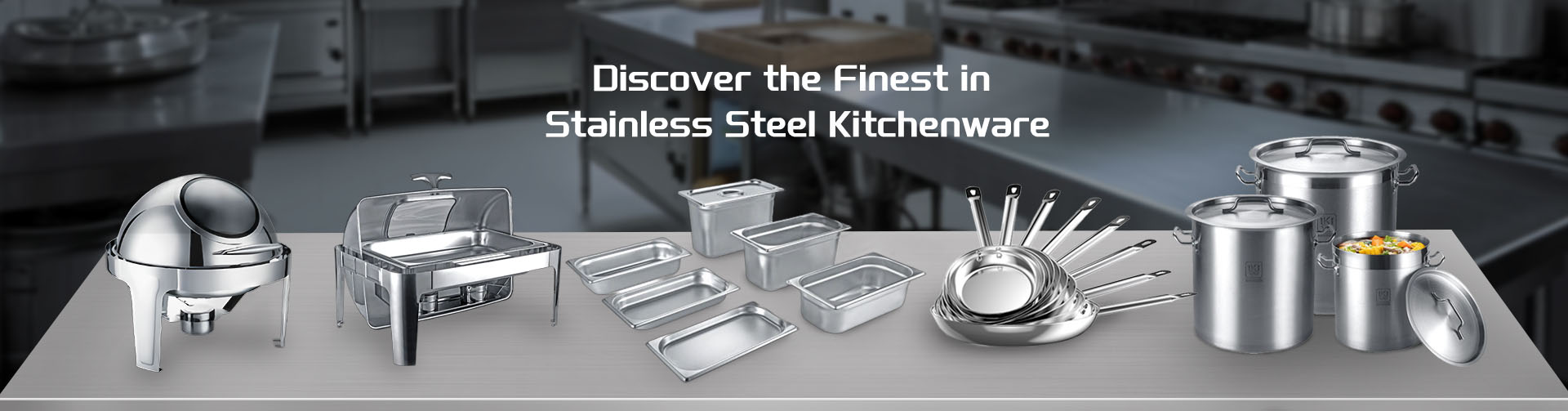
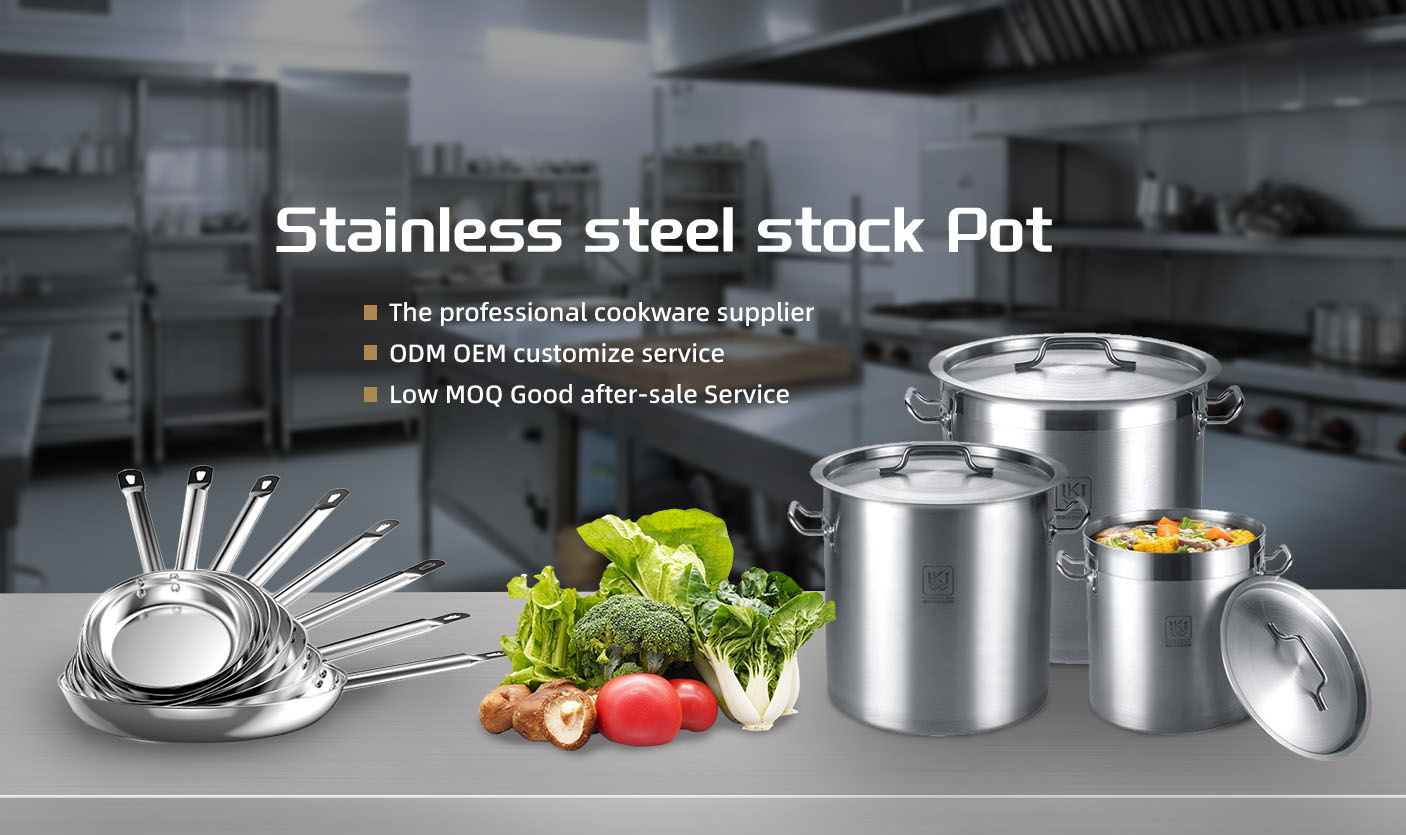
Our factory manufactures stainless steel frying pans, non-stick cooking pans, Griddle Pans, stock pots, GN Containers, Chafing Dishes, trays, trolleys, and other commercial kitchenware.
Our production system includes independent workshops, automated equipment, product-development support, assembly, and inspection from raw materials through finished products.
Customized projects can cover:
Pan diameter and depth
Stainless steel thickness
Single-layer or composite-bottom construction
Handle length and attachment
Helper handles
Surface polishing
Non-stick coating direction
Lids and accessories
Logo application
Retail or bulk packaging
Provide the required pan sizes, cooking temperature, stovetop type, handle structure, coating requirement, order quantity, and packaging format.
Our team can review the complete construction and prepare a quotation for frying pans suited to home retail, restaurants, catering suppliers, hotels, and private-label cookware programmes. Samples, OEM/ODM adjustment, production inspection, and export packing can be included before the bulk order begins.