kelley@u-kitchenwares.com
+86-15819924651
+86-0750-3719388

A stock pot and a Dutch oven are not the same, although both can be used for cooking soups, stews, stocks, and large portions of food. The main difference is the shape, material, weight, heat behavior, and kitchen use. A stock pot is usually taller and lighter, while a Dutch oven is heavier and built for slow, even cooking.
In home kitchens, people may use either one depending on the recipe. In restaurants, hotels, catering kitchens, and buffet preparation areas, a Stainless Steel Stock Pot is often the more practical choice for boiling, simmering, batch cooking, and preparing large-volume dishes.
A stock pot is usually tall with straight sides and a fitted lid. Its height helps hold more liquid without taking up too much stove space. It is commonly used for soup stock, pasta water, seafood boils, sauces, broths, beans, and large batches of vegetables.
For a restaurant kitchen, the biggest advantage is capacity. Cooks can prepare more food in one vessel, then move the finished dish into GN pans, Chafing Dishes, or holding equipment for service.
This is why stainless steel stock pots are widely used in commercial kitchens. They are easier to clean than many coated cookware options and can handle repeated daily use.
A Dutch oven is usually thicker and heavier. It may be made from cast iron, enameled cast iron, or heavy-duty metal. It holds heat very well, which makes it suitable for braising, baking bread, slow stews, and dishes that need long, steady cooking.
The trade-off is weight. A Dutch oven is not always convenient when kitchen staff need to move large batches quickly.
For restaurants with high output, the stock pot is often easier to handle during prep.
Both tools can cook soups and stews. Both can simmer food slowly. Both can be used for large family meals or small commercial kitchens.
The difference appears when the work becomes repeated and high-volume. A stock pot is made for liquid-heavy cooking and kitchen workflow. A Dutch oven is better when heat retention and slow cooking texture matter more.
If the kitchen needs to prepare soup for a buffet line, the stock pot usually makes more sense. If the kitchen wants braised short ribs or a slow-cooked casserole, a Dutch oven may be better.
A commercial kitchen does not choose cookware only by recipe. It also considers cleaning speed, storage, durability, staff handling, and how the food moves from cooking to serving.
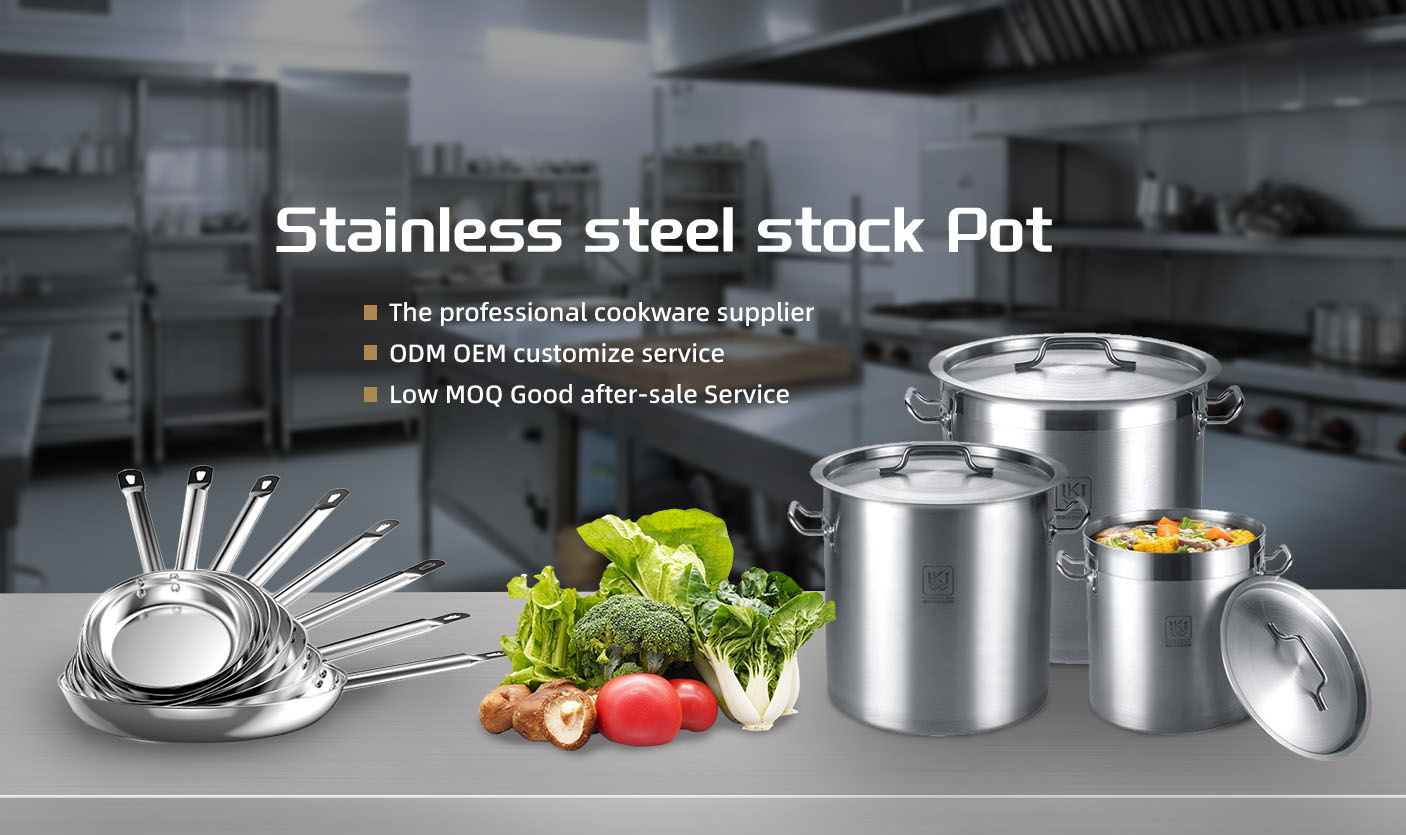
Our stainless steel stock pot series is designed for restaurants, hotels, catering companies, buffet suppliers, and food preparation teams that need dependable cookware for repeated use. For commercial grade stock pot bulk supply, buyers usually look at capacity, handle strength, lid fit, wall thickness, bottom structure, and carton protection.
A stock pot may look like a basic product, but in daily kitchen work, weak handles or thin construction can quickly become a problem.
For soup, broth, seafood, pasta, and large-volume boiling, choose a stainless steel stock pot. For braising, roasting, oven cooking, and slow heat retention, choose a Dutch oven.
Kitchenware buyers should also think about what comes after cooking. If food will be moved into buffet service, chafing dishes, GN pans, and food trolleys should be planned together with the cookware.
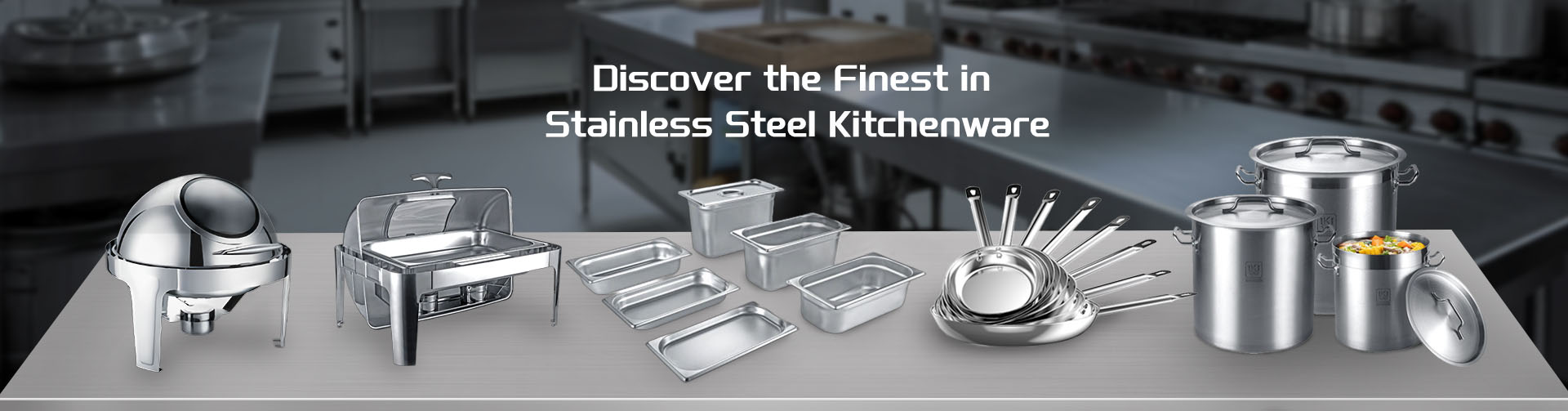
We support stainless steel stock pots, GN Containers, chafing dishes, trolley carts, Juicer Dispensers, and buffet service products for restaurants, catering suppliers, hotels, and foodservice distributors. For stock pot orders, size range, lid style, packaging, and order quantity can be discussed according to the target market.