kelley@u-kitchenwares.com
+86-15819924651
+86-0750-3719388

The broad commercial sector connected with food and drinks is usually called the food and beverage industry, commonly shortened to the F&B industry.
The term covers a wide range of businesses, from factories that process ingredients to restaurants that serve finished meals. More specific terms are used when describing one part of this wider industry.
The food and beverage industry includes businesses involved in producing, processing, distributing, selling, preparing, and serving food or drinks.
It can include:
Food manufacturers
Beverage producers
Ingredient suppliers
Wholesalers
Supermarkets
Restaurants
Hotels
Caterers
Food trucks
Institutional kitchens
Equipment suppliers
Because the category is so broad, it is useful for market discussions but less precise when describing an individual company.
Foodservice refers mainly to businesses that prepare food for customers to eat away from their own home kitchen.
Restaurants, hotel kitchens, workplace canteens, school cafeterias, hospitals, catering companies, and takeaway businesses all operate within foodservice.
These businesses usually need equipment for cooking, storage, holding, transport, and serving rather than industrial food-processing machinery.
Commercial foodservice earns revenue directly from food sales. Restaurants and cafés are clear examples.
Institutional foodservice supports another organization. A school kitchen, hospital kitchen, or staff canteen may operate primarily to serve students, patients, or employees.
Their purchasing priorities can differ. A restaurant may focus heavily on presentation, while a hospital may give greater attention to portion control, cleaning, and workflow consistency.
Hospitality is a larger service category that includes accommodation, guest service, events, travel, entertainment, food, and beverages.
A hotel restaurant is part of both hospitality and foodservice. A hotel banquet department may also operate as a catering business.
A food factory, however, belongs to the food and beverage industry without normally being described as a hospitality company.
Food manufacturing involves turning ingredients into packaged or prepared products on an industrial scale.
Examples include factories producing:
Sauces
Bread
Frozen meals
Dairy products
Snacks
Canned food
Beverages
Meat products
Dry ingredient blends
Food manufacturers often require processing lines, packaging systems, quality-control equipment, and larger production vessels.
Their equipment needs are different from those of a buffet restaurant.
Catering businesses prepare food for events, workplaces, institutions, or private customers.
Food may be cooked in a central kitchen and transported to another location for service.
This creates demand for equipment such as:
GN pans
Stock pots
Soup kettles
Beverage dispensers
Serving trolleys
Insulated containers
Portability, setup speed, and replacement-part availability are especially important for caterers.
Retail food businesses sell products directly to consumers.
Supermarkets, bakeries, convenience stores, delicatessens, and prepared-food counters belong to this category.
Some retailers cook or assemble food on site, while others sell packaged products supplied by manufacturers.
| Term | Main Activity |
|---|---|
| Food and beverage industry | Covers the complete food and drink market |
| Foodservice | Prepares and serves meals |
| Hospitality | Provides guest-focused accommodation and service |
| Food manufacturing | Produces food on an industrial scale |
| Catering | Prepares food for events or contracted service |
| Retail food | Sells food directly to consumers |
A business can belong to more than one category. A hotel may operate accommodation, restaurant, bar, and catering services within the same property.
A Food and Beverage Equipment Manufacturer does not normally produce the meal itself.
Instead, it supplies the cookware and serving systems used by restaurants, hotels, canteens, catering companies, and distributors.
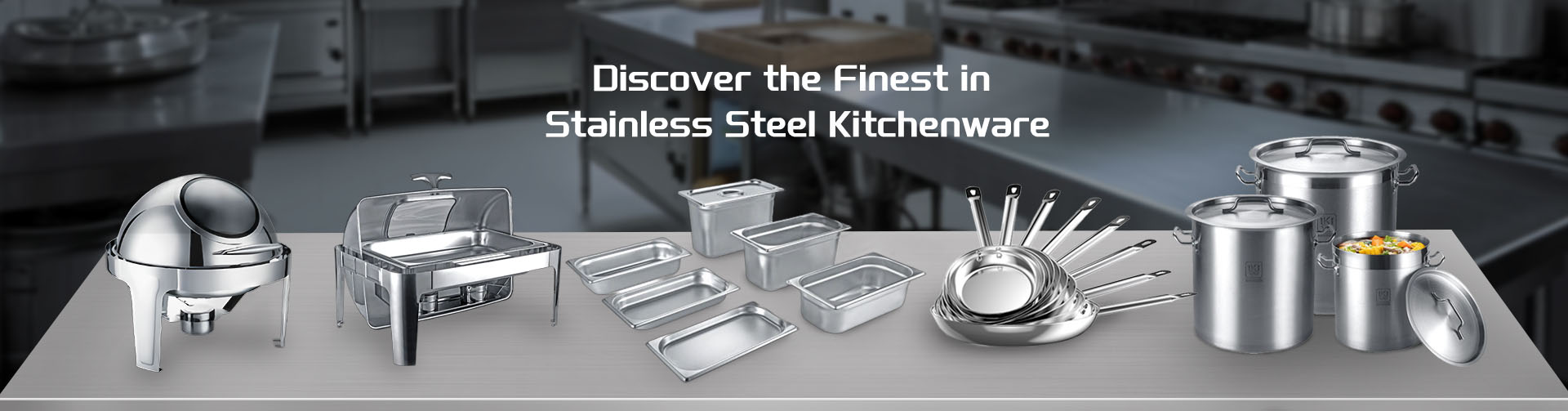
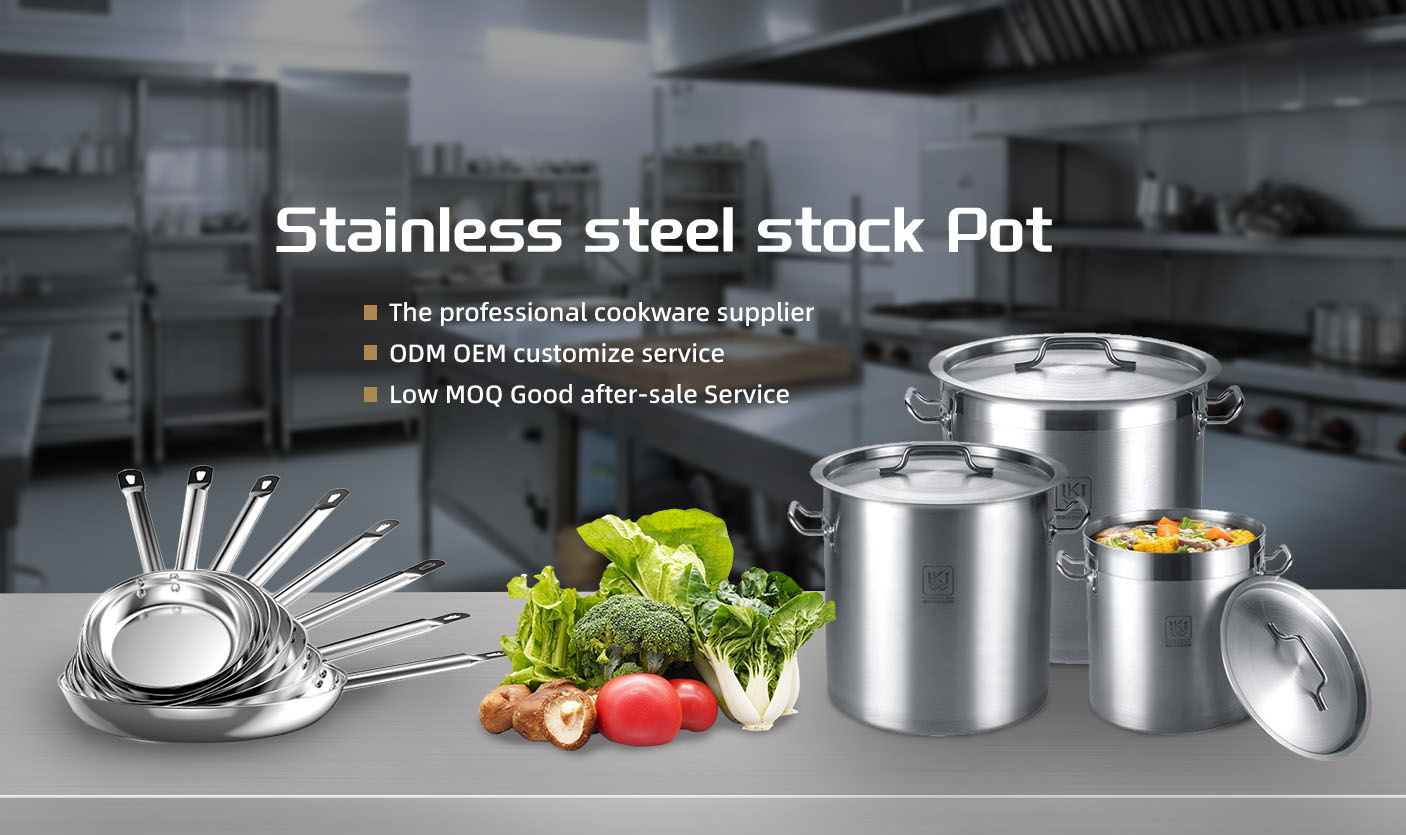
Our product range includes stainless steel stock pots, sauce pots, GN Containers, chafing dishes, soup kettles, beverage dispensers, BBQ Griddles, tray trolleys, serving carts, buffet holders, and buckets.
These products support cooking, holding, portioning, beverage service, buffet presentation, and movement within commercial kitchens.
Our manufacturing process covers design management, mold making, forming, product assembly, inspection, and packaging.
OEM and ODM orders can involve adjustments to dimensions, capacity, handle structure, lid design, surface finish, logo, and cartons. We also inspect products from raw-material stages through finished production.
This allows distributors and project buyers to develop a coordinated product range rather than purchasing unrelated items from multiple sources.
Send us the target customer group, required product categories, capacities, materials, finishes, branding, packaging, destination market, and expected quantity.
We will prepare a coordinated proposal from a Food and Beverage Equipment Manufacturer for restaurants, hotels, caterers, and commercial kitchen distributors.