kelley@u-kitchenwares.com
+86-15819924651
+86-0750-3719388

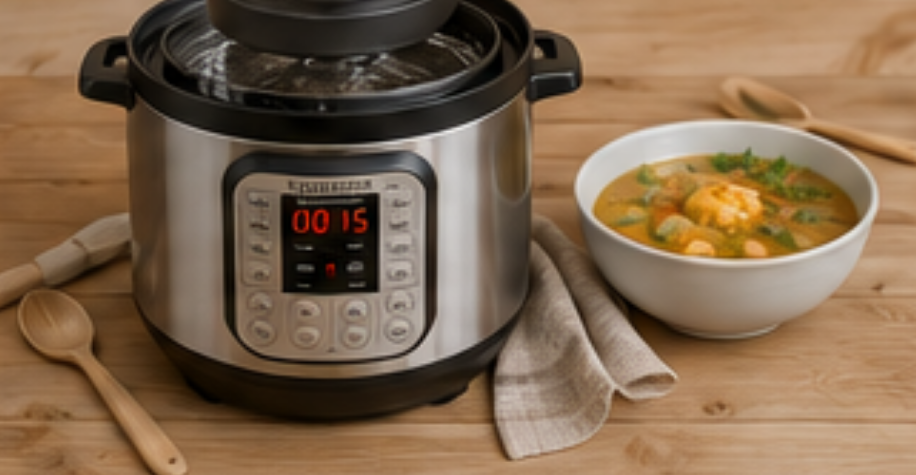
An Instant Pot or similar electric multicooker can reheat soup, but the best method depends on the soup’s thickness, starting temperature, quantity, and appliance model.
Thin broth reheats more easily than a thick cream soup, chili, or starch-heavy stew. Very thick soup can scorch on the bottom before the center becomes hot.
For many soups, reheating with the sauté or low-heat function provides better control than using pressure.
Do not reheat soup that has an unusual odor, visible mold, excessive gas, or an uncertain storage history.
Reheating does not make spoiled food safe.
Transfer the soup from its storage container into the clean inner pot.
Add a small amount of water or stock when the soup has thickened in the refrigerator.
Frozen soup should ideally be thawed in the refrigerator before reheating.
When the appliance instructions allow reheating from frozen, divide large frozen blocks into smaller pieces so the center heats more evenly.
The sauté function allows direct heating with the lid open.
This method is suitable for most soups because the user can stir the contents and monitor the bottom of the pot.
Place the soup in the inner pot.
Add a small amount of liquid if required.
Select a low or normal sauté setting.
Stir frequently from the bottom upward.
Reduce the heat when the soup begins simmering.
Check the temperature in several areas.
Serve immediately or transfer to suitable hot-holding equipment.
Do not leave the pot unattended while using the sauté function.
Pressure reheating may be suitable for a large quantity of thin soup when the appliance manual and recipe allow it.
Use the required minimum liquid and do not exceed the maximum fill line.
Cream soups, cheese soups, bean purées, chili, and soups thickened with flour or starch may trigger a burn warning or heat unevenly.
The pressure method also prevents stirring during heating, making it harder to identify food sticking to the base.
Follow the appliance instructions for natural or controlled pressure release.
Hot soup can foam or spray through the steam release when pressure is released too quickly.
Even when the surface is steaming, the center may remain cooler.
Stir the soup thoroughly and check the temperature near the center, sides, and bottom.
For food reheated for hot holding in a commercial operation, the FDA Food Code specifies that cooked, cooled food should reach at least 165°F or 74°C for 15 seconds before entering hot holding.
There is no fixed time that applies to every soup.
Reheating time depends on:
Soup quantity
Refrigerator or freezer temperature
Appliance wattage
Soup thickness
Ingredient size
Added liquid
Selected function
Frequency of stirring
A thermometer is more reliable than time alone.
The keep-warm function is designed mainly to maintain already-hot food.
It may heat cold soup too slowly, allowing the food to remain for an extended period at unsuitable temperatures.
Reheat the soup rapidly first, then use the keep-warm function only when the appliance maintains the required holding temperature.
Use a lower heat setting and stir frequently.
Add milk, cream, or cheese after the main soup has become hot when the recipe allows it.
Noodles absorb liquid during storage and may become overly soft during reheating.
Add extra broth or reheat the noodles separately when texture is important.
Use gentle heat and avoid prolonged cooking.
Seafood can become tough when reheated for too long.
Reheating equipment raises cold food to a safe service temperature.
Hot-holding equipment maintains food that is already hot. These are different processes.
An electric soup warmer should not be relied upon to reheat a large volume of refrigerated soup unless the manufacturer specifically approves that function.
We supply electric soup warmers, stainless steel food warmers, round Chafing Dishes, roll-top chafers, stock pots, gn pans, and buffet-service accessories.
Our factory can review capacity, voltage, power, thermostat structure, outer finish, removable inner pot, lid design, logo, packaging, and target-market requirements.
Quality checks are performed from incoming materials through finished-product inspection.
Developing soup-service equipment for restaurants, hotels, convenience stores, cafeterias, or catering distributors?
Provide the required capacity, voltage, power, temperature range, inner-pot material, lid structure, finish, packaging, and expected volume. We will prepare an Electric Soup Warmer solution for your market.
Previous: How To Replace Shower Drain?