kelley@u-kitchenwares.com
+86-15819924651
+86-0750-3719388

This is a question many buyers ask before placing repeat orders for catering, takeaway, buffet, or central kitchen use: can I microwave aluminum tray?
The short answer is that it depends on the microwave type, the tray shape, and the actual use environment. In some controlled foodservice applications, aluminum trays may be used in certain microwave systems, but in many standard microwave ovens, metal can still create safety concerns. That is why professional buyers usually look beyond the tray itself. What they really want to know is which material works better, which format is easier to standardize, and which supplier can offer a more reliable long-term solution.
For commercial kitchens, that discussion often leads to stainless steel gn pans. A tray in this category is not only a food container. It is part of a working system used for prep, storage, display, transport, and kitchen organization. That is also why buyers comparing aluminum trays often end up looking at gastronorm trays and the wider Gastronorm system when they want something more stable for professional use.
For home use, people may ask this question out of convenience. In commercial use, the issue is much bigger. A buyer may be sourcing for hotel kitchens, buffet lines, catering companies, restaurant chains, hospital canteens, or food factories. In those cases, a tray is not used once and thrown away. It has to fit into a workflow.
That changes the whole buying logic. The tray must match equipment, handle repeated cleaning, work in storage areas, and stay consistent across batch orders. If the wrong material is selected, the result is not just inconvenience. It can affect food handling speed, replacement cost, and customer satisfaction.
This is one reason many professional buyers no longer focus only on whether a tray can go into a microwave. They also ask whether the tray fits a broader kitchen system and whether it can support repeat operations without creating extra trouble.
The reason people hesitate about aluminum trays is simple. Metal and microwaves have always been treated carefully together. In some cases, specially designed aluminum trays may be used under controlled conditions, but that does not mean every aluminum tray is suitable for every microwave oven.
For buyers, that uncertainty is a real problem. A product may look practical at first, but if the usage conditions are limited or easy to misunderstand, complaints can follow very quickly. This becomes even more serious in foodservice distribution, where one item may be sold across different markets with different equipment habits.
That is why many commercial buyers prefer to move the discussion away from microwave guesswork and toward standardized kitchen solutions. A tray that works well across storage, prep, buffet display, and transport often has more practical value than a tray chosen only for one possible heating scenario.
In professional kitchens, consistency usually matters more than short-term convenience. That is where GN pans have a stronger advantage. Instead of being selected for one isolated task, they are chosen because they fit a recognized system.
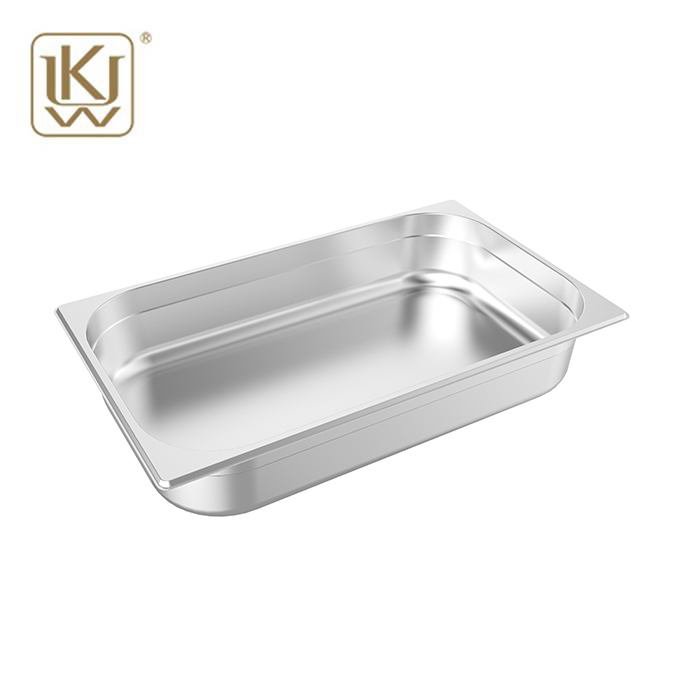
Our 2/1 GN Pan is part of that logic. It is built to the Gastronorm format, which makes it easier to use in commercial kitchens where sizing compatibility matters. A buyer does not need to guess whether the tray can match common kitchen setups. The value comes from standard dimensions, easier organization, and smoother movement between workstations.
This is especially important for importers, wholesalers, and project buyers. They are not only choosing a container. They are building a product line or supplying a foodservice operation that needs stable specifications. Once a kitchen uses Gastronorm products, purchasing becomes easier, replacement becomes clearer, and workflow becomes more predictable.
There are many tray types on the market, but not all of them help buyers reduce confusion. Gastronorm remains popular because it gives kitchens a shared sizing language. When products follow that format, they are easier to match with counters, trolleys, prep areas, storage racks, and buffet equipment.
That is why gastronorm trays are still widely preferred in commercial foodservice. Buyers do not want to waste time comparing unclear dimensions or dealing with mismatched products in the middle of a project. They want something that fits, stacks, and works without creating unnecessary follow-up issues.
For that reason, Gastronorm is not only a technical standard. It is also a purchasing advantage. It helps buyers make decisions faster and manage stock more easily. In large-volume procurement, that kind of clarity is often worth more than a low unit price on a non-standard tray.
In real business, buyers are usually thinking about more than material. They want to know whether repeat orders will stay consistent, whether the tray size is accurate, whether the finish is stable, and whether the product can support long-term kitchen use.
This is where many simple-looking products become more complicated than expected. A tray may seem easy to source, but once batch consistency, equipment matching, and customer expectations enter the conversation, supplier strength matters much more.
A good supplier helps solve these concerns early. That includes stable sizing, dependable quality, practical communication, and the ability to support larger programs. In many cases, buyers also want OEM or ODM support because they are building a broader kitchenware line rather than buying one tray size only.
For distributors and private label buyers, trays are often part of a bigger plan. They may want multiple GN sizes, customized packaging, logo support, or a more complete stainless steel kitchenware range. In that situation, choosing a supplier with OEM and ODM ability makes the business easier to scale.
That is one reason standardized GN products are attractive. They give buyers a solid starting point for expansion. Instead of selling isolated items, they can develop a more complete category around a system that the market already understands.
Our 2/1 GN Pan is suitable for that kind of cooperation. It is designed for food storage, display, and transport in professional settings, which makes it more useful for long-term commercial supply. For buyers who want a supplier rather than a one-time seller, this matters a lot.
So, can I microwave aluminum tray? In some cases, possibly, but it should never be treated as a simple yes-or-no decision for every market and every appliance. For commercial buyers, that uncertainty is exactly why material choice should be connected to the full use scenario.
If the goal is better kitchen organization, more reliable sizing, and easier repeat purchasing, a standardized GN solution often makes more sense. That is where stainless steel pans in the Gastronorm system offer stronger long-term value. They are easier to integrate into professional workflows, easier to reorder, and easier to build into a wider product line.
The question can I microwave aluminum tray sounds simple, but for commercial buyers it usually leads to a bigger decision about material, system compatibility, and supplier reliability. In many foodservice settings, the better choice is not just the tray that seems convenient in the moment. It is the tray system that keeps operations more organized and more dependable over time.
That is why many buyers continue to choose gastronorm trays and other Gastronorm products for kitchens, buffets, catering programs, and distribution supply. Our 2/1 GN pan is built for that kind of professional use, with standardized sizing and support for broader OEM and ODM cooperation.
If you are comparing tray materials, planning a GN product range, or looking for a supplier for catering and commercial kitchen projects, contact us with your size, depth, or packaging needs. We can help you review suitable options and support your sourcing plan with practical product guidance.