kelley@u-kitchenwares.com
+86-15819924651
+86-0750-3719388

For commercial kitchens, catering teams, buffet operations, and food preparation lines, this issue is more than a cleaning problem. Burnt residue affects pan appearance, slows down turnover, and creates extra labor pressure during service and closing shifts. Buyers who source stainless steel pans for hospitality or foodservice usually care about the same thing: cookware should be easy to clean, strong enough for repeated use, and practical for daily high-frequency washing. That is why the right cleaning method matters almost as much as the material itself.
Food usually burns onto a pan when heat is too high, moisture evaporates too quickly, or the pan is left unattended for too long. Sugary sauces, dairy-based mixtures, starch-heavy foods, and reduced gravies are especially likely to stick and carbonize. Once that layer hardens, simple rinsing will not remove it.
In commercial use, another reason is holding food too long during warming or service. Steam table pans, buffet pans, and prep pans may not be used as frying cookware, but they still face residue buildup when sauces dry around the corners, food remains are reheated repeatedly, or the pan stays on the line too long without timely cleaning. Over time, that residue becomes harder to remove and makes the pan look older than it really is.
The best first step is to avoid aggressive scrubbing. Fill the pan with warm water and add a small amount of dish soap. Let it soak long enough for the burnt layer to soften. In many cases, this already removes a large part of the residue. Once the food has loosened, use a soft sponge or cloth to wipe the surface clean.
This method works well because burnt food usually releases more easily when moisture returns to the dried layer. It is also the safest option for daily cleaning because it avoids unnecessary wear on the stainless steel surface. For kitchens that clean pans in batches, soaking first is often the most efficient method because it reduces labor and improves consistency.
If soaking alone is not enough, gentle reheating with water can help. Add water to the pan until the burnt area is covered, then warm it on the stove or heating source for a few minutes. Do not overheat. The goal is to loosen the residue, not cook it again. As the water heats, the burnt layer often begins to lift from the bottom or corners.
After that, let the pan cool slightly and use a wooden or silicone utensil to lift the softened residue. This step is especially useful for stainless steel pans because it helps release stuck food without using sharp tools. In foodservice environments, this method saves time when staff need to clean cookware quickly between service rounds.
For darker stains or thicker burnt patches, baking soda is one of the most practical cleaning aids. After soaking the pan, sprinkle baking soda over the burnt area and add a little water to form a light paste. Let it sit for a while, then rub gently with a non-abrasive pad. The residue usually begins to break down without the need for harsh scraping.
Baking soda is popular because it is simple, low-cost, and suitable for regular kitchen use. It also helps reduce odor and surface discoloration caused by burnt oils or sauces. For buyers serving restaurants, canteens, or buffet lines, pans that respond well to this kind of routine cleaning are easier to maintain over time.
Another useful method is water mixed with a small amount of vinegar. Add the mixture to the pan, heat it gently, and allow the residue to loosen. This can work especially well when burnt food is combined with mineral marks or dried sauce film. Once the pan cools, wipe the inside and rinse thoroughly.
This method is practical because it helps restore a cleaner look without relying on heavy abrasives. In stainless steel service pans and steam table pans, that matters because appearance is part of daily presentation. A pan that looks cleaner after repeated use supports a better impression in buffet lines, open kitchens, and serving stations.
One of the biggest mistakes is trying to remove burnt food with steel wool, sharp metal tools, or very aggressive scraping. That may remove the residue faster in the short term, but it can leave scratches, reduce surface smoothness, and make future cleaning harder. Once the finish is damaged, food particles and stains may collect more easily.
This is especially important in commercial purchasing. Buyers do not just want pans that look good when new. They want products that remain easy to clean after months of repeated use. Stainless steel pans with smooth formed interiors and rounded corners are easier to wash because there are fewer places for food to build up.
Cleaning results are strongly influenced by product design. A pan with rounded inner corners, smooth edges, and one-piece forming is easier to maintain than a pan with rough joints or difficult angles. In high-use catering or buffet operations, that difference becomes very clear. Staff need cookware that can be cleaned quickly and stacked back into service without long scrubbing time.
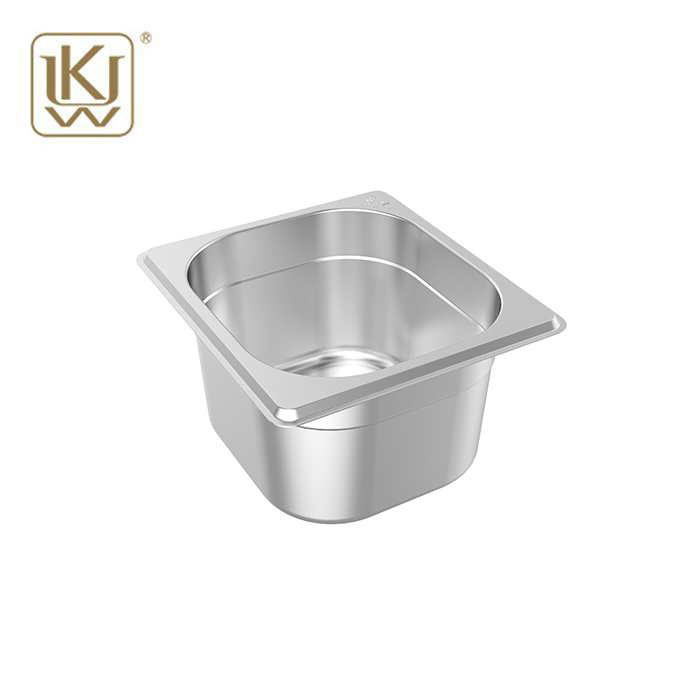
This is one reason stainless steel gn pans remain widely used in foodservice. Their smooth inner surfaces, practical shape, and stackable structure make them suitable for repeated loading, washing, and storage. For B-end buyers, easy-clean design reduces labor pressure and supports faster kitchen turnover, which is often a bigger value point than low purchase price alone.
The easiest way to remove burnt food is to prevent heavy burning in the first place. That starts with better temperature control. Food should not stay too long over direct heat or in a heated holding environment after moisture has dropped too far. Timely transfer, stirring, and cleaning between uses also help reduce buildup.
In commercial kitchens, routine handling matters a lot. Staff should avoid leaving empty pans on heat, avoid reheating dried residue repeatedly, and wash pans before food remains harden completely. Once burnt layers sit overnight, cleaning takes much longer the next day.
For operators buying in volume, these small details affect the real service life of the cookware. A well-made stainless steel pan can perform for a long time, but proper use and cleaning habits still play a major role in keeping it in good condition.
When wholesalers, distributors, hotels, or catering suppliers choose food pans, they usually look beyond size and price. They care about whether the pan is easy to clean, whether it can handle repeated heating and washing, whether it stacks well, and whether the surface stays presentable after regular use. Burnt residue is one of the quickest ways to test that in real kitchens.
If a pan is difficult to clean, labor cost goes up. If it scratches too easily, the product looks old too quickly. If the shape traps food in corners, staff spend more time on every wash cycle. These are practical pain points in commercial kitchens, and they directly affect reorder decisions. Easy maintenance is not a minor feature. It is part of product value.
Getting burnt food off a pan is usually easiest when the residue is softened first, then removed with the right cleaning method. Warm soaking, gentle reheating with water, baking soda, and light vinegar cleaning are all effective ways to loosen burnt buildup without damaging the surface. The goal is not to scrub harder. The goal is to clean smarter and protect the pan for long-term use.
For commercial kitchens and foodservice buyers, cleaning efficiency matters just as much as durability. A well-designed stainless steel pan with a smooth interior and practical structure is easier to maintain, easier to reuse, and better suited for daily high-frequency work.
If you are sourcing stainless steel gn pans or buffet food containers and want help with size selection, material details, or product matching for your market, feel free to contact us. We can provide practical guidance and help you choose solutions that are easier to use, easier to clean, and better suited for professional kitchen operations.
Previous: How To Keep Soup Warm for A Party?
Next: What Is A Frying Pan?