
2 Tiers Drinking Wheeled Serving Trolley
- Product Information
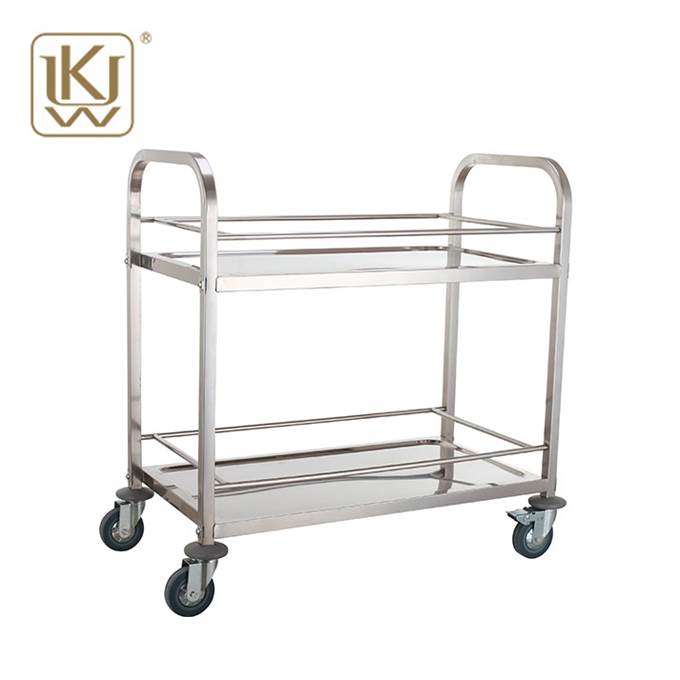
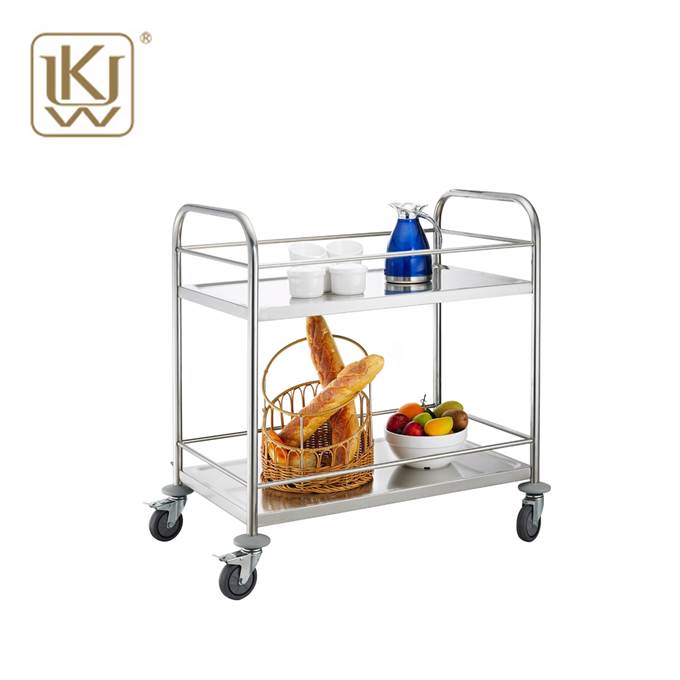
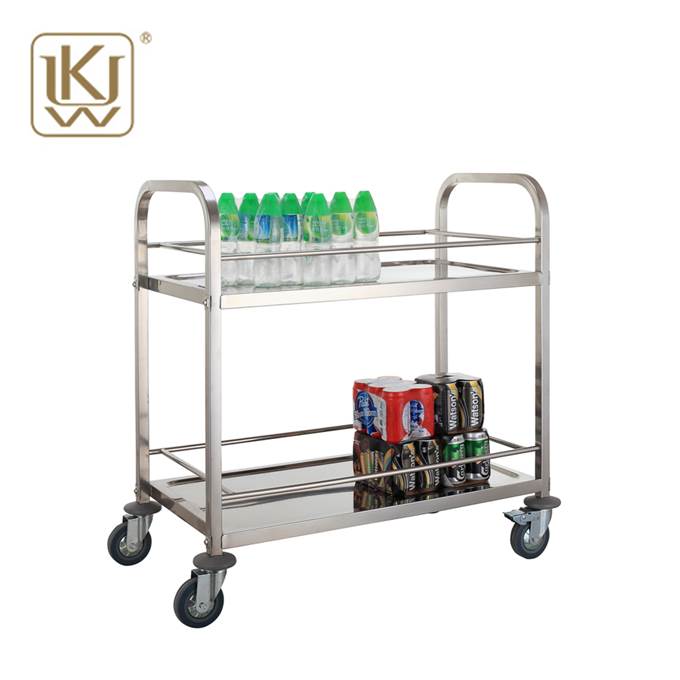
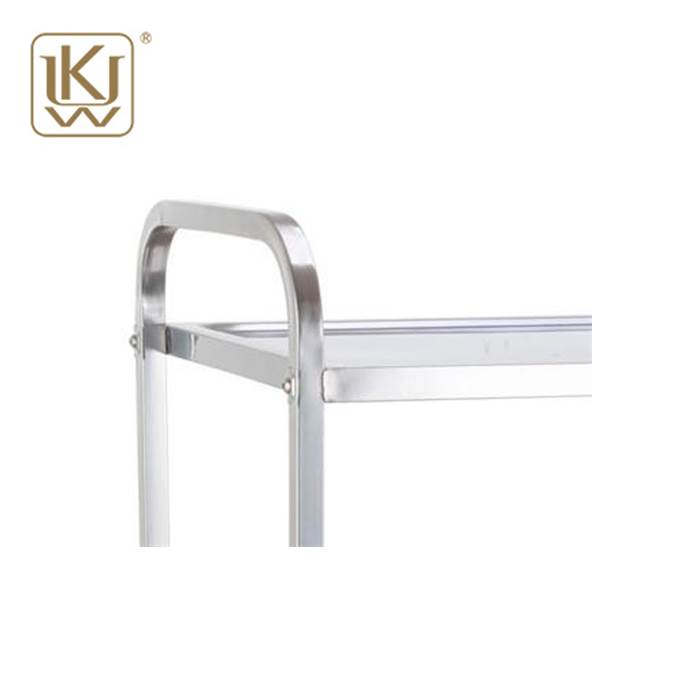
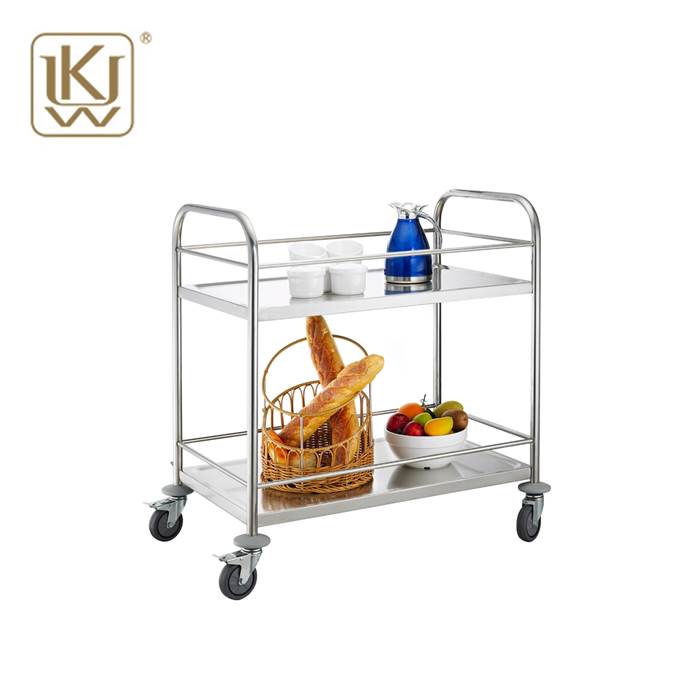
The Wheeled Serving Trolley is a professional trolley equipment with a stainless steel structure at its core, integrating carrying, mobility, and layered storage. It is primarily used in environments requiring frequent transfer of items and where hygiene, stability, and load-bearing capacity are critical. This product features a double-layered tray structure and four swivel casters, enabling efficient item movement in limited spaces while ensuring both stability and flexibility. The overall frame is constructed from metal tubing and stainless steel trays, with surface treatments focused on ease of cleaning and corrosion resistance, allowing for long-term use in high-frequency environments.
Wheeled Serving Trolley Parameters:
| CODE | Dimension(mm) |
| QRD-L2 | 950*500*950 |
| QRD-M2 | 850*450*900 |
| QRD-S2 | 750*400*835 |
Wheeled Serving Trolley Features:
1. Load-Bearing Structure
This Wheeled Serving Trolley features a double-layered, integrally welded frame structure. The trays and columns form a stable load-bearing system, with a single-layer load capacity stably controlled within the 40–60 kg range, and a total load capacity exceeding 80 kg for continuous use. The metal structure distributes stress evenly, reducing the risk of localized deformation, making it suitable for frequent pushing and long-term use under full load, while maintaining structural dimensional stability.
2. Stainless Steel Material
The main frame and trays are made of food-grade stainless steel, offering stable corrosion resistance and maintaining surface integrity even in humid or frequently cleaned environments. The stainless steel surface is brushed or polished, providing superior resistance to cleaning agents compared to ordinary carbon steel, and is less prone to oxidation spots during long-term use, making it suitable for environments requiring strict hygiene management.
3. Caster System
The bottom is equipped with four industrial-grade swivel casters, each with a diameter of approximately 100 mm and a rolling resistance of less than 0.03, allowing for smooth movement on tile, epoxy, or concrete floors. Some casters support directional locking, preventing trolley movement when stationary and enhancing the overall safety and controllability of the Wheeled Serving Trolley during loading, unloading, and parking.
4. Edge Protection
The trays feature flanged or railing-style edge designs, with a protective height controlled within the 20–30 mm range, effectively limiting the risk of items sliding during movement. The edges are rounded to reduce the possibility of scratches during contact, improving overall safety in high-frequency operation environments and meeting conventional commercial equipment safety design requirements.
5. Size Configurations
The product is available in various standard sizes, including 950×500×950 mm, 850×450×900 mm, and 750×400×835 mm models, covering different space and load requirements. The size proportions have undergone stability testing, ensuring a reasonable center of gravity distribution, allowing for stable steering even under full load, and making it suitable for various working aisle widths.
Wheeled Serving Trolley Application:
1. Hotel and Restaurant Operations
In hotel and restaurant operations, the Wheeled Serving Trolley is commonly used for the centralized transport of food, beverages, or tableware. Its double-layered structure allows for categorized placement, improving the efficiency of each transport. The trolley operates smoothly and quietly, making it suitable for use in guest areas, minimizing disruption to the dining environment and meeting the dual requirements of efficiency and image in food service.
2. Commercial Kitchens
Commercial kitchens are often compact and experience frequent activity. This Wheeled Serving Trolley can be used for temporary storage of ingredients, transport of semi-finished products, or centralized management of tools. The stainless steel material is resistant to high humidity and grease, making it easy to clean and disinfect. Its flexible casters reduce the need for manual trips, improving the overall workflow in the kitchen.
3. Food Preparation Areas
In centralized food preparation areas, the Wheeled Serving Trolley can be used as a temporary workbench and item transfer platform. The double-layered tray structure allows for upper-level operation and lower-level storage, efficiently allocating workspace. Its stable load-bearing capacity ensures structural reliability even when stacking multiple containers, making it suitable for continuous food preparation and distribution processes.
Wheeled Serving Trolley Maintenance:
Regular Cleaning: To maintain hygiene and prolong the life of the trolley, it should be cleaned regularly. This involves wiping down the surfaces with a mild detergent and water, followed by a thorough rinse and dry. Avoid using abrasive cleaners or scouring pads, as they can scratch the surface and damage the finish. Regular cleaning prevents the buildup of food particles and bacteria, ensuring compliance with health standards.
Lubrication of Wheels: The wheels of the trolley should be lubricated periodically to ensure smooth movement. Use a food-safe lubricant to prevent any contamination of food items. Lubrication reduces friction and wear on the wheel bearings, extending the life of the wheels and ensuring consistent performance. Check the wheels regularly for signs of wear or damage and replace them as needed.
Inspection and Maintenance: Regularly inspect the trolley for any signs of damage, such as dents, scratches, or loose components. Tighten any loose bolts or screws and repair or replace damaged parts promptly. This prevents further damage and ensures the trolley remains safe and functional. A well-maintained trolley is less likely to break down during use, minimizing disruptions in the kitchen.
Proper Storage: When not in use, the trolley should be stored in a dry, clean area away from direct sunlight and extreme temperatures. This prevents rust and corrosion, which can compromise the structural integrity of the trolley. Storing the trolley in a designated area also helps keep the kitchen organized and reduces the risk of accidents.
Avoid Overloading: To prevent damage to the trolley and ensure safe operation, avoid overloading it beyond its recommended weight capacity. Distribute the weight evenly across the shelves to maintain balance and stability. Overloading can cause the wheels to wear out faster and increase the risk of tipping, which can lead to accidents and injuries.
Protective Measures: Use protective mats or liners on the shelves to prevent scratches and dents from heavy or sharp items. This also makes cleaning easier and helps maintain the trolley's appearance. Additionally, consider using covers or wraps to protect the trolley during transport or storage, especially if it is moved frequently or stored outdoors.
Wheeled Serving Trolley FAQs:
Q: What is the maximum load capacity of the Wheeled Serving Trolley?
A: Depending on the structure and size, the overall load capacity of this type of trolley usually exceeds 80 kg, with a recommended load of 40–60 kg per tray. Proper weight distribution ensures the long-term stable operation of the casters and frame, preventing premature wear due to excessive localized stress.
Q: Is the stainless steel trolley suitable for long-term use in humid environments?
A: Wheeled Serving Trolleys made of stainless steel have excellent corrosion resistance and maintain structural and surface stability even in humid or frequently cleaned environments. Routine maintenance only requires regular cleaning, without the need for additional rust prevention treatment, making them suitable for high-humidity conditions.
Q: Will the casters jam under full load?
A: Industrial-grade casters are designed to handle full load rolling requirements. The single-wheel load capacity and bearing structure support continuous movement. As long as the ground is level, smooth movement is maintained even under full load. Regularly cleaning the wheel surface can further reduce resistance.
Q: Can the trolley dimensions be adjusted according to requirements?
A: Existing models cover a variety of common sizes to meet most space requirements. If special height or length ratios are needed, adjustments can be made based on the standard structure to ensure suitability for the actual use environment without compromising stability.
Q: Does the double-layer structure affect cleaning efficiency?
A: Both trays of the double-layer structure are open, without hidden corners, allowing for quick wiping or overall rinsing during cleaning. The stainless steel surface is not prone to staining, making it suitable for applications requiring frequent cleaning, with relatively controllable maintenance costs.