kelley@u-kitchenwares.com
+86-15819924651
+86-0750-3719388

Buffet equipment is exposed to heat, steam, food acids, salt, detergents, and frequent handling during service. Storage is where many long-term problems begin. Moisture left behind, chemical residue, poor airflow, and improper stacking can slowly lead to discoloration, corrosion, warped components, and shortened service life. These issues are especially common with stainless buffet equipment that is cleaned often but stored in a rush.
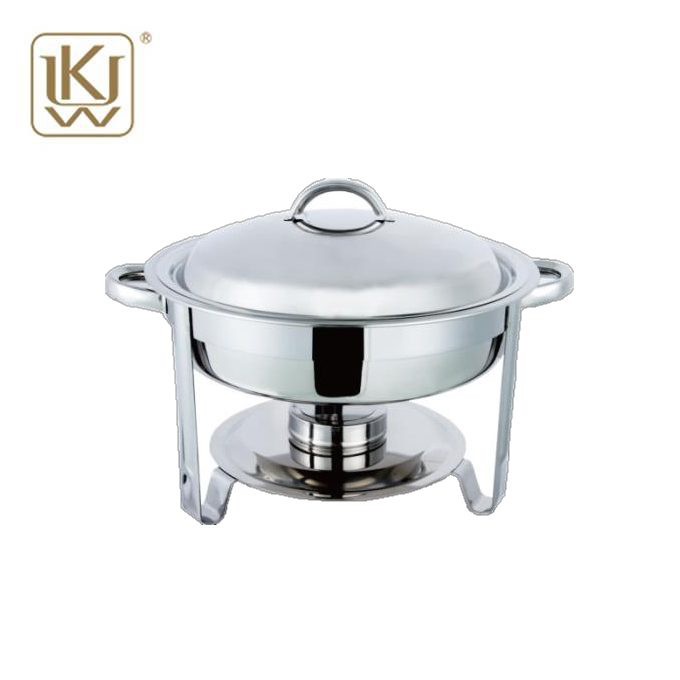
This guide focuses on practical storage methods for stainless buffet equipment, with a core focus on stainless steel chafing dishes, which combine multiple components such as lids, frames, water pans, food pans, and fuel holders. Proper storage protects both appearance and performance while reducing replacement and maintenance costs.
Stainless steel resists corrosion through a passive protective layer, but storage conditions can weaken this protection. Common causes include:
Moisture trapped in seams, rolled edges, hinge points, and joints
Chlorides from salt, salty food residue, bleach, or chlorine-based sanitizers
Iron contamination transferred from carbon-steel shelves, steel wool, or tools
High humidity and limited airflow that slow drying and encourage condensation
Scratches and impact damage that create pockets for moisture and residue
Most rust-related issues during storage are not material defects but process and environment problems that repeat over time.
Chafing Dishes often hold acidic and salty foods such as tomato-based sauces, gravies, and marinades. These residues should be rinsed off as soon as service ends. Allowing residue to dry increases the risk of staining and surface attack.
Avoid steel wool and carbon-steel brushes. These can leave iron particles that later oxidize on stainless surfaces. Use non-abrasive pads and soft brushes designed for stainless buffet equipment.
Cleaning chemicals left on the surface can cause streaking and discoloration, especially in humid storage areas. A clean-water rinse before drying helps preserve surface quality.
Air-drying alone is often insufficient for chafing dishes. Pay special attention to:
Lid hinges and handle mounts
Rolled rims on water pans and food pans
Corners and welded joints on frames
Fuel holders and recessed areas
If moisture remains in these areas, stacking or covering will trap it and accelerate corrosion.
Even well-cleaned equipment can develop problems if stored in the wrong environment.
Moderate humidity with steady airflow
Dry floors and surfaces with no standing water
Distance from bleach storage, mop sinks, and chemical mixing areas
Shelving made from stainless or coated materials that do not shed rust
Adequate space to avoid forced stacking and surface contact
If water spots or discoloration appear repeatedly, humidity control and airflow should be reviewed first.
Chafing dishes are modular systems. Improper stacking causes scratches, dents, and deformation that affect both appearance and fit.
Separate stainless components with liners, mats, or dividers
Avoid stacking heavy frames on thin lids or rolled pan edges
Keep stack height reasonable to prevent warping
Store lids upright when possible to reduce surface contact
Vertical rack storage allows better airflow and reduces friction between surfaces. It also shortens drying time and minimizes staining risk.
Store frames on flat shelves with even support. Avoid hanging or leaning them in ways that stress joints or legs. Make sure frames are completely dry before stacking.
Lids often trap moisture around handles and hinges. Dry these areas carefully and store lids vertically or with protective spacing to prevent scratching.
Fuel holders should be fully cleaned and dried before storage. Residue from fuel cans can attract moisture and cause discoloration if left in contact with stainless parts.
Some storage-related issues come from nearby materials rather than the equipment itself.
Contact with rusty shelves, tools, or mixed-metal hardware
Storage near chlorine-based chemicals that can splash or release fumes
Plastic covers placed over damp equipment, trapping humidity
Wet cardboard or packaging pressed against stainless surfaces
If covers are required, use breathable materials and only after equipment is fully dry.
Many dents and scratches occur during cleanup and storage, not during service.
Lower stacked items gently onto shelves
Avoid sliding stainless parts across each other
Keep storage aisles clear to prevent collisions
Place heavier components on lower shelves
Careful handling during storage preserves surface finish and maintains proper fit between components.
Early discoloration does not always indicate deep corrosion. Acting quickly prevents escalation.
Wash the affected area to remove grease and residue
Clean with stainless-safe tools only
Rinse thoroughly and dry completely
Identify the cause, such as moisture trapping or chemical exposure
Adjust storage procedures to prevent recurrence
Repeated staining in the same area usually points to trapped moisture or environmental exposure.
| Frequency | Storage action | Purpose |
|---|---|---|
| After service | Rinse, wash, rinse, fully dry before storage | Prevent residue and moisture buildup |
| Daily | Use separators and keep storage areas dry | Reduce scratches and humidity exposure |
| Weekly | Inspect hinges, rims, and joints for moisture or discoloration | Catch early corrosion signs |
| Monthly | Deep-clean corners and review storage layout | Prevent recurring damage patterns |
Consistency across shifts is key to protecting equipment over time.
Well-stored chafing dishes maintain their appearance, fit correctly, and perform reliably during service. Clean stainless surfaces, straight rims, and smooth hinges reduce setup time and improve presentation at every event.
UKW designs stainless steel chafing dishes for commercial environments where frequent cleaning and storage cycles are part of daily operation. By combining durable construction with proper storage practices, operators can significantly extend equipment lifespan while maintaining a professional buffet presentation.