kelley@u-kitchenwares.com
+86-15819924651
+86-0750-3719388

Choosing between a stainless steel trolley cart and a plastic trolley cart is not just a price decision. In foodservice and hospitality, the cart becomes part of daily workflow: it carries hot trays, moves through narrow aisles, gets washed repeatedly, and is exposed to impacts, chemicals, and moisture. Over time, the material of the trolley affects hygiene, durability, load stability, maintenance cost, and even how professional the operation looks to customers.
This article compares Stainless Steel Tray Trolleys and plastic trolleys in practical terms, explains where each one fits best, and shows why many kitchens standardize on stainless steel for high-frequency service. UKW supplies commercial options in this category through its stainless steel tray trolley.
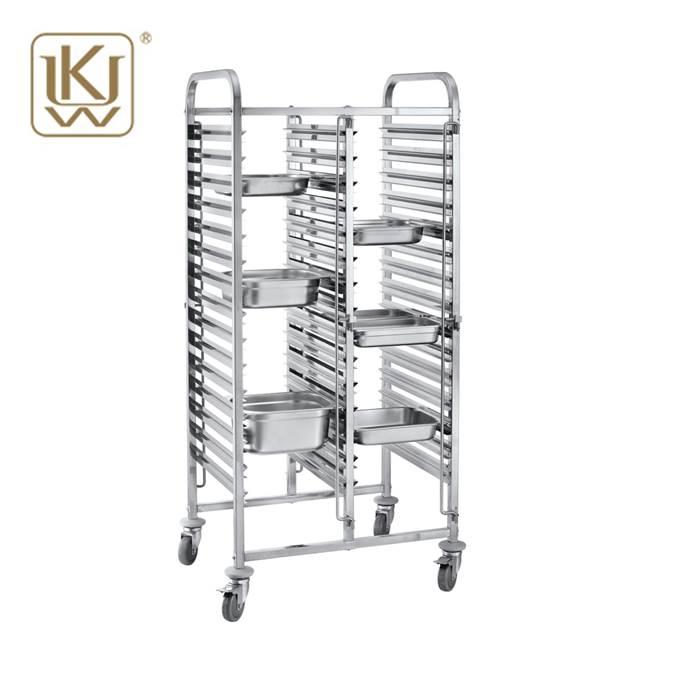
A trolley is a moving piece of equipment. It has to stay rigid under load, resist wear at joints and shelves, and remain easy to clean. When a trolley is used for tray service, it also needs to keep trays aligned, prevent rattle, and remain stable during turns and threshold transitions.
Stainless steel and plastic behave differently under these stresses. Stainless steel keeps its structure and surface integrity in hot, wet, and chemical-heavy environments. Plastic is lighter and often cheaper, but can deform under heat, scratch more easily, and show wear faster in rough daily use.
Stronger load stability for trays and bulk items
Stainless steel frames are typically more rigid, which helps maintain stability when the trolley is fully loaded and pushed over uneven floors. Less flex reduces tray vibration and the risk of items shifting. This is especially important for hot foods, liquids, and plated service.
Better hygiene performance under frequent cleaning
Stainless steel is well suited to repeated washing and sanitizing. Its surface is less likely to absorb odors and stains, and it can tolerate common cleaning agents used in commercial kitchens. Plastic carts can develop deep scratches over time, and those scratches can become difficult-to-clean areas that trap residue.
Higher heat tolerance around hot trays and dish rooms
Tray trolleys often operate near hot holding areas, dishwash stations, and steam zones. Stainless steel handles heat exposure more reliably without softening or warping. Plastic can deform when repeatedly exposed to high heat or placed too close to heat sources, which affects shelf fit and wheel alignment.
Longer service life under impact and daily transport
Carts are frequently bumped into door frames, elevator edges, and kitchen equipment. Stainless steel typically resists cracking better than many plastics. Even when dented, it often remains functional and safe, while cracked plastic components may require immediate replacement.
More professional appearance in front-of-house service
In hotels, banquet halls, and open-kitchen environments, stainless steel often presents a cleaner, more premium look. It aligns with modern commercial kitchen aesthetics and can support brand standards for high-end hospitality.
Better resistance to corrosion when properly specified
Commercial stainless steel is chosen to handle wet environments. In humid kitchens, dish rooms, and food prep areas, corrosion resistance becomes a major factor in total cost of ownership. Plastic does not corrode, but it can discolor, become brittle with age, or degrade under UV exposure if used near sunlight.
UKW’s stainless steel tray trolley options are built for these high-frequency, wet-environment workflows where stability and cleanability are priorities.
Plastic trolleys can be a practical choice in certain conditions. The decision depends on workload intensity and environment.
Light-duty transport with low heat exposure
If the cart is used for moving packaged goods, room supplies, or light items away from heat sources, plastic can perform well.
Budget-limited projects with short replacement cycles
Some operations accept a shorter lifespan in exchange for lower upfront cost, especially for temporary sites or seasonal use.
Noise-sensitive areas where lightweight handling is preferred
Some plastic carts may roll more quietly depending on wheel type and construction, although wheel quality usually matters more than frame material.
Even in these cases, many buyers still choose stainless for tray service, because tray transport typically involves heat, moisture, and heavy daily usage.
| Decision factor | Stainless steel trolley cart | Plastic trolley cart |
|---|---|---|
| Load rigidity | High, strong frame stability | Moderate, can flex under heavy loads |
| Cleaning and sanitation | Excellent for repeated washing | Can scratch and retain residue in wear areas |
| Heat tolerance | Strong performance near hot zones | Can warp or soften with repeated heat exposure |
| Impact resistance | Typically durable, dents may remain functional | Can crack or chip depending on plastic type |
| Appearance | Professional for kitchens and hospitality | Practical, may look less premium over time |
| Long-term cost | Often lower per year due to longer life | Often higher per year if replaced more frequently |
A stainless trolley performs best when design details match your service conditions.
Shelf or tray runner spacing
Tray trolleys should match your tray size and loading pattern. Correct spacing prevents tray tilt and reduces rattling during movement.
Wheel quality and braking
Wheel material and bearing quality affect roll smoothness, noise, and floor protection. Brakes matter in ramps, elevators, and busy service corridors.
Corner protection and structural reinforcement
Reinforced corners reduce damage during inevitable impacts. A trolley with solid frame welding and stable joints will stay square over time.
Surface finish and ease of wiping
A smooth finish supports faster cleaning and reduces residue buildup in daily operation.
UKW supports commercial buyers with trolley designs intended for tray service efficiency and daily cleaning workflows through its stainless steel tray trolley.
Commercial kitchens and hospitality operations typically buy trolleys in batches and expect consistent performance across multiple units. UKW supplies tray trolley solutions that fit foodservice workflows where hygiene, stability, and durability are non-negotiable. For distributors, project buyers, and chain operations, consistent specifications and repeatable supply help reduce operational issues and simplify replacement planning.
A stainless steel trolley cart offers stronger load stability, better hygiene performance, higher heat tolerance, and longer service life than most plastic trolley carts, making it a preferred choice for tray transport and high-frequency commercial use. Plastic trolleys still work for light-duty transport and budget-limited use cases, but they may require more frequent replacement in demanding environments. For operations that want reliable tray service performance, UKW provides dedicated options through its stainless steel tray trolley.