kelley@u-kitchenwares.com
+86-15819924651
+86-0750-3719388

A steam pan is a rectangular foodservice pan used to cook, hold, transport, and serve food in commercial kitchens. It is designed to fit standard openings in steam tables, hot holding wells, and buffet lines, where heat is provided indirectly by hot water, steam, or warm air. Because steam pans follow standardized sizing, they are easy to swap, stack, store, and organize across restaurants, catering operations, hotels, institutions, and central kitchens. You will also see them called hotel pans, gastronorm-style pans in some markets, or simply food pans, depending on region and kitchen habit.
In practical terms, a steam pan is the backbone container behind many buffet and back-of-house systems. It holds everything from sauces and soups to proteins and side dishes, and it allows a kitchen team to move product from prep to holding to service without transferring into another container. UKW supplies this category for US foodservice needs through its US steam pan selection.
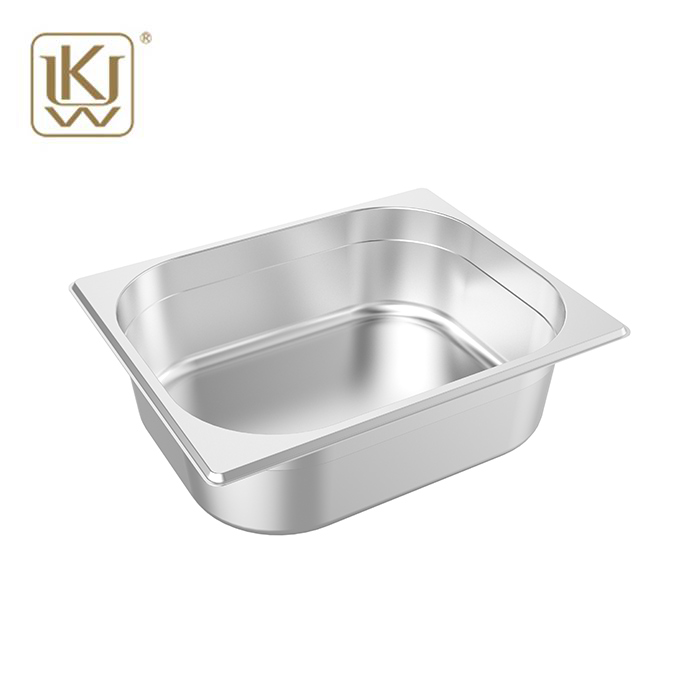
A steam pan is built for indirect heat systems. Instead of sitting directly on an open flame like a sauté pan, it typically sits inside a steam table well. Heat transfers through the pan walls and base to keep food at serving temperature. This is one reason steam pans are so widely used in buffet lines: they allow stable, controlled holding without constant attention from a cook.
Steam pans also work in cold wells for chilled service. The same standard sizing makes them suitable for salad bars, dessert stations, and ingredient wells. The value is operational. One pan type supports many stations.
Steam pans are chosen because they reduce handling steps and improve line efficiency.
Hot holding and buffet service
They keep cooked foods ready for service in a steam table, reducing the need to reheat small batches repeatedly.
Prep and staging
Many kitchens portion prepped ingredients into steam pans so the line can pull, refill, and rotate product quickly.
Baking and oven finishing
Steam pans can be used for roasting, baking, or finishing food in ovens, especially for banquet and catering workflows, where rectangular pans make portioning and storage easier.
Transport and catering
With the right lid, a steam pan becomes a transport container for catering deliveries, banquet staging, and commissary operations.
Because steam pans are a standardized tool, kitchens can build repeatable processes around them, improving consistency and reducing waste.
Steam pans are categorized by fraction sizes based on a full pan footprint, plus depth options that change capacity.
Full size
The standard largest footprint used for main buffet wells and high-volume holding.
Half size
Used for lower-volume items or to split the well between two menu items.
Third size, quarter size, sixth size
Used for toppings, sauces, ingredients, or items with limited turnover where freshness matters.
Depth is selected based on how much food is needed and how often refills happen. A deeper pan reduces refills but increases weight and can change how quickly food heats or cools.
Not all steam pans perform the same, even if they share the same footprint. Buyers usually evaluate steam pans based on daily durability, safety, and efficiency.
Stainless steel performance
Stainless steel is common because it handles repeated washing, resists corrosion in busy kitchens, and stays stable under high-temperature use. It also supports a clean professional presentation in open buffet lines.
Rim and edge stability
The rim determines how the pan sits in a well, how it seals with a lid, and how well it resists bending under heavy loads. In high-frequency service, a stable rim also reduces wobble when staff stir or portion.
Corner design and cleaning efficiency
Corners affect cleaning speed and food residue buildup. Kitchens typically prefer designs that are easier to wipe and less likely to trap residue, because steam pans are washed and reused continuously.
Stackability and storage space
Steam pans must stack smoothly without jamming. In a busy operation, stacking friction costs time and increases the risk of dents.
UKW’s US steam pan range is positioned for foodservice buyers who want dependable daily performance and standard sizing that fits US kitchen equipment.
These items look similar to new buyers, but they serve different workflows.
| Item | Primary role | Where it is used | Key difference |
|---|---|---|---|
| Steam pan | Hold and serve food in wells | Steam tables, prep lines, buffets | Standardized food pan sizing for equipment fit |
| Sheet pan | Baking and roasting | Ovens and bakeries | Flat profile for airflow and baking efficiency |
| Chafing dish pan | Buffet service with fuel heating | Catering and events | Designed around chafing frames and fuel heat |
A steam pan is specifically designed to integrate with steam table systems and buffet wells, which is why it is a core purchasing category for restaurants and institutional kitchens.
Choosing the correct pan usually comes down to menu structure, service speed, and cleaning workflow.
Match size fraction to turnover
High-turnover items often work best in larger fraction sizes. Lower-turnover items are better in smaller pans so the surface stays fresh and waste is reduced.
Match depth to refill strategy
If staff can refill quickly and you prioritize freshness, a shallower pan may be better. If labor is tight and you need longer holding between refills, deeper pans can improve service stability.
Confirm compatibility with your equipment
US steam tables, wells, and lids are built around standard footprints. Selecting a consistent supplier helps keep replacements compatible across repeat orders.
For buyers standardizing inventory, UKW provides US-oriented sizing and selection guidance through its US steam pan product page.
Kitchen operators typically want four things from steam pans: consistent fit, reliable durability, easier cleaning, and stable supply. UKW supports these requirements by focusing on standard us steam pan specifications and providing product options suitable for restaurants, catering, and institutional use.
If you are purchasing for distribution, chain kitchens, or project supply, selecting from a consistent product lineup helps reduce operational friction. Staff can use the same lids, the same storage racks, and the same well layouts without unexpected fit issues.
Explore UKW options here: US steam pan.
A steam pan is a standardized rectangular foodservice pan used to cook, hold, transport, and serve food in commercial kitchen systems such as steam tables and buffet wells. It supports efficient workflows by letting kitchens move food from prep to holding to service in one container, with fraction sizing and depth options that match different menu needs. For buyers sourcing dependable pans built around US foodservice requirements, UKW offers a dedicated selection in its US steam pan category.