kelley@u-kitchenwares.com
+86-15819924651
+86-0750-3719388

A full steam pan, also called a full-size hotel pan, does not have one single quart capacity. The capacity depends mainly on the pan depth, and also on whether you mean brim-full capacity or a practical working fill level that reduces spill risk during transport and service. In most commercial kitchens, a full steam pan is considered full-size at roughly 20.75 inches by 12.75 inches, and the most common depths are 2.5, 4, 6, and 8 inches. Each depth corresponds to a different quart range.
This article explains typical quart capacities by depth, how to estimate capacity accurately for your menu and holding method, and how UKW supports foodservice buyers sourcing durable pans through its US steam pan lineup.
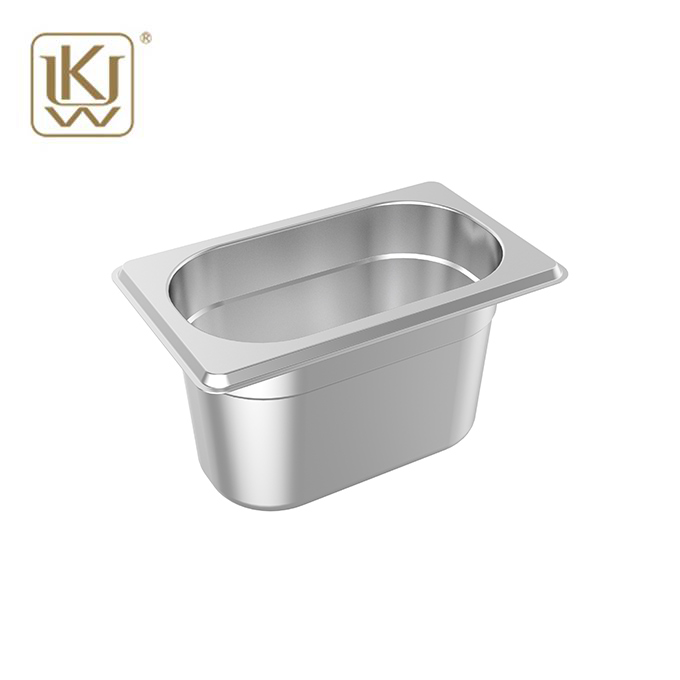
A quick, practical answer is that a full-size steam pan commonly ranges from about 7 quarts to about 28 quarts depending on depth. The table below uses widely used industry approximations for full-size pans.
| Full steam pan depth | Typical capacity in quarts | Best-fit use cases |
|---|---|---|
| 2.5 inch | 7 qt | Shallow hot holding, quick turnover items |
| 4 inch | 12 qt | General service pans, moderate batch volume |
| 6 inch | 22 qt | High-volume holding, sauces, proteins, sides |
| 8 inch | 28 qt | Bulk prep, large batch holding, commissary use |
These are typical capacities for full-size pans. Real capacity can vary slightly by manufacturer, corner radius, rim design, and whether the measurement is brim-full or working fill.
If you fill a steam pan to the brim, you might match the maximum quart number, but that is rarely how kitchens operate during service. Most teams use a working fill level to keep food stable during movement and to avoid slosh, drip, and lid sealing issues.
Brim-full capacity
This is the maximum volume the pan can physically hold. It is useful for ordering and planning, but it is not always practical for buffet lines or back-of-house transport.
Working fill capacity
This is the amount you can hold while still allowing safe carrying, stable placement in wells, and easier lid closure. A common practice is to leave headspace so liquids do not spill and foods can be stirred without pushing product over the rim.
As a simple planning rule, many operations treat working fill as roughly 80 to 90 percent of brim-full capacity, depending on how liquid the food is and how often the pan is moved.
Choosing depth is not only about volume. It affects heat performance, holding quality, speed of replenishment, and food appearance.
2.5 inch pans
These are best when presentation and fast turnover matter. They heat and cool faster, which helps with quick replenishment cycles. They are also useful when you want to avoid deep product compaction, such as for delicate foods.
4 inch pans
This depth is often a default choice because it balances capacity and service practicality. It works well for many sides, mixed dishes, and moderate-volume buffet items.
6 inch pans
These are often selected for high-volume holding, thicker foods, and items that need fewer refills. They also reduce labor in busy service periods because they extend time between replenishment.
8 inch pans
These are typically used for bulk prep, commissary workflows, and very high volume holding. They can be less convenient on a buffet line if frequent stirring is needed or if weight becomes a handling concern.
If you are building a standard kit for a kitchen line, a mix of 2.5 inch and 4 inch pans for service plus 6 inch pans for high-volume items is a common setup, then 8 inch pans are added when bulk prep volume justifies them.
Capacity is not only about how much food fits. It affects labor planning, service flow, and food quality.
Refill frequency
A deeper pan reduces refills, which can reduce labor during peak periods.
Temperature stability
Deeper pans hold more thermal mass, which can help maintain temperature in some holding setups, but it can also mean slower recovery after lid opening.
Portion control and waste
Oversized pans can increase leftover risk for low-turnover items. Right-sizing your pan depth helps reduce waste without sacrificing readiness.
Transport and safety
Heavier pans filled with hot liquid foods increase spill risk. Working fill and correct depth choice directly improve safety during movement.
To prevent ordering mistakes, it helps to keep a few conversions in mind.
4 quarts equals 1 gallon
8 quarts equals 2 gallons
12 quarts equals 3 gallons
16 quarts equals 4 gallons
This makes it easier to translate steam pan capacity into batch recipes that are written in gallons.
A steam pan is a high-frequency tool in foodservice. Buyers usually care about consistency, fit, durability, and supply reliability, especially when they are standardizing inventory across multiple kitchens. UKW provides full-size steam pan options designed for US foodservice usage, supporting selection by depth and operational needs through its US steam pan product line.
If you are ordering for restaurants, catering, institutions, or distribution, using a supplier that offers consistent specifications across repeat orders helps keep lids, pan wells, and storage systems compatible over time.
A full steam pan can hold different amounts depending on depth. In typical industry terms, a full-size pan holds about 7 quarts at 2.5 inches deep, about 12 quarts at 4 inches, about 22 quarts at 6 inches, and about 28 quarts at 8 inches. For real kitchen use, plan around a working fill level rather than brim-full volume, especially for liquids and transport-heavy workflows.
For dependable sourcing and depth selection, explore UKW options here: US steam pan.
Previous: What Is A Steam Pan?