kelley@u-kitchenwares.com
+86-15819924651
+86-0750-3719388

Setting up Chafing Dishes correctly is what keeps a buffet line safe, organized, and consistent from the first guest to the last. A chafing dish is not just a container. It is a controlled hot-holding system built around water, gentle heat, stable pan placement, and efficient service flow. When setup is rushed or incomplete, food temperature becomes unstable, pans scorch, lids drip condensation onto food, and the line slows down.
This guide explains how to set up chafing dishes for catering, hotels, events, and self-serve buffets, with practical details you can apply immediately. Product references in this article are based on UKW’s chafing dish range, designed for professional buffet and catering use.
A stable buffet starts with placement. If the table surface is uneven or the line is too tight, you will fight wobbling frames, hard-to-open lids, and guest congestion during service. Pick a setup area that lets guests serve without reaching across hot equipment and lets staff refill pans without blocking traffic.
For reliable flow, keep the chafing dish line away from doors, cold drafts, and strong air-conditioning vents. Drafts cool the pan edges and make temperature control inconsistent, especially when lids are opened frequently. Also leave space behind the dish so the lid can open fully without hitting a wall or décor.
Key placement checks:
The table should be flat and strong enough to carry a full dish plus water and food weight
There should be safe clearance for lid opening and guest movement
Staff should have a refill path that does not cross guest traffic
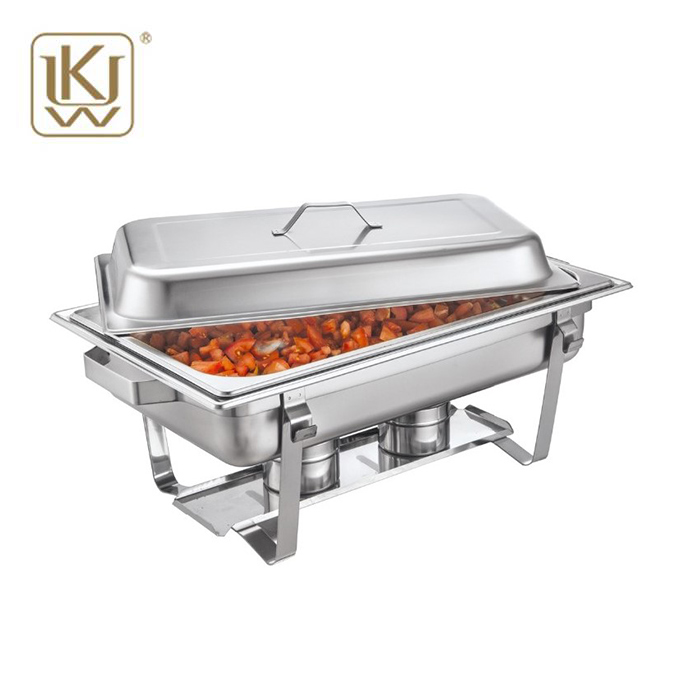
Most chafing dishes follow a similar structure: frame, water pan, food pan, lid, and heat source. Some models include handles, fuel holders, and internal supports. Before service, confirm that every part sits correctly. A small mismatch during assembly often becomes a major problem during peak service.
A quick dry-fit prevents surprises:
Place the water pan into the frame and ensure it sits flat
Set the food pan in position and confirm it does not rock
Open and close the lid to confirm smooth movement and safe clearance
Confirm fuel holders are stable and centered under the water pan
If you use standardized equipment often, selecting a consistent professional line such as UKW’s chafing dish range helps reduce setup variability across events because the system is built for repeatable assembly.
Water is the buffer that prevents direct heat from scorching food. A properly filled water pan creates gentle, even heat that holds food safely without burning edges. Too little water causes overheating and dry food. Too much water can spill during transport or reduce heat efficiency.
A practical rule is to fill the water pan with enough water to cover the bottom and provide stable steam heat, while still leaving safe space to prevent slosh. If the event is long, plan a refill check during service because water loss is gradual and easy to miss.
Two water-control points to remember:
Water should be hot when possible to reduce warm-up time and stabilize temperature faster
Water level should be checked during long service windows, especially when lids are opened frequently
Many buffet quality problems happen when hot holding is treated like reheating. A chafing dish is designed to maintain temperature, not bring cold food up to safe holding temperature quickly. If you load food before the water is warm, the pan spends too long in a low-temperature zone.
A reliable routine is to start the chafing dish early enough for a stable heat environment, then load hot food just before service begins. This reduces moisture loss and keeps texture better, especially for rice, pasta, and proteins.
Two practical preheating habits:
Light fuel or turn on the heat source and wait until the water pan is producing steady steam
Load food that is already hot from the kitchen rather than relying on the chafing dish to do the heating work
Once the water pan is stable, place the food pan into the unit. Ensure it sits flat and does not touch the fuel area directly. The lid position should match how guests will serve. For self-serve buffets, a lid that opens smoothly and stays safely positioned prevents guests from touching hot surfaces or dropping lids onto the pan rim.
Condensation control matters as well. When lids are opened and closed repeatedly, steam condenses and can drip back onto food. This is especially important for fried items and roasted items where added moisture reduces quality quickly. Where possible, keep crisp foods in smaller batches and refresh more often instead of holding large volumes for a long time.
Service positioning tips:
Keep ladles and tongs positioned consistently so guests do not search while holding a hot lid
Use smaller pans for items that suffer from long hot holding, and refill from backup pans
If you use fuel cans, place them only after the frame is stable and the water pan is filled. Lighting fuel before the unit is fully assembled increases risk. Once lit, avoid moving the unit. Plan for how you will replace fuel if the service window is long, and assign one staff member to handle fuel changes if the event is large.
Fuel setup is safest when the line is predictable:
Fuel holders should be centered under the water pan to avoid uneven heating
Long events should include a mid-service fuel check
Spare fuel should be stored away from guest areas and heat sources
Choosing professional chafing dish models with stable frame geometry and controlled component fit, such as UKW’s chafing dish selection, helps reduce shifting and improves operational safety during service.
A well-set buffet line reduces spills and keeps guests moving. The order of dishes matters. Place plates first, then the main proteins, then sides, then sauces, and finally bread and condiments. This ordering prevents guests from trying to balance plates while navigating hot stations.
Also plan spacing between dishes. Crowding increases lid collisions and slows serving. If space is limited, use fewer dishes per table or set up two shorter lines instead of one crowded line.
Two effective line-design tactics:
Put the most popular dish in the easiest position to access and refill
Separate slow-serving dishes such as soups or carved meats from fast grab items
The best buffet teams use the same routine every time. This keeps setup consistent even when staff changes. Use a simple checklist you can run in minutes before doors open.
| Step | What to Confirm | Why It Matters |
|---|---|---|
| Table position | Flat, stable, safe clearance | Prevent wobble, burns, congestion |
| Dry-fit parts | Frame, water pan, food pan, lid alignment | Avoid rocking pans and stuck lids |
| Water level | Enough for steady steam, not overfilled | Stable heat, prevents scorching |
| Preheat | Steam is stable before loading food | Better holding temperature control |
| Food loading | Food is hot before it enters the pan | Chafing dish maintains, not reheats |
| Fuel safety | Holders stable, safe lighting, refill plan | Prevent accidents and heat loss |
| Tools | Ladles, tongs, rest positions ready | Faster service, fewer spills |
| Monitoring | Water and fuel checks scheduled | Stable holding through service |
Once service starts, the most important job is monitoring. That means checking water level, watching for drying edges, stirring where needed, and rotating fresher pans in. Monitoring should be quiet and fast so guests do not feel interrupted.
A practical monitoring rhythm:
Check each dish on a fixed schedule instead of waiting for problems
Replace pans when quality starts to drop, not only when empty
Keep backup food ready in safe holding so refills are fast and controlled
Setting up chafing dishes properly is about predictable assembly, stable water-based heat control, safe fuel handling, and a buffet layout that keeps guests moving. When you preheat the unit, load hot food at the right time, manage water and fuel during service, and plan your line for easy access, you protect both food quality and service safety.
For professional buffet setups that demand repeatable assembly and stable operation, UKW’s chafing dish range provides practical options for catering and event service where reliability, presentation, and workflow efficiency matter.