kelley@u-kitchenwares.com
+86-15819924651
+86-0750-3719388

A sauce pot is a foundational piece of cookware in professional kitchens, catering operations, and high-volume food service environments. While it may appear similar to other cooking pots at first glance, a sauce pot is designed with specific proportions, materials, and performance characteristics that make it especially suitable for controlled liquid-based cooking. This article explains what a sauce pot is, what it is used for, its functional advantages, and how it can be customized to meet specific operational requirements in commercial kitchens.
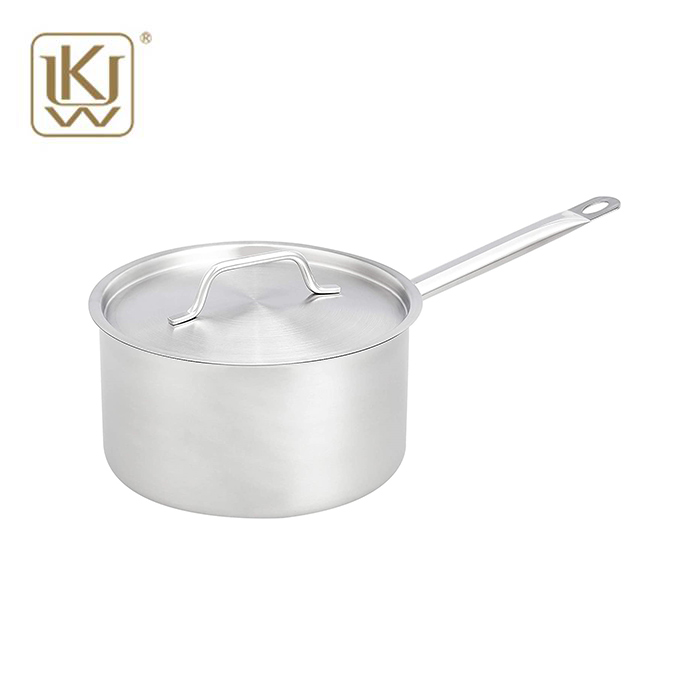
A sauce pot is a tall, straight-sided cooking vessel with a flat base and two side handles. Compared with a saucepan, it typically has a larger capacity and thicker construction, allowing it to handle greater volumes and longer cooking times. The vertical walls reduce evaporation, while the flat bottom ensures even contact with the heat source.
In professional kitchens, sauce pots are most commonly manufactured from stainless steel due to its durability, heat stability, and hygiene properties. This makes them suitable for repeated use in demanding cooking environments where consistency and safety are critical.
The main function of a sauce pot is to cook and hold liquids or semi-liquids under controlled heat. Its shape and depth allow for steady simmering rather than aggressive boiling, which is essential for developing flavor and texture.
Typical uses include:
Preparing sauces, gravies, and reductions
Cooking soups, broths, and stocks
Heating milk, cream, or custards
Simmering pasta sauces or stews
Holding cooked liquids at stable temperatures
Because of its size range, a sauce pot can be used for both small-batch preparation and large-volume production in catering or institutional kitchens.
Sauce pots offer several advantages that distinguish them from other cookware types. Their design directly supports cooking efficiency and food quality.
Key advantages include:
Even heat distribution across the base and walls
Reduced risk of scorching during long simmering
Better control over evaporation and consistency
High capacity without sacrificing stability
Compatibility with gas, electric, and induction heat sources
These features make sauce pots especially valuable for recipes that require patience, precision, and consistent temperature management.
In commercial kitchens, sauce pots are not limited to sauce preparation alone. Larger-capacity versions are often used as part of bulk cooking systems for soups, stocks, and liquid bases that serve multiple menu items.
In high-volume operations, Stainless Steel Barrel-style pots and large sauce pots are used interchangeably depending on capacity requirements. UKW supplies professional-grade solutions such as stainless steel barrel cookware that support large-batch cooking, stable heat retention, and long service life. These products are designed to integrate seamlessly into restaurant, hotel, and catering workflows where reliability is essential.
Stainless steel is the preferred material for sauce pots used in professional environments. Its properties support both cooking performance and operational hygiene.
Benefits include:
Resistance to corrosion and staining
Non-reactive surface suitable for acidic ingredients
Structural strength for large volumes
Easy cleaning and maintenance
Long-term durability under frequent use
Thicker stainless steel bases also help regulate heat more evenly, reducing hot spots that can compromise sauce quality.
Not all kitchens have the same operational needs. Sauce pots can be customized to meet specific volume, handling, and performance requirements.
Common customization options include:
Capacity adjustments for batch size control
Reinforced bases for high-heat or induction use
Handle design optimization for safer lifting
Wall thickness selection for improved heat retention
Surface finishing for easier cleaning or branding consistency
UKW supports customization and OEM solutions for stainless steel cookware, allowing professional buyers to specify sauce pots that align precisely with their kitchen layout, menu structure, and production scale.
A sauce pot is used primarily for preparing and holding liquid-based foods such as sauces, soups, and stocks under controlled heat. Its tall, straight-sided design, combined with durable stainless steel construction, makes it an essential tool in both professional and large-scale kitchens. Beyond its basic function, a sauce pot offers advantages in heat control, efficiency, and versatility, and can be customized to meet specific operational demands. Choosing the right sauce pot ensures consistent cooking results, improved workflow, and long-term reliability in demanding food service environments.
Previous: How To Use Gastronorm Pans?
Next: How Big Is A Sauce Pot?