kelley@u-kitchenwares.com
+86-15819924651
+86-0750-3719388

A sauce pot is one of the most commonly used cookware items in both professional kitchens and serious home cooking. Despite its simple appearance, understanding the actual size of a sauce pot, how capacities differ, and what each size is best used for is essential for efficient cooking, food consistency, and kitchen safety. This article explains what a sauce pot is, how big it typically is, how different sizes are used, important usage considerations, and how to maintain it properly over time.
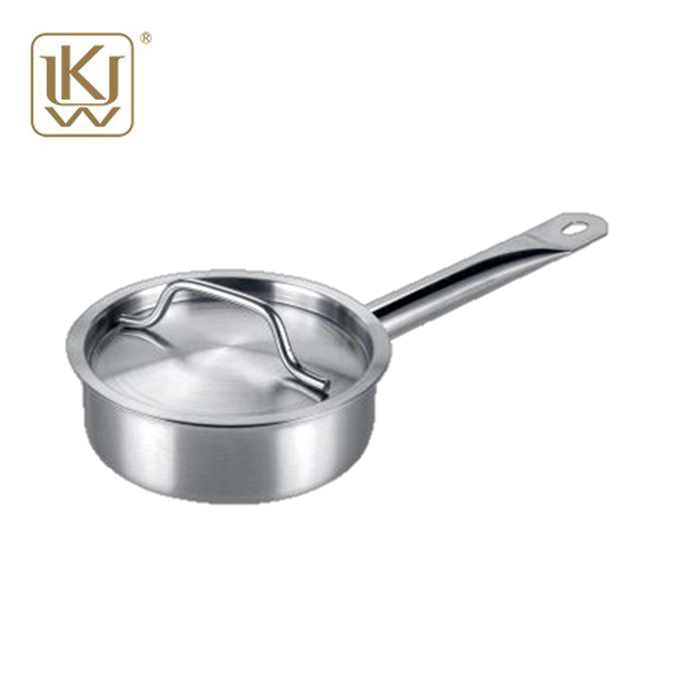
A sauce pot is a straight-sided cooking pot with a flat bottom, relatively tall walls, and usually two side handles. Unlike a saucepan, which often has one long handle and smaller capacity, a sauce pot is designed for larger volumes and longer cooking times.
Sauce pots are primarily used for preparing liquids or semi-liquids such as sauces, stocks, soups, gravies, and reductions. Their vertical walls help minimize evaporation while allowing even heat distribution, making them suitable for controlled simmering rather than rapid boiling.
The size of a sauce pot is usually defined by its capacity, measured in liters or quarts, rather than by diameter alone. In practical terms, sauce pots range from small countertop sizes to large-capacity vessels used in commercial kitchens.
Common sauce pot capacities include:
2–4 liters for small batch sauces
5–8 liters for medium-volume preparation
10–15 liters for restaurant-level cooking
20 liters and above for catering or institutional use
As capacity increases, both the height and diameter grow proportionally, affecting heat behavior and storage requirements.
Each sauce pot size serves a different purpose depending on kitchen scale and menu requirements. Choosing the correct size improves efficiency and prevents common cooking issues such as scorching or uneven heating.
Typical applications by size:
Small sizes are ideal for finishing sauces and reheating portions
Medium sizes are used for gravies, custards, and soup bases
Large sizes support stock preparation and bulk sauces
Extra-large sizes are common in catering, hotels, and central kitchens
Selecting a pot that matches the batch size reduces waste and improves temperature control.
It is important to note that the labeled capacity of a sauce pot does not represent its recommended working volume. For safety and performance reasons, sauce pots should not be filled to the brim.
Professional kitchens typically use:
70–80 percent of total capacity for liquids
Lower fill levels for thick or starchy sauces
Additional headspace for stirring and simmering
This working margin prevents boil-over, improves heat circulation, and reduces the risk of spills or burns.
As sauce pots increase in size, handling and heat management become more critical. Larger pots retain heat longer and respond more slowly to temperature changes.
Key considerations include:
Using appropriate burners or heat sources
Stirring frequently to prevent scorching at the base
Avoiding rapid temperature shifts
Ensuring stable placement on cooking surfaces
In professional environments, large sauce pots are often paired with reinforced bases and thicker stainless steel walls to support consistent heating.
Proper maintenance helps preserve the performance and appearance of a sauce pot, especially when used frequently in commercial kitchens.
Best practices include:
Cleaning promptly after use to prevent residue buildup
Avoiding abrasive cleaning tools on stainless steel
Drying thoroughly to prevent water spots
Inspecting handles and weld points regularly
With correct care, a high-quality Stainless Steel Sauce Pot can remain in service for many years without compromising food quality or safety.
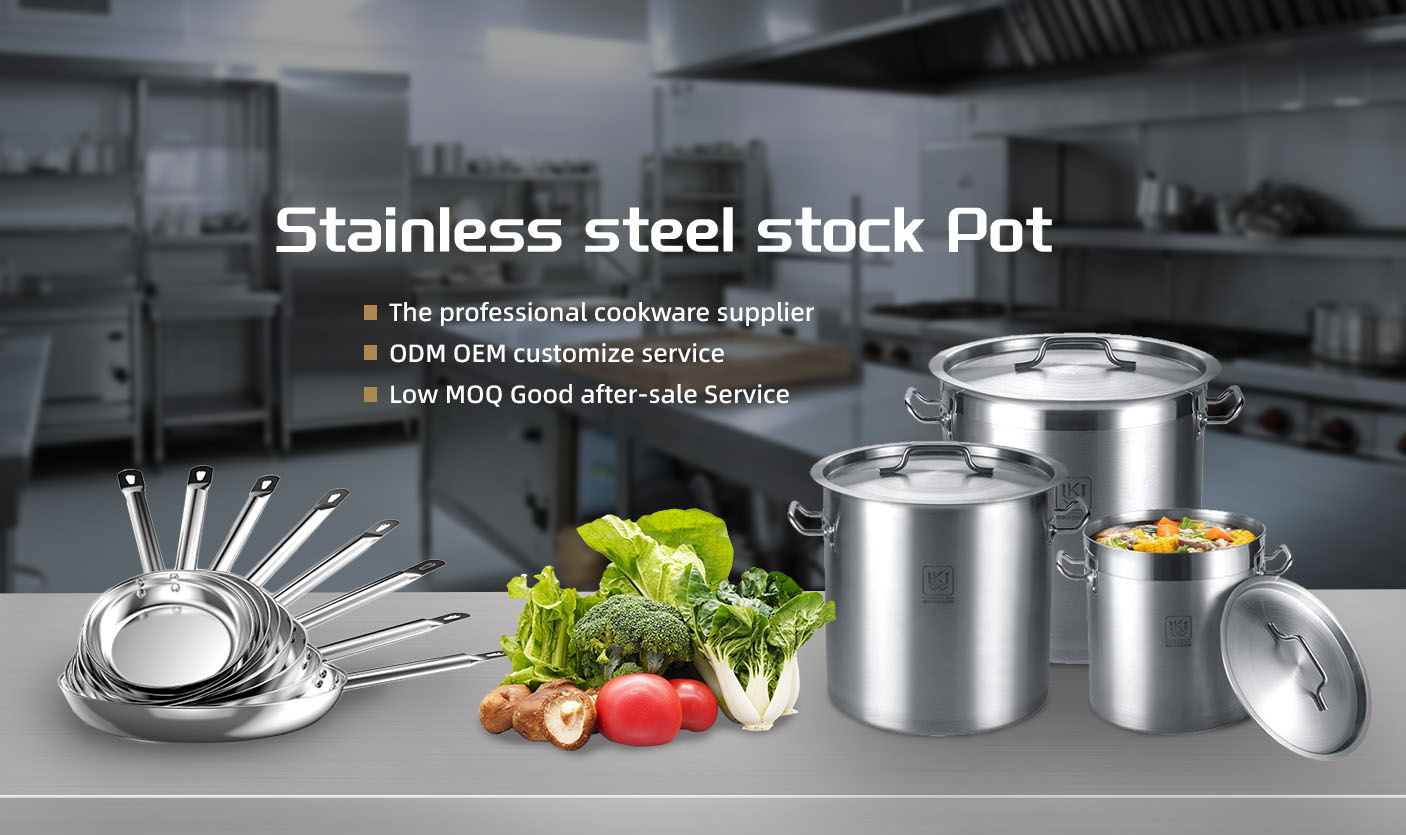
In large-scale kitchens, sauce pots are often part of a broader system of cookware designed for bulk preparation. Stainless Steel Barrels and large-capacity pots are used for soups, stocks, and sauces that require stable heat and volume consistency.
UKW offers professional stainless steel solutions such as stainless steel barrel cookware that support high-volume food preparation, consistent heating, and long-term durability. These products are designed to integrate smoothly into restaurant, hotel, and catering workflows.
A sauce pot can range from a few liters to several dozen liters in capacity, depending on its intended use. Understanding how big a sauce pot is involves more than just numbers; it requires considering working volume, cooking application, handling safety, and maintenance needs. By selecting the right size for the task and caring for it properly, sauce pots remain a reliable foundation for sauce-making and liquid-based cooking in both professional and high-demand kitchen environments.
Previous: What Is A Sauce Pot Used for?