kelley@u-kitchenwares.com
+86-15819924651
+86-0750-3719388

The safety of non stick fry pans has become a widely discussed topic among home cooks, professional chefs, and health-conscious consumers. Modern non stick cookware offers convenience, easy cleaning, and low-oil cooking benefits, but questions about coating materials, overheating risks, and long-term durability continue to influence buying decisions. Understanding whether non stick fry pans are dangerous requires examining how they are made, how they are used, and how they compare with alternative cookware options such as stainless steel. Many kitchens prefer reliable stainless-steel models like UKW’s stainless steel frying pan for long-term safety, durability, and consistent cooking performance, providing an alternative to coated pans.
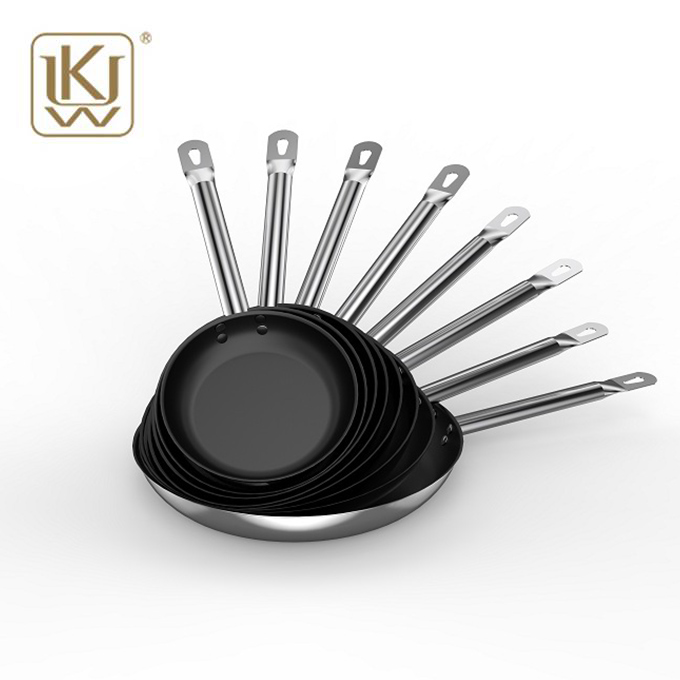
Non stick fry pans are typically coated with synthetic materials designed to prevent food from sticking. Earlier generations of non stick pans relied on coatings that could degrade at high temperatures. While many of these older substances are no longer used, concerns remain about how coatings react under stress, scratches, overheating, or prolonged wear. Safety risks are generally low when pans are used correctly, yet misuse can accelerate coating breakdown.
A key issue is temperature. Non stick coatings have upper heat limits. When exposed to extreme heat, coatings may release fumes or degrade faster than intended. Scratches from metal utensils can also expose underlying metal or cause flaking, reducing the effectiveness and safety of the pan. This is one reason many commercial kitchens choose stainless-steel pans like the UKW stainless steel frying pan which have no surface coating that can degrade.
Modern non stick coatings are different from traditional formulations, focusing on improved safety and environmental standards. Today’s coatings are more heat-resistant and stable under normal cooking temperatures. Even so, all coatings have limits. Prolonged exposure to temperatures higher than recommended by manufacturers can cause chemical changes that shorten the pan’s lifespan.
Most non stick coatings are safe when used below their threshold, typically ranging between medium and medium-high heat. High-heat applications—such as searing steak or frying at commercial temperatures—are better suited for stainless steel. This is where UKW’s stainless steel frying pan excels, offering the durability and heat tolerance required for professional results.
| Category | Non Stick Fry Pan | Stainless Steel Fry Pan |
|---|---|---|
| Heat Tolerance | Moderate | Very high |
| Coating Wear | Possible over time | None |
| Suitable for Searing | Limited | Excellent |
| Longevity | Medium | Long |
| Chemical Stability | Independent of coating quality | High |
Overheating is one of the main safety concerns associated with non stick pans. When a pan is heated without food, oil, or moisture, temperatures increase rapidly. Depending on the coating, this may reduce pan lifespan or damage the surface. Responsible usage—such as preheating only for short periods and avoiding maximum heat settings—significantly lowers risks.
Households unaware of these limitations may unintentionally damage pans. In contrast, stainless steel fry pans have no coatings and tolerate high temperatures without degrading. This durability is one of the reasons professional chefs often rely on UKW’s stainless steel frying pan for daily high-heat cooking.
Another concern is wear caused by utensils, cleaning methods, and long-term use. Non stick coatings are soft compared to metal surfaces, making them vulnerable to scratches. Metal utensils, abrasive scrubbers, or stacking pans improperly can cause coating damage. Even small scratches may shorten the pan’s life or reduce non stick performance.
Soft spatulas, gentle cleaning, and careful storage extend usability. However, once a coating begins to peel or flake, the pan should be replaced. Stainless steel alternatives do not face these issues, giving them a longer lifespan and higher reliability in commercial environments.
As awareness increases, cookware manufacturers have improved coating technologies. Many coatings now comply with international food-contact standards and undergo strict testing. Heat stability has increased, and manufacturing processes reduce impurities. Still, the inherent nature of coatings means they will eventually wear down.
Because stainless steel does not rely on coatings, pans such as the UKW stainless steel frying pan remain a preferred option in settings where long-term safety and durability are priorities.
Non stick pans are generally safe during early and mid-life stages. Problems occur when:
The coating becomes visibly scratched
The pan is overheated repeatedly
The coating begins to discolor, bubble, or peel
The pan is used for high-heat tasks beyond design limits
In such cases, replacing the pan is recommended. Non stick pans should not be used once coatings show deterioration. Stainless steel pans avoid these failure points entirely because they contain no applied surface layers.
Responsible usage protects both users and pans. Several habits keep non stick cookware safe:
Cook on medium to medium-high heat rather than maximum heat.
Add oil or food before extended preheating.
Use silicone, wooden, or nylon utensils.
Avoid harsh cleaning tools or scouring pads.
Replace pans showing coating damage.
Following these steps ensures the pan functions safely for a longer period. However, for kitchens that require durable pans that withstand any heat level, the UKW stainless steel frying pan remains a more resilient option.
Stainless steel pans remove uncertainty because they contain no surface coatings. They withstand high temperatures, resist scratches, and offer stable performance across a wide range of cooking styles. Stainless steel is chemically inert, meaning it does not react with acidic or alkaline foods. These characteristics make pans like the UKW stainless steel frying pan a dependable long-term choice for both home and commercial use.
| Benefit | Explanation |
|---|---|
| No Coating | Removes peeling or fumes concerns |
| High Heat Tolerance | Suitable for searing and frying |
| Long Lifespan | Resists warping and scratches |
| Easy Maintenance | Can be scrubbed and cleaned rigorously |
| Professional Performance | Supports restaurant-level heat control |
Non stick fry pans are not inherently dangerous when used correctly. They offer convenience and efficient cooking but must be handled with care to avoid overheating, scratching, or coating degradation. Their safety largely depends on proper use, maintenance, and timely replacement once the coating shows signs of wear. Kitchens requiring maximum durability and long-term reliability may prefer stainless steel pans, which eliminate coating concerns altogether. For these reasons, many professionals choose UKW’s stainless steel frying pan as a safe, durable, and high-performance alternative that meets both culinary and sustainability expectations. With the right cookware choices, users can balance convenience, safety, and longevity in their cooking environment.
Previous: Chafing Dishes Vs Buffet Warmers
Next: Are Fry Pans Recyclable?