kelley@u-kitchenwares.com
+86-15819924651
+86-0750-3719388

The question of whether fry pans are recyclable is increasingly important as households and commercial kitchens look for sustainable ways to dispose of cookware. Fry pans are made from materials such as stainless steel, aluminum, cast iron, and non-stick composites—each with different recycling requirements. While many pans can be recycled, the conditions depend on local facilities and how the pans are constructed. As more consumers prioritize environmental responsibility, understanding the recyclability of cookware becomes essential. For kitchens seeking durable and long-lasting options, stainless-steel cookware such as UKW’s stainless steel frying pan offers better sustainability and extended service life, reducing the need for frequent disposal.
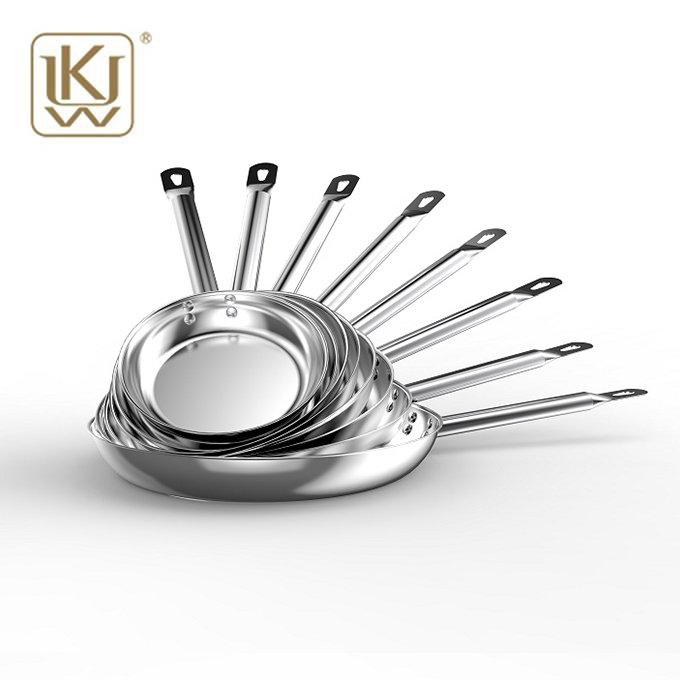
The recyclability of a fry pan depends primarily on its material. Metals like stainless steel and cast iron are widely accepted by scrap metal recyclers. Aluminum pans can also be recycled, though any non-stick coating may require special handling. On the other hand, pans with composite layers, plastic handles, or bonded coatings may not be eligible for regular recycling streams. Recycling centers often assess whether a pan can be separated into recyclable components. Stainless steel pans, including UKW’s frying pan models, are among the easiest to recycle because they contain no bonded coatings and resist corrosion.
In many cases, the challenge lies not in the recyclability of the metal itself but in whether the recycling facility can process cookware. Some require the removal of plastic handles, while others need pans to be entirely metal. Understanding these requirements helps kitchens dispose of cookware responsibly.
Fry pans are produced in several materials, each with distinct recycling pathways. Below is a detailed overview of the common types:
Stainless Steel
Highly recyclable and accepted by most scrap facilities. Its durability allows reuse and remelting repeatedly without losing quality.
Aluminum
Lightweight and recyclable, though non-stick coatings may need removal or special handling.
Cast Iron
Fully recyclable and valued as scrap metal. Cast iron can also be restored and reused for decades, minimizing waste.
Non-Stick Coated Pans
These may not be recyclable in all regions because coatings complicate the process.
Because stainless-steel pans contribute to longer cookware lifecycles, many kitchens invest in professional-grade pans like the UKW stainless steel frying pan to reduce waste and avoid premature disposal.
| Material | Recyclable | Notes |
|---|---|---|
| Stainless Steel | Yes | Widely accepted; eco-friendly |
| Aluminum | Yes | May require separation from coatings |
| Cast Iron | Yes | Highly recyclable; long lifespan |
| Non-Stick Coated | Limited | Depends on facility capabilities |
Recycling centers typically follow a rigorous assessment process before accepting fry pans. They determine whether the pan is free from adhesives, coatings, plastic handles, or non-metal attachments. For stainless steel cookware, processing is straightforward. The pan is shredded and melted down to produce new steel products.
Aluminum pans undergo smelting processes where coatings burn off or are filtered out. Cast iron, known for its density, is broken down and remelted, often ending up as construction materials or automotive components. Non-stick pans require additional evaluation, as coatings may release fumes if heated to smelting temperatures.
Professional kitchens that use stainless-steel cookware—like UKW’s frying pan collection—contribute significantly to lower waste because these materials are highly recyclable and maintain performance for years.
Despite the eco-friendly potential, not all fry pans qualify for recycling. Some reasons include:
Composite body construction
Non-removable plastic parts
Damaged or heavily layered coatings
Lack of local facilities capable of processing cookware
Pans containing multiple bonded materials
In these cases, repurposing becomes a practical solution. Old pans can be used as garden tools, pot covers, or craft items. Stainless steel pans with damaged surfaces may be reconditioned rather than discarded.
Preparing a pan for recycling improves the chance that a facility will accept it. Disassemble the pan if possible by removing plastic handles or silicone grips. Clean the surface to eliminate grease, which can interfere with processing. Confirm whether the facility accepts coated pans or only raw metal. Many centers weigh cookware as scrap metal, meaning stainless steel models like the UKW stainless steel frying pan can be dropped off easily without additional requirements.
| Step | Purpose |
|---|---|
| Remove Plastic Parts | Ensures metal purity |
| Clean the Pan | Prevents contamination during melting |
| Check Local Regulations | Facilities vary in accepted materials |
| Separate Coated Pans | Coatings may require special handling |
Choosing recyclable cookware reduces landfill waste, conserves natural resources, and promotes circular manufacturing. Metals like stainless steel retain their integrity even after multiple recycling cycles, making them exceptionally environmentally friendly. Aluminum recycling saves substantial energy compared to producing new aluminum. Cast iron rarely needs disposal because it lasts decades and can be refinished.
Stainless steel cookware—such as the UKW stainless steel frying pan—supports sustainable kitchen operations by reducing replacement frequency. The material resists warping, corrosion, and coating degradation.
Among all cookware materials, stainless steel stands out for its recyclability. It requires no coating removal, contains no harmful compounds, and is accepted globally by scrap recyclers. It can be melted down repeatedly without losing strength or purity. These characteristics not only reduce environmental impact but also lower long-term operational costs for restaurants and catering businesses.
UKW’s stainless steel frying pan is engineered to last, minimizing waste and maximizing recyclability once it reaches the end of its service life. For kitchens seeking eco-conscious solutions, stainless steel remains the smart choice.
Fry pans can be recyclable, but the outcome depends on the material and the capabilities of local recycling facilities. Stainless steel, aluminum, and cast iron pans are widely recyclable, while non-stick coated pans may face limitations. Preparing cookware properly before recycling improves the acceptance rate and contributes to a sustainable waste-management system. By choosing long-lasting, recyclable pans—such as UKW’s stainless steel frying pan—kitchens reduce environmental impact while benefiting from professional-grade durability. With informed decisions and proper disposal practices, cookware recycling becomes a practical step toward a greener culinary industry.
Previous: Are Non Stick Fry Pans Dangerous?
Next: What Is A Griddle Pan?