kelley@u-kitchenwares.com
+86-15819924651
+86-0750-3719388

Keeping a juice dispenser clean is essential for maintaining beverage quality, preventing bacterial growth, and ensuring a professional presentation in any food-service environment. Whether the dispenser is used in hotels, restaurants, cafés, or self-service buffet lines, proper cleaning protects both customers and equipment. Juice contains sugar, pulp, acids, and natural enzymes that can stain surfaces and form sticky residues quickly. Without consistent cleaning routines, these residues can clog dispensing valves, create odors, or impact cooling efficiency. Many operators rely on durable stainless-steel systems such as UKW’s juice dispenser series to improve hygiene and ensure easy maintenance with every service cycle.
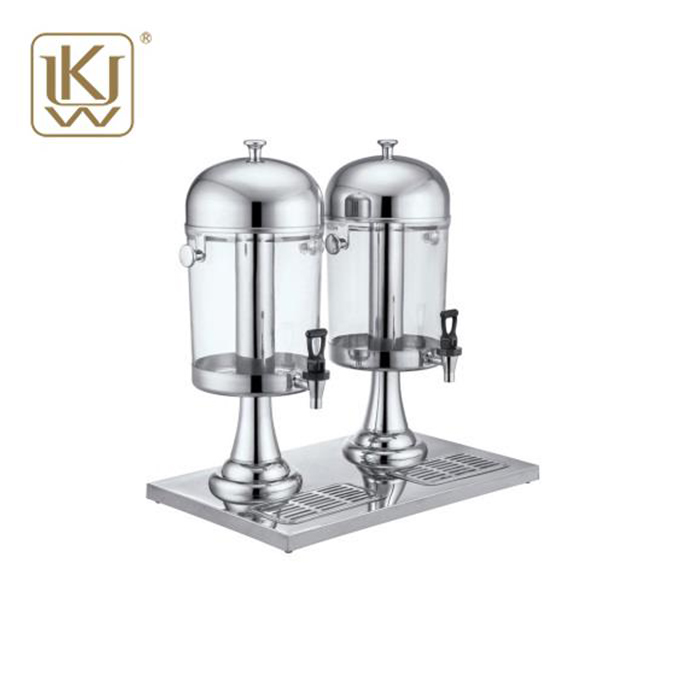
A juice dispenser consists of several parts: the beverage container, dispensing valve, drip tray, stirring or circulation mechanism, and the cooling base. Each component interacts directly with juice, which varies in acidity, sugar content, and pulp density. Understanding these functions prevents accidental damage during cleaning. For example, the valve requires detailed rinsing to remove pulp, while the cooling base must never be submerged. The stainless-steel construction of the UKW juice dispenser supports easier cleaning and resists staining caused by acidic beverages.
Daily cleaning prevents residue from drying into hardened layers. Start by turning off and unplugging the machine. Disassemble the dispenser by removing the lid, container, valve assembly, and stirring components. Empty remaining juice, then rinse all removable parts with warm water to loosen pulp and sugar deposits.
Clean the container using mild detergent and a soft sponge to protect the material. Wash the drip tray thoroughly, as it collects spills throughout the day. Wipe the machine’s exterior and cooling base with a damp cloth. In buffet environments, UKW’s stainless-steel juice dispenser unit helps minimize spills, making cleanup easier and reducing sticky buildup around the base.
A structured cleaning method guarantees consistent hygiene in professional settings:
Disconnect Power & Disassemble
Remove all detachable components for safe and thorough cleaning.
Rinse with Warm Water
Remove initial juice residue and prevent early sugar crystal formation.
Wash with Food-Safe Detergent
Clean gently using non-abrasive tools to maintain clarity and surface integrity.
Detail Clean the Valve
Use small brushes or directed water flow to remove pulp from narrow channels.
Sanitize Properly
Apply a food-safe sanitizer to all beverage-contact parts.
Dry Completely
Moisture left inside valves or containers can dilute juices or compromise freshness.
Juice dispensers face unique issues that make cleaning more demanding compared to soup warmers or coffee machines. Sugar crystallizes quickly and forms rough layers that obstruct smooth dispensing. Pulp can adhere to stirring paddles and valve channels, becoming a breeding ground for bacteria if not removed promptly. Acidic juices, like citrus blends, may stain low-grade components, emphasizing the value of stainless-steel construction such as that used in UKW’s juice dispenser.
Another challenge is condensation inside the cooling chamber, especially after long service hours. Sticky moisture forms when sugar-rich beverages meet cold surfaces, requiring consistent wiping and careful attention during daily cleaning.
| Component | Cleaning Method | Notes |
|---|---|---|
| Container | Warm rinse + detergent | Avoid boiling water |
| Valve Assembly | Deep rinse + brush | Removes pulp and sugar |
| Drip Tray | Soak + scrub | Clean daily |
| Stirring Paddle | Rinse + sanitize | Pulp adheres easily |
| Exterior | Damp cloth | Keep water away from vents |
Deep cleaning should be performed weekly or more often in high-volume operations. Begin by disassembling all components and soaking them in warm water mixed with a food-safe detergent. This step loosens stubborn sugar and pulp buildup. Scrub small parts such as seals, threads, and valve interiors using small brushes for precision cleaning.
The cooling basin and external frame should be cleaned gently using a damp microfiber cloth. Deep cleaning also provides an opportunity to inspect valve seals and gaskets. If seals show signs of wear, they should be replaced promptly to prevent leaks and ensure smooth beverage dispensing.
Sanitization is required to maintain food-safe beverage conditions. After cleaning, apply a food-safe sanitizing solution to every drink-contact surface. Allow proper contact time to eliminate harmful microorganisms. Rinse only if the sanitizer instructions specify. Since juices are served cold and stored at temperatures conducive to microbial growth, thorough sanitizing is essential. Stainless-steel units like UKW’s juice dispenser simplify sanitization due to their smooth, non-porous surfaces.
Juice dispensers are often at the front of customer-facing buffet lines. Keeping the exterior clean is essential for maintaining a professional appearance. Wipe away condensation, spills, and fingerprints frequently. Clean the base area to remove sugar droplets that attract insects and cause sticky buildup. Using a stable station such as UKW’s juice dispenser system helps prevent accidental tipping and reduces splash zones.
Preventive maintenance minimizes the workload associated with deep cleaning. This includes emptying leftover juice at the end of each service session, rinsing the container immediately to prevent pulp from drying, and flushing the valve with warm water after each use. Avoid abrasive cleaners that scratch container surfaces and create areas where residue accumulates easily. Regularly check seals and gaskets to prevent leaks and ensure smooth operation.
A clean juice dispenser directly impacts beverage quality, safety, and customer satisfaction. Establishing a routine that combines daily cleaning, weekly deep cleaning, and proper sanitizing ensures reliable performance and extends the equipment’s lifespan. By using well-designed equipment—such as UKW’s stainless-steel juice dispenser—operators can maintain a hygienic beverage service area with less effort and greater efficiency. With consistent maintenance practices, your juice dispenser will continue providing fresh, safe, and appealing beverages throughout every service period.
Previous: What Is A Griddle Pan?