kelley@u-kitchenwares.com
+86-15819924651
+86-0750-3719388

A Chafing Dish station should be arranged on a stable, heat-safe surface with a correctly fitted water pan, suitable heat source, fully heated food, and clear serving access. Staff should monitor water, fuel, and food temperature throughout service.
Setting up a commercial chafing dish station involves more than assembling the equipment.
The arrangement should support the menu, expected guest numbers, serving time, and available counter space.
Before placing the units, catering managers and buffet staff should consider:
Number of dishes being served.
Expected guest volume.
Duration of the buffet service.
Food pan capacity.
Fuel or electrical availability.
Refill access for kitchen staff.
Guest movement around the buffet counter.
Safety requirements for hot equipment.
A hotel breakfast buffet may require several chafing dishes arranged in a continuous serving line, while a banquet may need separate stations for main courses, vegetables, rice, and side dishes.
The equipment layout should make serving convenient without blocking staff movement.
The surface should be stable, level, and suitable for hot equipment.
A chafing dish should not be placed too close to the edge of a buffet counter or in a position where guests may accidentally touch hot components.
Leave sufficient space for opening the lid, removing food pans, and replenishing dishes.
For self-service arrangements, the lid mechanism should allow convenient access without obstructing neighboring units.
For staff-operated buffet lines, enough working space should remain behind the serving counter for food replacement and cleaning.
The heat source should also be considered when deciding the position of each unit.
Fuel-heated models require appropriate clearance and safe handling of open flames. Electric models require a suitable electrical connection and protection from water exposure.
A traditional fuel-heated chafing dish should be assembled in the correct order.
Set the frame on the prepared buffet counter and check that all supporting parts are stable.
Place the water pan into its designated position.
Make sure it sits evenly and does not wobble.
Fill the water pan according to the manufacturer's instructions.
A common operating guide is to fill approximately one-half to two-thirds of the water pan, leaving sufficient space to prevent overflow.
The correct level depends on the specific model and should take priority over a general guideline.
Position the approved fuel holders beneath the water pan.
For electric models, follow the rated voltage and electrical installation instructions supplied with the product.
For fuel models, light the approved fuel according to its instructions after the water pan has been filled.
For electric models, switch on the heating system according to the manufacturer's operating procedure.
Give the system time to reach an appropriate hot-holding condition before loading the food pan.
Transfer fully cooked and properly heated food into the food pan.
A chafing dish is intended primarily for hot holding. It should not be relied upon to cook raw food or bring cold food up to the required safe temperature.
Food pan configuration should match the menu and expected serving volume.
A large main dish may require a full-size pan, while smaller side dishes and sauces may be more practical in fractional pans.
For a mixed buffet menu, divided food pans help separate different dishes within the same chafing dish.
However, buyers should confirm that the selected model supports the intended pan configuration.
The pan should not be filled beyond a practical working level because excessive filling can make handling and serving more difficult.
For foodservice distributors, hotel suppliers, and banquet equipment buyers, pan compatibility is an important specification when sourcing commercial buffet equipment.
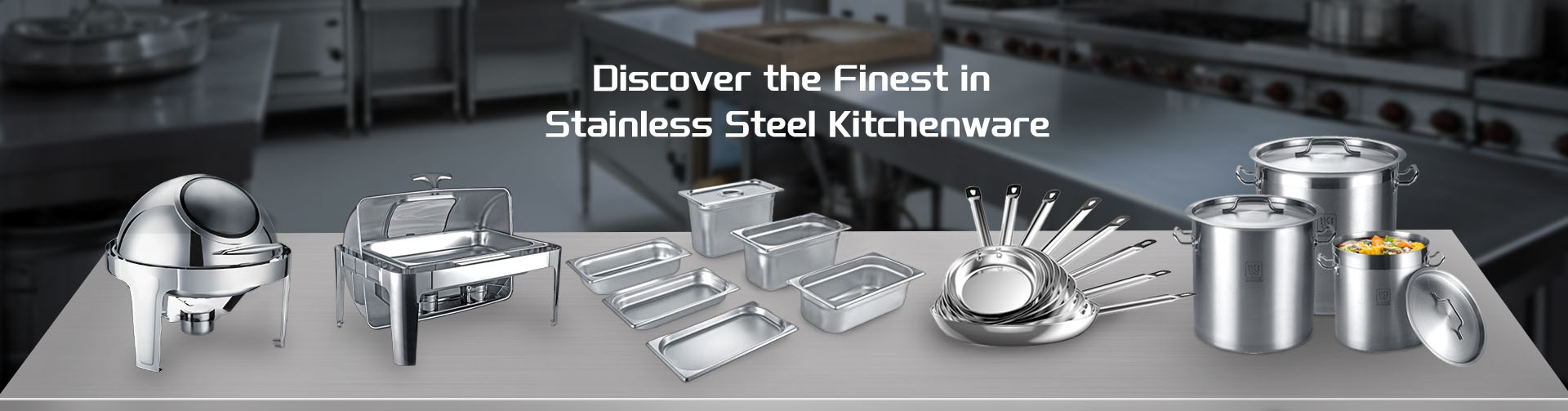
Our Chafing Dish Product Range includes different buffet configurations for commercial catering applications.
Correct operation continues after the buffet opens.
Staff should regularly check the equipment and food rather than assuming that the heating source will maintain the correct conditions automatically.
Monitor Water Levels
The water pan should not be allowed to run dry during operation.
Check the level according to the equipment instructions and replenish carefully when required.
Monitor Food Temperature
Use a suitable food thermometer and follow the food safety requirements applicable to the operating location.
A chafing dish is a hot-holding appliance, not a substitute for temperature monitoring.
Control the Heating Source
Excessive heat may affect food texture and moisture. Follow the product's heating instructions rather than increasing the flame or power unnecessarily.
Keep the Lid Properly Positioned
Closing the lid between serving periods helps reduce heat and moisture loss.
Prepare Backup Food Pans
For busy hotel and catering operations, keeping replacement food pans ready helps maintain a consistent serving workflow.
Whenever possible, replace the service pan with a fresh, properly heated pan rather than continuously adding new food to an old batch.
The operating method depends on the heating design.
Fuel-Heated Chafing Dishes
Fuel models are useful for buffet areas where a suitable fuel setup is permitted.
Staff should use compatible fuel products and follow the specified burner arrangement.
Important precautions include:
Keep fuel away from combustible materials.
Do not move the unit while the flame is burning.
Never refill or replace fuel near an active flame.
Keep guests away from exposed heating components.
Extinguish the burner before handling or cleaning the unit.
Electric Chafing Dishes
Electric models require a compatible electrical supply.
Before operation, confirm the product's voltage and power requirements.
Keep electrical connections away from water and follow the manufacturer's instructions for switching on, operating, and shutting down the heater.
The correct choice depends on the buffet location, electrical availability, operating rules, and service requirements.
After service, the heating source should be turned off or extinguished before the equipment is dismantled.
Allow the unit to cool according to the manufacturer's instructions.
Then:
Remove the food pan and water pan.
Empty remaining water carefully.
Clean removable components using suitable cleaning products.
Avoid abrasive tools that may damage polished surfaces.
Dry components thoroughly before storage.
Check hinges, handles, frame connections, and fuel holders.
Store accessories together to prevent missing parts.
For catering companies operating multiple buffet stations, a consistent cleaning checklist helps keep equipment ready for the next event.
The design of the equipment influences how easily staff can set up and manage the buffet.
A commercial chafing dish should have a stable frame, properly fitted pans, practical lid movement, and suitable heating components.
For hotel procurement teams and catering equipment distributors, sample evaluation should include actual assembly and handling rather than visual inspection alone.
MEIJIN manufactures stainless steel buffet equipment and commercial kitchenware for restaurants, hotels, catering companies, and international distributors.
Our factory has approximately 10,000 square meters of production space, independent production workshops, and product-development support for customized kitchenware requirements.
For buyers who need a more detailed operating reference, our existing guide on how to use chafing dishes step by step provides additional information about water management, heating, food holding, and cleaning.
The right chafing dish arrangement should match the buffet menu, guest volume, counter layout, and heating conditions.
Our team works with hotel suppliers, restaurant equipment distributors, banquet contractors, and catering wholesalers to discuss suitable buffet equipment configurations.
Explore our Commercial Chafing Dish Collection and send your preferred model, food pan configuration, heating method, estimated quantity, and packaging requirements through our Buffet Equipment Inquiry Page to discuss product supply and OEM/ODM cooperation.
Previous:
Next: What Is A Chafing Dish?