kelley@u-kitchenwares.com
+86-15819924651
+86-0750-3719388

The right commercial soup warming system depends on food type, serving volume, holding time, available power, and kitchen layout. Electric soup warmers suit countertop service, while Chafing Dishes and steam-table systems support different buffet operations.
Commercial soup warming equipment is available in several configurations. Although these products share the purpose of maintaining prepared food at serving temperature, their heating methods, capacities, and operating requirements differ.
1. Electric Soup Warmers
Electric soup warmers use built-in heating components and adjustable temperature controls to maintain prepared soups and sauces.
They are suitable for restaurant counters, hotel breakfast stations, cafeterias, and buffet service areas where electricity is readily available.
Our Stainless Steel Electric Soup Warmer, model SK10AS, has a listed capacity of 10 liters and dimensions of 350 × 350 × 380 mm. Its adjustable thermostat allows operators to control the heating level according to service requirements.
2. Commercial Soup Kettles
Commercial soup kettles are commonly used for holding larger quantities of soups, sauces, and other liquid foods.
Capacity, temperature adjustment, lid design, inner-pot construction, and cleaning access are important purchasing considerations.
For high-volume foodservice operations, buyers should compare working capacity with the expected number of servings rather than selecting equipment based on nominal volume alone.
3. Fuel-Heated Chafing Dishes
Traditional chafing dishes use fuel burners to heat a water pan beneath the food pan.
This indirect heating arrangement helps maintain prepared food during buffet service. It is suitable for hotels, banquets, catering companies, and temporary foodservice stations.
For example, our 6L round food warmer with stove uses a fuel holder and a 100 mm deep water pan. Buyers should confirm that the food pan configuration is appropriate for the intended menu.
4. Steam Table and GN Pan Systems
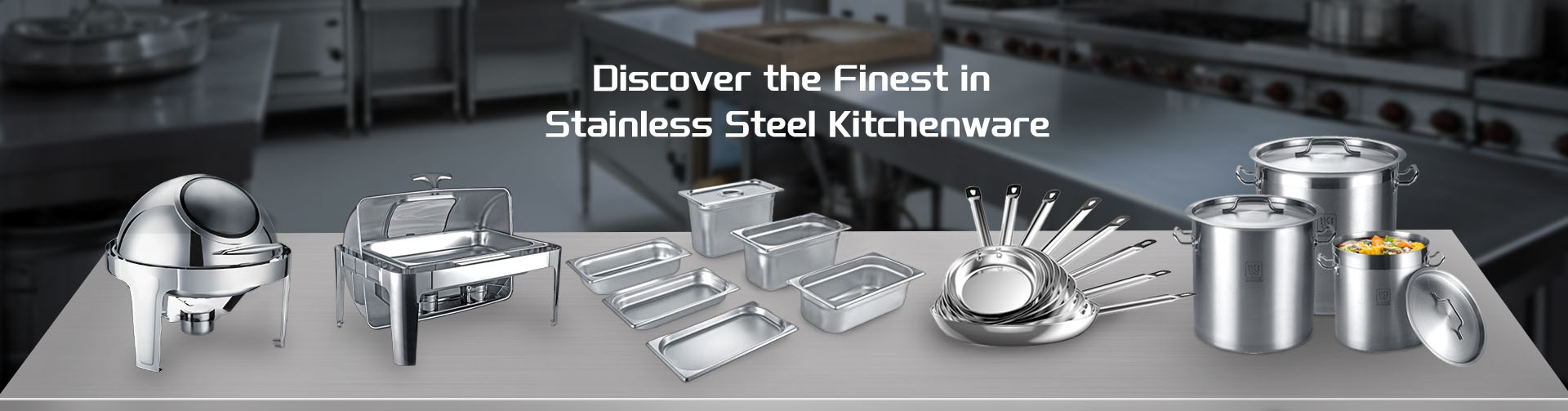
Steam tables use heated wells to maintain food temperature, while GN Containers and steam-table pans hold the food.
This arrangement is suitable for buffet lines serving several dishes simultaneously.
A compatible food pan is essential. The pan's dimensions, depth, rim design, and material must match the equipment opening.
The menu should be considered before the equipment model.
Thin soups, cream-based soups, thick stews, and sauces behave differently during extended hot holding.
A dispensing-style soup warmer with a spout may work particularly well for pourable soups and sauces. Thick foods containing large pieces may require a wider serving opening or a ladle-based arrangement.
Buyers should also consider whether the equipment needs to serve one menu item continuously or support several dishes through interchangeable containers.
Capacity should reflect service volume, refill frequency, and the space available at the serving station.
A small restaurant may benefit from a compact countertop unit, while a hotel breakfast buffet may need several warmers arranged together.
A practical purchasing calculation considers:
Expected servings per service period.
Average portion size.
Peak customer demand.
Refill frequency.
Available counter space.
Cleaning and replacement arrangements.
For example, a 10-liter soup warmer can provide a practical countertop solution for operations requiring a moderate quantity of continuously available soup.
However, actual output depends on portion size and service turnover.
Temperature adjustment is one of the most important features because different foods may require different holding conditions.
Other details should not be overlooked.
Lid Construction: A hinged lid provides convenient access while helping reduce unnecessary heat loss.
Serving Design: A suitable spout can make portioning and dispensing easier while reducing spills.
Stainless Steel Construction: Buyers should confirm the actual material grade, surface finish, and cleaning requirements.
Heating Components: Electrical models require confirmation of voltage, wattage, plug configuration, and destination-market requirements.
Maintenance Access: Removable or accessible components can simplify routine cleaning, depending on the product design.
A commercial soup warmer supplier should understand more than the external appearance of the equipment.
Manufacturing details such as stainless steel forming, component assembly, thermostat integration, lid alignment, and finished-product inspection influence the consistency of bulk orders.
Our factory in Jiangmen, Guangdong, has a 10,000-square-meter production site, independent production workshops, and an experienced product development team.
We manufacture stainless steel kitchenware, soup warmers, GN containers, chafing dishes, and buffet equipment.
OEM and ODM services support customized product development, including selected dimensions, configurations, branding, and packaging requirements.
Choosing a soup warming system should begin with the food being served and the operating conditions rather than the appearance of the equipment.
Request a Commercial Soup Warmer Quotation
Share your required capacity, heating method, voltage, target market, preferred design, and estimated order quantity. Our team can help review suitable soup warmer models for restaurant, hotel, and catering supply.
Previous: