kelley@u-kitchenwares.com
+86-15819924651
+86-0750-3719388

Foodservice containers can be grouped into seven practical types: preparation containers, cooking containers, storage containers, transport containers, hot-holding containers, display and serving containers, and waste-collection containers. This is an operational classification rather than one universal legal system, but it helps commercial kitchens select equipment around each stage of food handling.
One container may perform several functions. A stainless steel GN pan, for example, can support preparation, chilled storage, cooking, buffet display, and short-distance service when the pan, lid, and appliance are compatible.
Preparation containers hold ingredients during washing, cutting, marinating, portioning, or mixing. Bowls, trays, food pans, strainers, and ingredient bins belong to this group.
Useful features include smooth internal corners, stable bases, clear size identification, and surfaces that are easy to clean. Perforated pans are practical when liquid needs to drain away from washed produce, steamed foods, or thawing ingredients.
Stock pots, sauce pots, frying pans, steam pans, and oven-compatible GN Containers are used during thermal processing. Material, base construction, handles, wall thickness, and equipment compatibility become especially important here.
Not every storage container is suitable for direct heat or oven use. Buyers should confirm the permitted temperature range and heating method rather than assuming that a stainless steel appearance guarantees universal cooking compatibility.
Storage containers protect ingredients or prepared food in dry stores, refrigerators, and freezers. Covers reduce contamination and help organize inventory.
A useful storage system needs stackability, clear labeling, appropriate depths, and compatibility with shelving. Operators should avoid stacking in a way that crushes food or makes heavy containers unsafe to lift.
Transport containers move food between the kitchen, service area, vehicle, event site, or another facility. They need secure closures, practical handles, controlled stacking, and resistance to movement.
A lid that works for refrigerated shelf storage may not be leak-resistant during vehicle transport. Liquids, sauces, and soups require a container designed for that level of containment.
Insulated barrels, Soup Kettles, steam-table pans, and heated holding equipment keep prepared food within a controlled service process. These products maintain temperature; they do not automatically make unsafe food safe again.
The operation needs thermometers, time control, documented procedures, and compliance with local food-safety requirements. Equipment selection should reflect holding time, batch volume, refill frequency, and service style.
Buffet pans, Chafing Dishes, beverage dispensers, trays, and serving bowls present food to customers. Appearance matters, but access, portioning, lid movement, spill control, and replenishment speed are equally important.
Standardized GN containers help kitchens move compatible pans between preparation, refrigeration, heating, and buffet equipment. Common fraction sizes also allow several dishes to share a standard opening.
Commercial kitchens need dedicated containers for food waste, used coffee grounds, utensils, dishes, and recyclables. These should be clearly separated from containers used for edible food.
Cleaning carts, collecting carts, and waste pans improve workflow when their routes are planned away from ready-to-eat food.
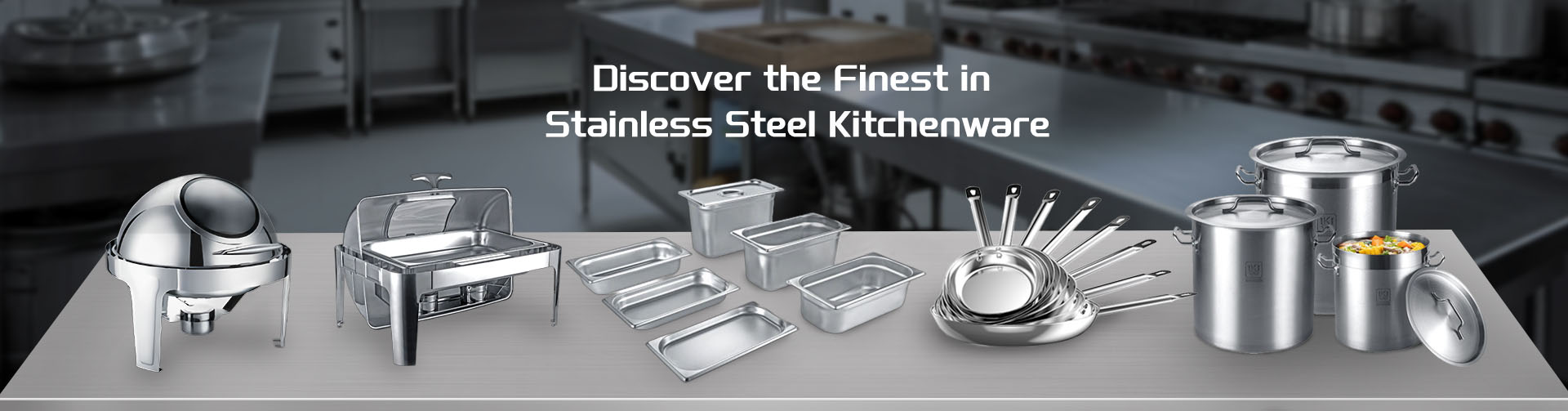
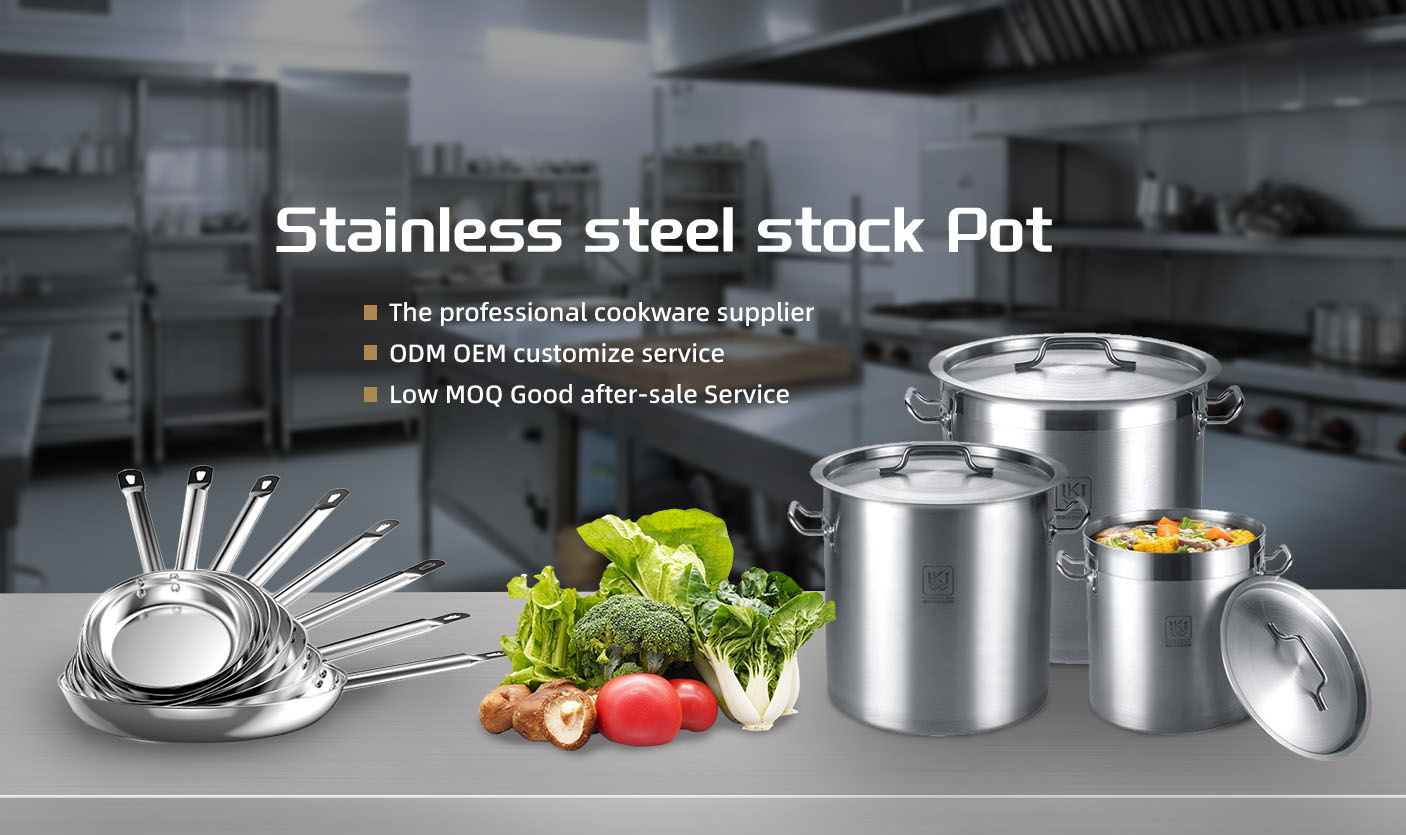
Our factory manufactures stainless steel GN pans, us steam pans, perforated pans, stock pots, sauce pots, insulated barrels, buckets, chafing dishes, soup kettles, beverage dispensers, and catering carts. We provide one-stop commercial kitchenware supply covering preparation, cooking, holding, serving, and transport-related operations.
As a commercial food container wholesale supplier, we can coordinate container size, depth, stainless steel selection, lid style, surface finish, handles, perforation, logo, packing, and order mix. Our design, mold-making, forming, assembly, and quality-inspection processes support both standard products and OEM/ODM requirements.
Mapping the seven container types against the kitchen workflow reveals where products can be standardized and where specialized equipment is necessary. A compatible container system reduces transfers, limits unnecessary handling, and makes storage easier to organize.
The best purchasing list follows food from receiving to preparation, cooking, holding, serving, and collection. That approach creates a functional container system instead of a collection of unrelated pans and pots.