kelley@u-kitchenwares.com
+86-15819924651
+86-0750-3719388

Choosing a stock pot sounds simple at first, but once cooking volume, kitchen space, and daily use come into the picture, the answer becomes more practical than many buyers expect. A pot that feels large enough on paper may turn out to be too small during busy service. A pot that looks efficient in a catalog may become hard to lift, hard to store, or slower to heat than expected in real use.
That is why the question what size stock pot do I need matters to more than home cooks. It also matters to restaurant buyers, hotel kitchens, catering suppliers, food processing businesses, and importers building a cookware line for different markets. In those situations, stock pot size is not just about capacity. It affects cooking rhythm, labor efficiency, replacement planning, and how easily one product line can serve more than one type of customer.
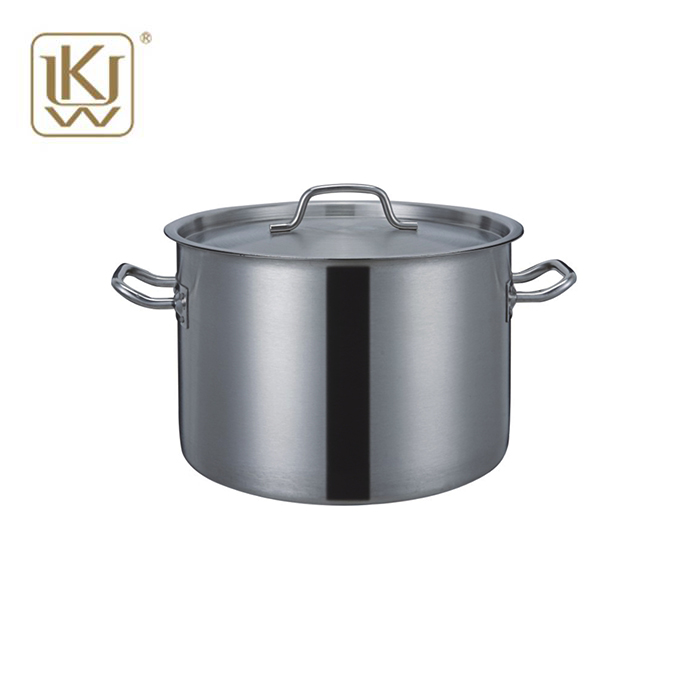
Our heavy bottom stock pot fits naturally into this discussion because buyers in this category are often looking for more than a single cooking vessel. They are looking for a dependable stainless steel solution that can cover different capacity needs, support repeat purchasing, and work well in both direct sales and OEM or ODM programs. That is also why the keyword Stainless Steel Soup Pot still has strong search value. Many buyers are not only searching for soup cookware. They are trying to find a pot that can handle broth, stock, stew, boiling, batch prep, and long cooking hours without becoming a weak point in the kitchen.
The right size depends first on what the pot will actually do. A pot used for home soup and weekend stock does not need the same capacity as one used in a restaurant for daily broth production. A catering kitchen working in batches thinks differently from a retail buyer choosing cookware for household use. The product may belong to the same category, but the working logic is completely different.
This is where many buyers make the wrong comparison. They focus only on the liter number and miss the real question of output. A stock pot must fit the portion size, the cooking frequency, and the type of food being prepared. Broth, soup, stew, pasta, seafood boil, and central-kitchen batch cooking all place different demands on pot size. The better buying decision usually comes from matching the pot to workflow, not simply choosing the largest option available.
That is one reason commercial buyers often prefer a broader capacity range from one supplier. It gives them more room to build a practical product line instead of forcing different customer groups into one standard size.
For smaller kitchens, a pot that is too large can be just as inconvenient as one that is too small. It takes up more storage room, becomes heavier during use, and may not be necessary for everyday cooking. In home kitchens or small independent food businesses, buyers often need a pot that can handle soup, stock, noodles, and stewing without turning basic cooking into a burden.
A moderate-capacity Stainless Steel Soup Pot usually works better in these situations because it offers enough depth for daily use while staying easier to move, clean, and store. Buyers in this segment are often looking for a balance between practicality and appearance. They want something durable and professional-looking, but still suitable for normal kitchens and regular stovetop use.
For distributors and kitchenware wholesalers, this is an important market layer. Smaller-capacity stock pots are often easier to place in mixed cookware lines because they appeal to both household users and light commercial buyers.
Once the kitchen moves into restaurant, hotel, or batch-prep work, pot size starts affecting speed and consistency much more directly. If capacity is too small, staff must cook in extra rounds. That creates more labor, slower output, and less predictable timing during peak hours. If the pot is sized correctly, kitchen flow becomes much smoother.
This is why commercial buyers usually think about more than one size at the same time. They may need one size for soup base, one for boiling ingredients, and another for large-batch cooking. A single stock pot rarely solves every task in a professional kitchen. What matters more is whether the supplier can offer a size range that fits actual business use.
That is also where a heavy bottom design becomes more meaningful. In larger pots, heat distribution matters more because the cooking volume is bigger and the risk of uneven heating becomes more noticeable. Buyers do not want a pot that looks strong from the outside but performs poorly once it is filled and used under pressure.
Pot size is the first question, but material quality stays close behind it. A larger stock pot carries more product weight, more liquid weight, and more heat demand. If the material is weak, the pot may lose shape more easily, feel unstable in handling, or create a less reliable cooking experience over time.
That is why stainless steel remains one of the strongest choices in this category. Buyers want a pot that can handle repeated kitchen use while staying easier to maintain and easier to match with broader cookware lines. A stainless steel soup pot is especially attractive because it fits both practical and commercial expectations. It looks clean, works across many cooking tasks, and is easier to position in both household and professional markets.
For B2B buyers, this is also a product-positioning issue. A stock pot is not only sold on capacity. It is sold on how trustworthy it feels in use. Material choice directly affects that perception.
In real sourcing, buyers rarely stop at asking what size stock pot do I need. They also want to know whether the pot is stable in bulk production, whether the handles feel secure, whether the bottom structure supports repeated heating, and whether the next order will match the first one.
These concerns are common because stock pots may look simple, but they are not casual products in commercial trade. A restaurant supplier may need dependable repeat orders. A private label buyer may need packaging support and size planning. A hotel supply company may need cookware that looks consistent across a full range. Once those needs enter the discussion, the choice is no longer only about one pot. It becomes a supply decision.
This is where a supplier matters more than a catalog page. A reliable supplier helps buyers choose sizes based on market demand and usage rather than pushing one standard option for every customer.
Many buyers in cookware are not purchasing one item only. They are building a line. That may mean several stock pot capacities, matching sauce pots, frying pans, or broader stainless steel cookware programs. In these cases, OEM and ODM support become part of the buying logic very early.
Some buyers need customized packaging. Some want their own branding. Some need a capacity mix that fits local distribution habits. Others want to expand from one successful stock pot into a larger stainless steel cookware collection. This is very common in wholesale, project supply, and private label kitchenware business.
That is why size choice should not be treated as a one-time question. The better approach is to think about how one product fits into a wider sourcing plan. A supplier who understands that can help the buyer make cleaner, more scalable decisions.
A useful way to choose stock pot size is to start with output instead of product description. Think about how many servings the pot needs to support, how often it will be used, and whether it is meant for soup only or for several cooking jobs. A pot used once in a while can be sized differently from one used every day under kitchen pressure.
Then think about handling. A stock pot should be large enough to work efficiently but not so large that it becomes awkward in normal operation. Buyers sometimes assume bigger is safer, but over-sizing can bring its own problems in storage, transport, cleaning, and daily use. The best choice is usually the size that removes friction from the kitchen rather than adding visual impact on paper.
So, what size stock pot do I need? The right answer depends on output, kitchen type, and how the pot will be used in real cooking. For smaller kitchens, practical control matters more than oversized capacity. For restaurants, hotels, and catering work, a broader size range usually makes more sense because different tasks need different volumes.
That is why many buyers look for a reliable stainless steel soup pot line instead of one single product. A strong stock pot program should offer dependable material, useful capacity options, and room for repeat supply. Our heavy bottom stock pot is designed for that kind of demand, making it suitable for buyers who need practical cooking performance as well as OEM or ODM cooperation for wider kitchenware plans.
If you are comparing capacities, planning a cookware range, or looking for a supplier for household or commercial kitchen projects, send us your target market, size preference, or packaging needs. We can help you review suitable options and suggest a practical stock pot solution for your next order.
Previous: