kelley@u-kitchenwares.com
+86-15819924651
+86-0750-3719388

When people search how much are cookout trays, they are usually trying to compare price first. But in real purchasing, price is only one part of the decision. For a restaurant, catering company, buffet supplier, hotel kitchen, or foodservice distributor, the better question is often this: what kind of tray gives better long-term value?
That is where many buyers start moving away from disposable or low-spec options and begin looking at stainless steel kitchen pans used in professional systems. A commercial tray is not only something that holds food. It needs to fit prep stations, storage shelves, buffet counters, transport carts, and daily cleaning routines. It also needs to stay consistent in repeat orders. That is why many buyers looking at cookout trays eventually compare them with deeper, more durable food pans that can serve more than one purpose.
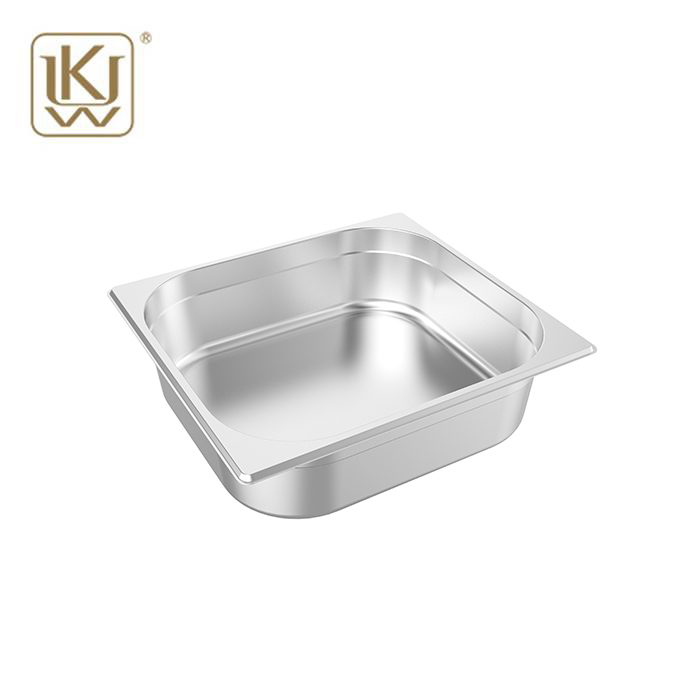
Our Commercial Gastronorm Food Pan fits into that discussion naturally. Instead of treating trays as one-time-use items or simple serving pieces, it supports a more standardized kitchen setup. For buyers who care about stable sizing, repeat purchasing, and broader product planning, that difference matters.
Cookout trays can vary a lot in price because the market includes many different products under the same word. Some are simple serving trays. Some are takeaway containers. Some are light-duty pans meant for short-term use. Others are built for repeated food prep, display, and storage in commercial environments.
That is why buyers often run into confusion when comparing quotes. One supplier may be offering a basic tray with limited durability. Another may be offering a standardized stainless steel pan designed for repeated kitchen use. On paper, both may look like trays. In practice, they belong to very different purchasing categories.
For B2B buyers, this matters immediately. A lower price may look attractive at the beginning, but if the product bends easily, fails to match equipment, or cannot hold up in repeated use, the total cost becomes much higher later. Replacement, complaints, and inconsistent supply often do more damage than a slightly higher unit cost on the first order.
A home user may ask about tray price because they want something quick and simple. A commercial buyer usually has a longer list of concerns. They need to know whether the tray can handle repeated kitchen work, whether it fits standard equipment, whether it stacks well, and whether the next order will match the first one.
That is one reason price discussions in foodservice are rarely only about the piece itself. Buyers are also paying for stability. They are paying for easier restocking, smoother workflow, and fewer problems across storage, prep, transport, and service.
This is where a standardized product line makes more sense than random tray sourcing. Once a kitchen or distributor starts working with standardized food pans, procurement becomes clearer. The product is easier to describe, easier to reorder, and easier to fit into a larger supply program.
If the question is how much are cookout trays, the answer changes quickly once the use scenario becomes more professional. In many commercial settings, buyers are not really looking for the cheapest tray. They are looking for a tray or pan that can keep working across more tasks.
A stainless steel food pan does that much better than many short-life tray options. It can move between prep, storage, display, and transport more easily. It is also easier to build into a full kitchenware range. That matters for wholesalers, hotel supply buyers, catering equipment dealers, and project-based purchasers who do not want to solve the same tray problem again and again.
Our Commercial Gastronorm Food Pan is designed for this kind of use. It gives buyers a more dependable option when they need a tray format that fits professional kitchens instead of temporary service needs only. That also gives it stronger value in repeat business, where consistency matters more than a one-time low quote.
One common mistake is comparing trays only by visible size. Two products may look similar at first glance, but the actual value can be very different. Material quality, thickness, edge finish, depth options, and compatibility with existing kitchen systems all affect whether the tray performs well after delivery.
This is especially important for foodservice importers and distributors. They are not only buying for one kitchen. They may be supplying a chain account, a hospitality program, or a local dealer network. If the tray quality changes from batch to batch, the pricing advantage disappears very quickly.
That is why experienced buyers often ask more detailed questions before discussing final price. They want to know whether the tray is suitable for hot and cold use, whether the dimensions are standardized, whether cleaning is straightforward, and whether the product line can expand later. Price still matters, but it stops being the only filter.
The same buying logic applies when customers compare the best meal prep containers. In many cases, the product that looks cheapest at the beginning is not the one that works best in long-term operations. If a container or tray does not stack well, fit equipment, or last through repeated commercial handling, the user ends up paying for that weakness in other ways.
That is why buyers in professional kitchens often move toward more durable and standardized products rather than chasing the lowest unit price. The best meal prep containers for a real food business are usually the ones that help reduce waste, simplify kitchen organization, and support repeat workflows.
For this reason, stainless steel gastronorm-style pans stay relevant in modern kitchens. They are not only storage pieces. They are part of a practical operating system. That is also why buyers who start by asking about cookout tray pricing often end up reviewing more standardized commercial kitchen options.
Standardization makes sourcing easier. Once trays or pans follow a clear format, buyers spend less time checking fit and less time solving avoidable compatibility issues. Kitchens also work faster when the same pan sizes can move from one station to another without disruption.
That is one of the biggest reasons commercial food pans have stronger value than loosely defined tray products. A standardized product reduces purchasing risk. It also makes it easier for distributors to expand into related sizes and related items later.
Our product is positioned well for that type of buyer. It is not only meant to fill one short-term need. It is useful for food storage, preparation, display, and transport in commercial settings, which makes it easier to fit into broader sourcing plans.
A lot of buyers in this market are not purchasing one tray size only. They may be building a hotel supply line, a catering equipment range, or a private label kitchenware program. In those cases, OEM and ODM support become part of the buying decision early on.
Some buyers need packaging changes. Some need a wider product assortment built around food pans and related kitchenware. Some need a dependable supplier that can support repeat production with steady quality instead of only offering mixed stock. These needs are very common in B2B trade, even for products that look simple on the surface.
That is why choosing a supplier matters just as much as choosing a product. A supplier should not only quote a tray. The supplier should also help the buyer build a workable, repeatable sourcing plan.
So, how much are cookout trays? The real answer depends on material, durability, standardization, and how the tray will be used. In commercial kitchens, the better buying decision is often not the cheapest tray on the list. It is the one that brings better consistency, easier handling, and more reliable repeat use.
That is why many professional buyers move toward commercial food pans when they want stronger value. Our commercial gastronorm food pan is designed for foodservice use where storage, preparation, display, and transport all matter. It also fits buyers who are planning broader OEM or ODM cooperation and need a supplier rather than a one-time seller.
If you are comparing tray options, planning a foodservice product line, or looking for a dependable supplier for commercial kitchenware, send us your size, depth, or packaging requirements. We can help you sort through the options and suggest a practical solution for your market.
Previous:
Next: What Is A Tray Ceiling?