kelley@u-kitchenwares.com
+86-15819924651
+86-0750-3719388

Cooking steak on a Griddle Pan is not only about timing. The real result depends on heat level, steak thickness, pan material, and how evenly the surface transfers heat. In practical kitchen use, most steaks cook quickly on a hot griddle, but the difference between a dry surface and a good sear often comes down to the quality of the pan as much as the cooking time.
For many buyers, this topic matters for more than home cooking advice. In retail cookware, food-service supply, and private-label programs, a griddle pan must deliver stable heating, easy cleaning, and reliable surface performance. That is why questions about steak timing often lead directly to a bigger product question: whether the pan is built for repeated, real-world cooking rather than only for display.
A thinner steak cooks fast on a griddle pan, while a thicker cut needs more time and more controlled heat. In most kitchens, the pan should be fully preheated before the steak touches the surface. If the pan is not hot enough, the steak may release moisture instead of building a better crust. If the heat is too aggressive for too long, the outside can overcook before the center reaches the right doneness.
This is why the cooking answer is never just one number. A griddle pan needs to hold and spread heat well, otherwise timing becomes less predictable. For home users, that affects cooking success. For commercial kitchens, it affects consistency across service.
A flat griddle pan gives the steak more direct contact with the cooking surface, which helps create even browning and a more controlled sear. That is especially useful when the goal is to cook more than one piece at a time or to keep the doneness more uniform from edge to center.
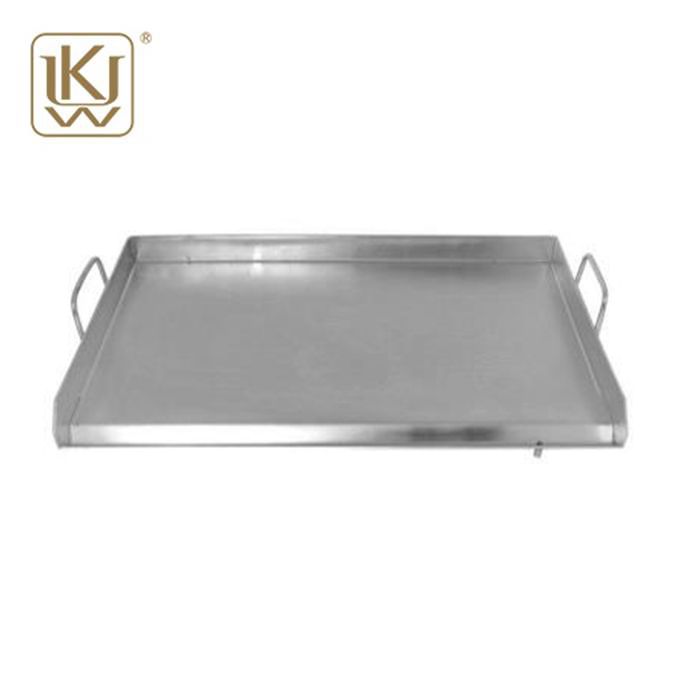
Our product fits naturally into this topic because it is built as a Stainless Steel Flat Griddle Pan for repeated cooking use. The flat design, wide surface, and sturdy body make it suitable for steak, chicken, vegetables, and other high-contact cooking tasks. For buyers, this is important because the pan is not only meant for one recipe. It needs to perform across household, restaurant, and hotel kitchen scenarios.
When people ask how long to cook steak on griddle pan, they often focus only on cooking skill. But the pan material changes the result. A stronger stainless steel body supports better durability and helps the pan stay more stable through repeated heating cycles. A smoother polished surface also makes cleaning easier after cooking, which is important in both home and commercial kitchens.
For distributors and importers, this matters because customer feedback is closely tied to daily use. A pan that heats more evenly and cleans more easily is far easier to position in the market. In cookware sourcing, performance after repeated cooking often matters more than first impressions.
Steak cooking depends on rhythm. The pan needs to recover heat quickly after the meat is placed on the surface. If the temperature drops too sharply, the steak may cook unevenly and lose the seared texture buyers expect from a griddle product.
This is one reason commercial buyers often look closely at thickness, material grade, and practical cooking performance. In food-service supply, a pan should help maintain output speed without making the chef fight the equipment. In home use, it should make cooking simpler and more repeatable. That is why strong structure and steady heat performance remain key selling points.
Steak leaves oil, browned protein, and residue on the cooking surface, so cleaning is part of the full user experience. A griddle pan that is difficult to wash becomes less attractive after only a short period of use. A pan with a smoother stainless surface is easier to wipe down and maintain, which improves customer satisfaction over time.
For B-end buyers, this is not a small detail. Easy cleaning affects product reviews, repeat sales, and long-term product value. A pan that performs well but becomes troublesome after use is harder to support in the market.
In cookware business, many customers are not simply purchasing one pan. They are building a product line. Some want a standard griddle under their own brand. Others need changes in size, handle structure, finish, or packaging to suit a specific market. This is where OEM and ODM support become important.
A supplier that can support practical customization helps buyers build cookware collections that match local cooking habits, retail channels, and food-service demand. That flexibility is useful for wholesalers, distributors, and private-label brands that need more than open-market stock items.
So, how long to cook steak on griddle pan? The practical answer depends on steak thickness, heat level, and how well the pan transfers heat. A good griddle pan should help the steak sear evenly, cook more predictably, and stay easier to clean after use.
If you are sourcing cookware for retail, wholesale, restaurant supply, or private-label development, we can help you review product direction, OEM or ODM options, and market-fit details. Share your target size, application, or branding plan with us, and we can help you build a griddle pan solution that performs well in real kitchen use.