kelley@u-kitchenwares.com
+86-15819924651
+86-0750-3719388

Cleaning a non stick frying pan sounds simple, but in real use it affects much more than appearance. A non stick surface works best when it is cleaned gently, dried properly, and used in a way that protects the coating over time. For home users, this helps the pan last longer. For distributors, wholesalers, and private-label buyers, it also connects directly to customer satisfaction, repeat orders, and product reputation in the market.
That is why this topic matters beyond daily kitchen care. A pan may look good at first, but if it becomes difficult to clean after a short period of use, it quickly loses value in the eyes of customers. In contrast, a pan that stays easy to wash and keeps its surface clean after repeated cooking is much easier to position as a reliable product. This is why many buyers searching for the best non stick pan are not only comparing price or appearance. They are paying attention to coating performance, material structure, and long-term usability.
One common mistake is washing the pan immediately after cooking while it is still hot. Sudden temperature change can affect the surface over time. It is better to let the pan cool naturally, then clean it with warm water and a mild detergent.
In daily use, especially in busy kitchens, this step is often overlooked. But over time, this small habit can make a clear difference in how long the coating stays in good condition. For buyers, this also explains why ease of maintenance becomes part of product evaluation, not just a user habit.
A non stick frying pan should always be cleaned with a soft sponge or cloth. Rough scrubbers or metal tools can damage the coating and make the surface less effective over time.
In high-frequency use environments such as restaurants or commercial kitchens, cookware goes through repeated cleaning cycles every day. If the surface is not durable or easy to maintain, it quickly becomes a problem. That is why many buyers look beyond basic design and pay attention to how the product performs after continuous use.
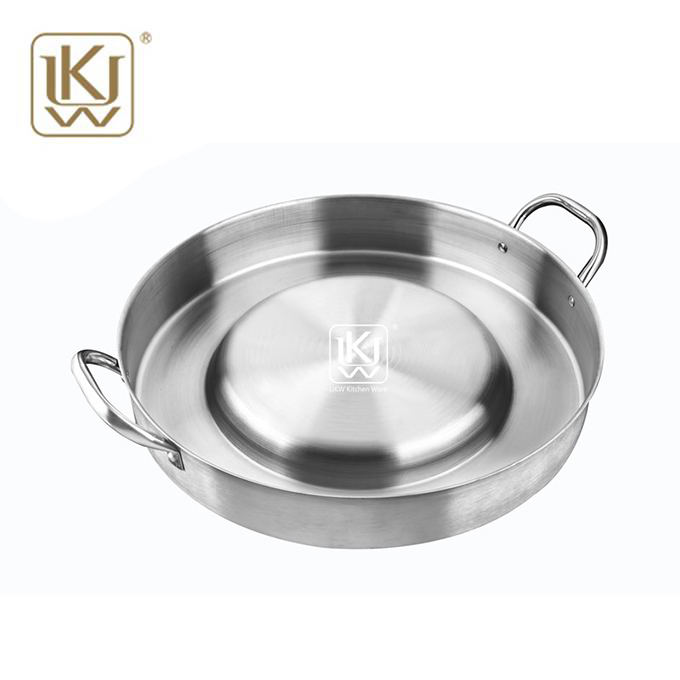
Our convex frying pan is designed with this in mind. It combines a stainless steel body with a non-stick interior and a smooth outer surface, making it more suitable for regular cooking and cleaning without adding extra difficulty to daily use.
When food residue sticks to the surface, the best approach is to soak the pan in warm water for a short time. This softens the residue and makes it easier to clean without damaging the coating.
Using force to remove residue may seem faster, but it often leads to faster wear. Over time, this affects how the pan performs. For distributors and retailers, this directly impacts customer feedback. A pan that remains easy to clean after repeated use is always easier to sell and recommend.
After cleaning, it is important to dry the pan properly. Leaving water on the surface for long periods can affect appearance and may reduce the overall product experience.
A clean and dry pan not only looks better, but also feels more reliable in daily use. This is especially important for cookware used in open kitchens or commercial environments where presentation matters as much as function.
Cleaning is often where users feel the real difference between products. A pan that rinses clean quickly and does not hold onto grease or residue gives a much better experience.
This is also where material and surface treatment play a role. A well-finished surface is easier to maintain and keeps a cleaner look over time. For buyers, this is not a small detail. It is part of how customers judge quality after purchase.
That is why many buyers looking for the best non stick pan focus on long-term use instead of just first impressions. A product that performs consistently in real kitchen conditions has stronger market value.
Cleaning habits also depend on how the pan is used. In home kitchens, users may cook once or twice a day. In restaurants or hotels, the same pan may be used continuously throughout service hours.
This is why cookware needs to match different environments. Our convex frying pan is suitable for multiple heat sources including gas, electric, and induction, and it is used in household kitchens as well as restaurant and hotel kitchens. This flexibility makes it easier for buyers to serve different customer groups with one product direction.
In cookware sourcing, many buyers are not only purchasing products. They are building their own product lines. This is where OEM and ODM support becomes important.
Different markets may prefer different sizes, handle styles, or finishes. A supplier that can support customization helps buyers create products that better match their target customers. Instead of relying on standard items, they can develop cookware that fits their brand positioning and market demand.
So, how to clean non stick frying pan? The key is simple: let it cool, clean it gently, avoid harsh tools, use soaking instead of force, and dry it properly after washing. These steps help protect the coating and keep the pan working well over time.
If you are sourcing cookware for retail, wholesale, or private-label projects, we can support your requirements with practical product solutions and customization options. Share your market needs or product ideas with us, and we can help you develop cookware that is easier to maintain and more suitable for long-term use.
Previous: How Long To Cook Steak on Griddle Pan?
Next: What Are Chafing Dishes?