kelley@u-kitchenwares.com
+86-15819924651
+86-0750-3719388

Finding the answer to what are the best pots and pans depends on how they will actually be used. For home cooks, the best choice is usually cookware that heats evenly, cleans easily, and feels practical for everyday meals. For distributors, importers, retailers, and hospitality buyers, the answer goes further. The best pots and pans also need stable quality, usable size options, reliable coating performance, and a structure that can handle repeated cooking without becoming difficult to sell or support later.
That is why non-stick cookware continues to stay relevant in the market. A well-made non-stick cooking pan is easier for many users to handle, especially when they want faster cleanup, smoother food release, and a more forgiving cooking experience. Instead of treating cookware as a simple kitchen basic, many buyers now look at it as a product that affects user satisfaction, reorder potential, and after-sales risk.
The best pots and pans are not always the heaviest or the most expensive. In real kitchens, people usually care about whether the pan heats food evenly, whether the handle feels secure, and whether cleanup takes two minutes or twenty. If a pan develops hot spots, food burns in one area while staying undercooked in another. If the coating wears too quickly, the product becomes harder to use and harder to recommend.
A non-stick cooking pan solves some of these everyday issues in a direct way. It helps food release more easily, which is useful for eggs, vegetables, fish, and light frying. It also reduces the need for aggressive scrubbing after cooking. For buyers building a product range, that makes non-stick pans easier to position because the benefit is simple and visible from the first use.
When people compare cookware, they often focus on appearance first. In practice, structure matters more. A pan body with balanced thickness is more likely to stay stable during heating and less likely to deform over time. That stability affects how the pan sits on the cooktop, how evenly it transfers heat, and how reliable it feels after repeated use.
This matters even more for B-end buyers. One common problem in cookware sourcing is that the sample performs well, but the bulk order feels less consistent. The bottom may heat unevenly, the handle may feel less secure, or the coating may not hold up in normal daily use. Buyers are not only choosing cookware for today’s sale. They are choosing a product that needs to keep performing after it reaches end users.
Non-stick pans remain popular because they solve practical cooking problems without making the process complicated. They are easier for everyday users, easier to clean, and easier to include in entry-level and mid-range cookware programs. For sellers, that makes them easier to explain and easier to move across different markets.
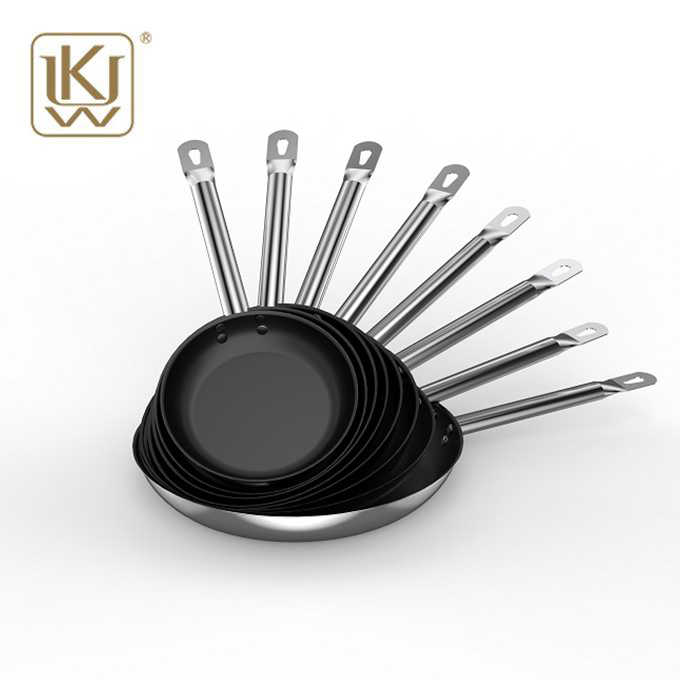
A non-stick cooking pan with multiple size options is especially useful because it fits more than one sales channel. Smaller sizes work for light household cooking, while larger diameters are more suitable for bigger portions and faster kitchen output. When a product line covers a wider size range, buyers can build a more complete offering without changing product style too often.
For wholesalers and project buyers, the best pots and pans are not only about cooking results. They also need to reduce avoidable complaints. If the handle loosens, the coating fails too early, or the pan shape changes under heat, the issue quickly moves from product quality to customer trust. That is why experienced buyers often look at thermal balance, abrasion resistance, handle fixing, and daily maintenance needs before they look at pure price.
Another pain point is product overlap. Many cookware items look similar in photos, but the real difference appears in use. A pan that offers smoother heat control, stronger handle fixing, and easier cleanup usually creates a better ownership experience. That translates into stronger repeat business and fewer service issues.
The best cookware choice should match the customer group it is meant for. If the target market values convenience and light daily cooking, a non-stick frying pan is often the better fit. If the target buyer is more focused on repeat family cooking, size range and ease of maintenance become more important. If the product is meant for retail or distribution, consistency across sizes matters because buyers usually want a product line that looks unified and performs in a similar way.
This is where product structure becomes a selling point, not just a manufacturing detail. A pan that is easy to cook with, easy to clean, and easy to reorder gives buyers more confidence when building long-term supply plans.
So, what are the best pots and pans? In most real buying situations, they are the ones that combine even heating, reliable structure, practical sizing, and easy daily use. A good non-stick cooking pan meets those expectations more directly than many buyers expect. It supports smoother cooking, easier cleaning, and a product experience that feels straightforward from the first use.
If you are reviewing cookware options for retail, wholesale, or project supply, feel free to contact us. We can help you compare sizes, discuss suitable product choices for your market, and provide practical guidance before you move forward with an order.