kelley@u-kitchenwares.com
+86-15819924651
+86-0750-3719388

When people search how to keep soup warm for a party, they usually want a method that looks neat, holds temperature steadily, and does not create extra stress during service. That matters even more for caterers, buffet operators, restaurants, rental companies, and hospitality buyers who need to serve soup in volume without losing quality. Soup can cool down quickly once service begins, and if the holding method is unstable, the texture changes, the surface forms a skin, and the serving line starts to look messy.
For small gatherings, a home solution may be enough for a short time. For real party service, especially when guests serve themselves over a longer window, a more controlled setup is the better choice. This is where an electric soup warmer becomes useful. It keeps soup at a serving temperature more consistently, reduces repeated reheating, and helps the station stay cleaner and easier to manage.
Soup is one of the easiest foods to prepare in advance, but it is also one of the easiest to mishandle during service. Once the lid is opened again and again, heat escapes fast. If the pot is left on a weak warmer, the temperature may drop below a comfortable serving range. If the heat is too high, the soup may thicken too much, split, or scorch around the edge.
This is a common problem in buffet service and event catering. Buyers do not just need a container that holds soup. They need a holding solution that supports steady output, keeps the soup presentable, and does not force staff to keep adjusting or transferring product during the event. In busy service environments, that difference matters.
One of the most practical answers to how to keep soup warm for a party is to avoid repeated reheating altogether. Reheating may seem simple, but it often hurts consistency. A soup that has been heated, cooled, and heated again can lose its original texture and flavor balance. It also adds labor pressure during service.
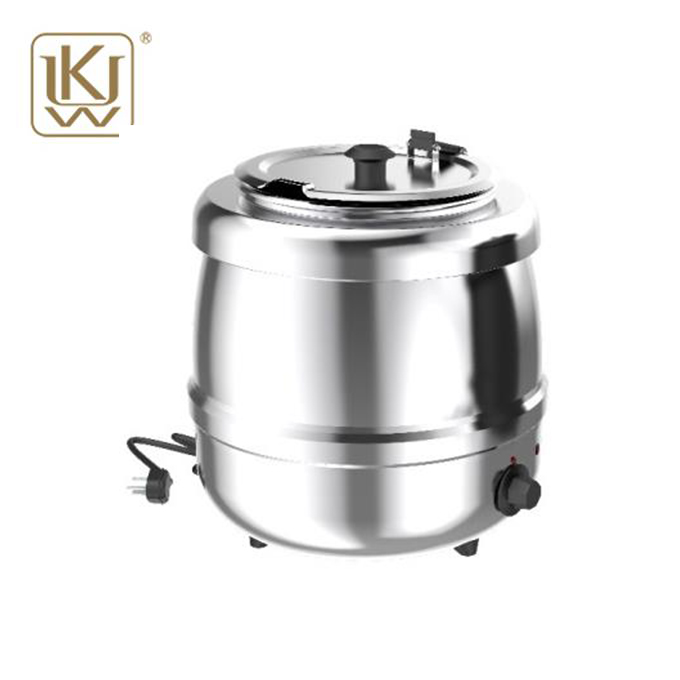
A dedicated electric soup warmer solves that more cleanly. A stainless steel model with an adjustable thermostat gives better control over the holding process. Instead of guessing whether the soup is still hot enough, staff can keep the product at a more stable serving temperature from the start of service to the final portion. For operations that serve soup, sauces, or stews regularly, this is a more dependable method than moving pots on and off the stove.
For parties, banquets, and buffet lines, presentation and workflow matter almost as much as heat retention. A countertop electric soup warmer helps solve both. It keeps the station compact, reduces clutter, and makes self-service easier for guests. It also helps staff avoid the common problem of replacing lukewarm soup with a freshly reheated batch in the middle of service.
A 10L electric soup warmer is also a practical size for many commercial settings. It gives enough volume for steady serving without taking too much counter space. That balance is useful for event planners and foodservice buyers who need equipment that fits different layouts. An adjustable thermostat is another important point. Different soups hold best at different temperatures, and fixed-heat equipment often creates avoidable quality problems.
For commercial buyers, the question is not only how to keep soup warm for a party. It is also how to do it with less waste, less labor pressure, and fewer service complaints. If the soup cools too quickly, guests notice. If the station looks untidy, the setup feels less professional. If the equipment is hard to clean, staff time goes up after the event.
That is why buyers tend to look for a few practical things. They want stable heating, easy cleaning, durable material, and a size that works across more than one service model. Stainless steel remains a strong choice because it is durable, easier to maintain, and better suited to repeated commercial use. An electric soup warmer with a smooth surface and simple controls is easier for both operators and service teams to handle during busy hours.
To get better results, soup should go into the warmer already hot rather than cold. The warmer is best used for holding temperature, not for replacing full cooking time. Preheating the unit before service can also help create more stable holding conditions from the beginning. Once service starts, keeping the lid closed as much as possible reduces heat loss and helps maintain a better product appearance.
It is also smart to match the soup type to the service window. Thin broths, creamy soups, and chunky stews do not respond to heat in the same way. A unit with temperature adjustment gives more flexibility here. This is especially useful for businesses that serve different menus in different seasons or across different event formats.
If you are buying for commercial use, the right product should support daily work, not just look acceptable in photos. Capacity matters, but so do heat control, cleaning convenience, and countertop footprint. A soup warmer that heats in about 15 to 20 minutes can help teams prepare the line faster before guests arrive. That can make setup more efficient during short turnover periods between lunch, dinner, or event sessions.
A durable electric soup warmer also supports more than one use case. It can work for buffet stations, catering service, hotel breakfast areas, banquet events, and restaurant self-service counters. That kind of flexibility matters to buyers trying to control equipment budgets while still covering multiple service needs.
If you are still asking how to keep soup warm for a party, the most reliable answer is to use a controlled holding method instead of depending on improvised heating. A well-designed electric soup warmer helps protect soup quality, supports cleaner service, and makes event operations easier to manage. For commercial buyers, it also reduces the common headaches of temperature inconsistency, repeated reheating, and inefficient service flow.
If you are comparing soup holding solutions for buffet service, catering, or hospitality projects, feel free to contact us. We can help you review product details, discuss suitable capacity options, and recommend a more practical setup for your service environment.
Previous: What Are The Best Pots And Pans?