kelley@u-kitchenwares.com
+86-15819924651
+86-0750-3719388

A frying pan is one of the most common and practical cookware items in any kitchen. It is designed with a wide flat bottom, relatively low sides, and a long handle, making it ideal for direct-heat cooking. People use a frying pan for searing, browning, frying, sauteing, and quick surface cooking that needs steady heat and easy control. From eggs and vegetables to fish and meat, this pan is built for everyday cooking tasks that depend on speed, contact, and consistency.
At first glance, a frying pan seems like a simple product. In reality, it is one of the cookware categories that buyers evaluate very carefully. For end users, the main concerns are usually whether the pan is easy to use, easy to clean, and suitable for daily cooking. For distributors, wholesalers, importers, and hospitality buyers, the focus goes further. They also care about material safety, heat performance, size coverage, product consistency, service life, and whether the pan can meet the needs of different sales channels.
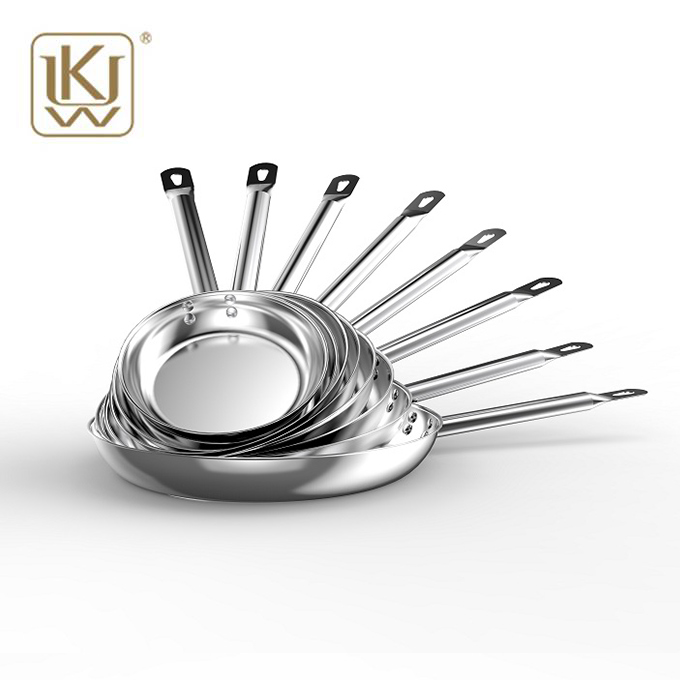
A frying pan is built around three main parts: the base, the sidewall, and the handle. The base is the working area where heat transfers from the stove to the pan and then to the food. If the base is stable and well made, cooking becomes more even and predictable. If the base is weak, thin, or poorly formed, users may notice uneven heating, hot spots, or unstable contact with the cooktop.
The sidewall of a frying pan is lower than that of a stock pot or saucepan. This is one of its defining features. Lower sides make it easier to turn food, stir ingredients, and move food out of the pan. This shape is especially useful for foods that need contact heat rather than deep liquid cooking. It also helps the user cook quickly without feeling restricted by high walls.
The handle is another key part of the structure. A frying pan is moved often during cooking, so the handle must feel secure and balanced. In commercial kitchens, this matters even more because cookware is used repeatedly, cleaned frequently, and handled under fast working conditions. A stable handle gives users more confidence and helps reduce complaints later.
A frying pan is sometimes confused with other cookware such as saute pans or skillets, but its practical role is quite specific. It is made for direct, fast, open-surface cooking. The wide flat bottom allows ingredients to spread out rather than sit in layers, which helps moisture evaporate more easily and allows better browning.
Compared with deeper cookware, a frying pan is less about volume and more about heat exposure. That is why it is commonly used for eggs, fish fillets, steaks, cut vegetables, and many breakfast or lunch items that cook better on a broad heated surface. For product planning, this distinction matters because a frying pan is not simply another pot shape. It serves a different cooking purpose and usually has different purchasing logic.
For B-end buyers, that difference affects assortment decisions. A frying pan is often one of the first products considered in a stainless steel cookware line because it is a high-frequency item. It has broad market acceptance and can work in both household and commercial channels.
Material is one of the most important factors in defining the real value of a frying pan. Two pans can look very similar in shape, but their long-term performance may be very different if the materials are not the same. In today’s cookware market, stainless steel remains one of the most trusted choices because it combines durability, clean appearance, and strong acceptance in both retail and professional kitchens.
A Stainless Steel Frying Pan is often chosen for its resistance to rust, staining, and daily wear. It also suits kitchens that value hygiene and easier cleaning. For buyers, these are not small details. They directly affect product returns, maintenance questions, and repeat-order confidence. A cookware item that keeps its appearance and structure through frequent use is much easier to sell and support in distribution channels.
This product uses food-grade 304 stainless steel, a material widely recognized for corrosion resistance and reliable food-contact performance. It is also available in multiple sizes from 180mm to 400mm, with a body thickness of 0.8mm. These product details make the pan easier to position across different kitchen needs, from light household cooking to broader restaurant and hotel use.
Stainless steel frying pans remain popular because they offer a practical balance between durability and versatility. They are suitable for everyday kitchens, but they also fit environments where cookware must handle repeated use, regular washing, and more demanding cooking routines. That is one reason they continue to perform well in wholesale and hospitality supply.
Another strength of stainless steel is surface maintenance. A good stainless steel pan is easier to clean thoroughly than many other cookware types, especially in kitchens where appearance and hygiene are both important. This matters to buyers serving restaurants, hotels, or food preparation customers, because those users often judge cookware by how well it performs after repeated use, not only by how it looks when new.
This product also uses an electrolytic polished finish, which helps improve the surface appearance and supports better corrosion resistance in daily use. For B-end buyers, that adds more than visual value. It also improves the pan’s presentation at retail level and can support a more premium product image.
A frying pan is made for cooking that depends on surface contact and controlled direct heat. It is commonly used for frying eggs, searing meat, pan-frying fish, browning vegetables, and preparing many quick dishes that need even contact with the cooking surface. Its shape allows food to cook efficiently while giving the user enough room to move and monitor ingredients.
That flexibility is one reason frying pans are important in so many markets. In home kitchens, they are often used every day. In restaurants and hotels, they are part of the basic cookware setup because they support both speed and consistency. In food processing or preparation environments, they can also be used for small-batch heating or finishing work where a flat open pan is more practical than a deep vessel.
For buyers, this broad use range increases product value. A frying pan that works well across household, restaurant, hotel, and food-prep settings is easier to market and easier to fit into multiple sales channels. That makes it a useful category for wholesalers and importers building a more complete cookware range.
Size matters more than many buyers expect. A smaller frying pan is often better for light household use, while a larger one is more practical for family cooking, hospitality kitchens, or food-service use. Because cooking quantity, kitchen layout, and user habits vary from market to market, size range becomes an important part of product planning.
This is where a broader diameter range becomes useful. With options from 180mm to 400mm, the pan can cover smaller personal-use applications as well as larger cooking tasks. For retail channels, that gives more flexibility in product selection.
From a B-end perspective, size coverage also helps solve assortment pain points. Buyers do not want a cookware supplier that can only support a narrow range. They usually prefer a product line that can serve multiple end-user groups with a consistent look and stable quality level.
A frying pan succeeds only when it cooks predictably. End users expect the surface to heat steadily enough to support browning, searing, and frying without obvious unevenness. That is especially important in stainless steel cookware, where cooking results depend heavily on heat management and base quality.
This pan is positioned as suitable for tasks such as searing steak, frying eggs, and pan-frying fish, which are all cooking applications that quickly reveal whether the heat distribution is practical. Even heating is not just a technical phrase. It directly affects whether food cooks with a better color, better texture, and less risk of one side burning while another side remains undercooked.
For importers and distributors, this matters because cookware complaints often come from cooking experience rather than visible defects. A pan may arrive looking fine, but if the user feels that it performs poorly, brand confidence drops. That is why performance should always be considered together with material and finish.
For B-end buyers, a frying pan is not only a kitchen tool. It is also a supply item that must meet commercial expectations. Material reliability is one of the biggest concerns. Buyers want to know whether the pan is suitable for repeated food-contact use and whether it will maintain its surface and structure over time. Size consistency is another concern, especially for wholesalers who need repeat orders to match previous shipments.
Cleaning convenience also matters. Products that are easier to clean usually create better user feedback and fewer after-sales questions. In restaurant or hotel supply, durability and stable handling are equally important because cookware is often used more intensely than it is in a normal home setting. Buyers in these segments are usually not looking only for low price. They are looking for products that balance cost with dependable long-term use.
This is why a stainless steel frying pan can be a strong category for professional sourcing. It is a basic product, but it is also one of the most visible and most frequently used items in a kitchen. If the product performs well, it can support repeat business. If it performs poorly, customers notice quickly.
When evaluating a frying pan, buyers should look beyond photos and basic dimensions. The more useful questions are whether the material grade is reliable, whether the thickness is suitable for the target market, whether the handle feels secure, and whether the product range is wide enough for different channels. Surface finishing should also be reviewed because it affects appearance, cleanability, and the overall market position of the product.
A good frying pan should feel practical in real use. It should support daily cooking without becoming difficult to maintain. It should also fit the buyer’s channel strategy. A retail-oriented buyer may focus on appearance and everyday versatility, while a project or hospitality buyer may care more about durability, consistency, and bulk supply stability. The best product is the one that aligns with the actual market need, not simply the one with the lowest quoted price.
A frying pan is a flat, shallow cooking pan designed for direct-heat tasks such as frying, browning, searing, and quick everyday cooking. But in product terms, it is much more than a simple kitchen basic. Its value comes from the balance of material, structure, heat performance, size range, and ease of maintenance. When those elements are handled well, a frying pan becomes a reliable cookware product for both household and professional use.
For B-end buyers, understanding what a frying pan is also means understanding what makes it commercially dependable. A stainless steel frying pan with stable quality, practical dimensions, and broad application value can fit retail, hospitality, and distribution channels much more effectively.
If you are selecting stainless steel frying pans for wholesale, distribution, or project supply, and want help with size planning, product matching, or specification review, feel free to contact us. We can provide practical guidance and help you choose a solution that fits your market more accurately.
Previous: How To Get Burnt Food Off Pan?
Next: What Is A Sauce Pan?