kelley@u-kitchenwares.com
+86-15819924651
+86-0750-3719388

A beverage dispenser looks clean when it is clear and shiny, but real cleanliness is about removing sugar film, pulp residue, and microbial buildup in hidden areas such as the spigot, seals, and lid grooves. In buffet lines, hotels, catering service, and self-serve stations, dispensers often hold juice, infused water, iced tea, or sweet drinks for hours. These liquids leave behind sticky deposits that harden quickly, and if cleaning is rushed, odor, staining, and flow restriction can appear within a few service cycles.
This guide explains how to clean a beverage dispenser properly, with a practical routine that protects hygiene, preserves taste, and extends service life. You can also view UKW models and structures on our juicer dispenser collection.
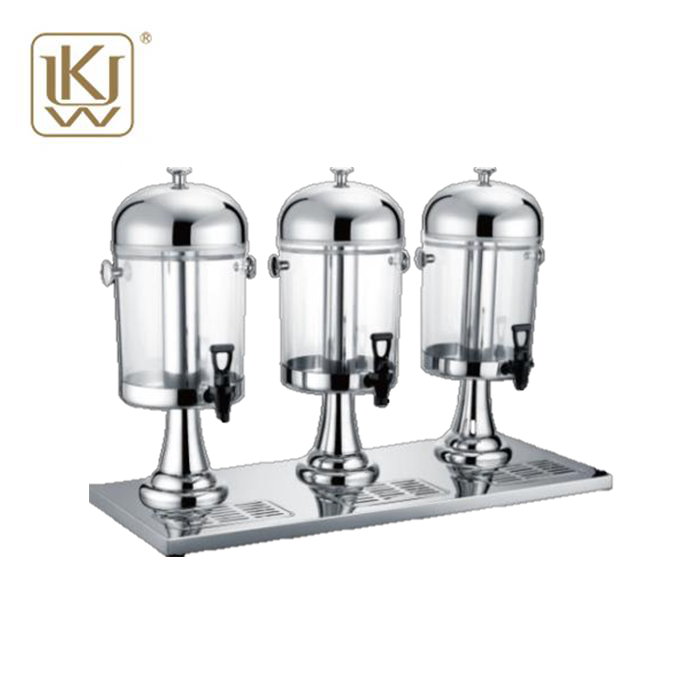
Beverage residue behaves differently from plain water. Sugar creates a thin, tacky layer that attracts dust and holds odor. Fruit pulp settles into corners and around spigot openings. Tea and coffee tannins stain surfaces and form a film that is difficult to remove if it dries. Even when a dispenser is emptied, the remaining liquid inside the spigot channel and gasket area can become the source of off-flavors during the next service.
A consistent cleaning routine prevents these issues by removing residue before it dries, disassembling the parts that trap liquid, and ensuring everything dries fully before storage.
How often you clean depends on what you serve and how long it sits. Water dispensers can usually be cleaned on a regular schedule, but juice and sweetened drinks require more frequent washing because sugar residue builds faster. Drinks with pulp or dairy-based mixtures require even stricter discipline because they can spoil and create odor quickly.
A reliable rule is to clean immediately after service whenever the dispenser holds juice, sweet tea, lemonade, or any beverage that leaves visible residue. For continuous stations, a full disassembly cleaning should be scheduled daily, with rinsing and refresh cycles during the day depending on usage.
Start by draining the dispenser completely through the spigot, because this flushes the internal channel and helps remove sediment. Then do a warm water pre-rinse. Warm water loosens sugar film better than cold water and helps lift sticky residue from the walls.
If the beverage contained pulp, swirl warm water inside the body before draining again. This mobilizes settled solids so they do not remain trapped near the bottom edge. The goal of the pre-rinse is not full cleaning, but removing the first layer so the main wash is faster and more effective.
Most cleaning failures happen because the spigot is not disassembled. Spigots contain small cavities, threads, and gasket contact points where residue hides. If you only wash the container body, the spigot can remain a contamination point and cause slow dripping, restricted flow, or odor.
Disassemble the spigot according to its structure. Remove the handle, nozzle parts, and gasket if accessible. Wash each piece with warm soapy water and brush the internal channel. A small food-safe brush is useful for reaching the narrow spigot tube without scratching. Pay attention to gasket surfaces. If a gasket holds sticky residue, it will continue to transfer odor and may reduce sealing performance.
A durable beverage dispenser stays dependable longer when spigot parts are cleaned and reassembled correctly, because residue is one of the main reasons seals degrade and leaks develop.
After disassembly, wash the dispenser body with warm water and a mild food-safe detergent. Use a non-abrasive sponge so the surface stays smooth. Smooth internal surfaces are easier to sanitize because residue has fewer places to grip. Avoid harsh scouring pads that create micro-scratches, because scratches can trap film and make future cleaning harder.
If there is visible staining from tea, fruit, or flavored drinks, allow the detergent solution to sit briefly before wiping. For stubborn spots, a soft brush is more effective than hard scrubbing, because it lifts film without damaging the finish.
If your water is hard, mineral scale can form, especially around water lines and edges. Scale is not only a cosmetic issue. It can create rough surfaces that hold residue and can affect how clean the dispenser feels over time.
For periodic deep cleaning, a mild descaling approach can be used. A diluted food-safe acid solution such as vinegar and warm water is commonly used to loosen scale and remove odor. After descaling, rinse thoroughly until no smell remains. The key is complete rinse-out, because leftover acid odor can transfer to beverages during the next service.
This step is especially useful for dispensers used daily in breakfast service, where repeated refills and frequent warm-cold cycles can accelerate film and odor buildup.
Cleaning removes visible residue. Sanitizing reduces remaining microorganisms, especially in spigot channels and gasket contact surfaces. For foodservice operations, sanitizing is an important step when dispensers hold juice or sweetened beverages.
Use a food-contact sanitizer that is appropriate for your operation’s standards and follow the correct dilution and contact time. After sanitizing, rinse as required by the sanitizer instructions. Rinsing should be thorough, because sanitizer taste transfer is one of the most common customer complaints when cleaning is rushed.
Drying is part of hygiene. Moisture trapped in the spigot assembly or under gaskets can create odor and shorten gasket life. After washing and sanitizing, allow all parts to air dry fully. If you must dry quickly, use clean, lint-free cloths and ensure the spigot channel is not left wet.
Reassemble the dispenser only when parts are dry. This reduces mold risk and helps seals sit correctly. When storing, keep lids slightly open if possible to prevent trapped humidity.
A frequent mistake is cleaning only the tank but leaving the spigot assembled. Another is soaking parts in strong chemicals that degrade gaskets over time. Over-scrubbing with abrasive pads is also common and can make stains worse in the long run because scratches trap residue.
If the spigot begins to drip after cleaning, the gasket may be misaligned or residue may still be present on the sealing surface. Correct assembly and clean gasket contact points usually solve the issue.
| Cleaning Level | When To Use | Key Focus | Typical Outcome |
|---|---|---|---|
| Daily cleaning | After each service | Disassemble spigot, wash body, dry fully | Prevents odor and flow issues |
| Mid-shift refresh | During heavy usage | Rinse, flush spigot, refill with chilled beverage | Keeps taste consistent |
| Deep cleaning | Weekly or as needed | Descale, remove stains, full sanitation | Restores clarity and cleanliness |
This structure helps keep cleaning predictable and reduces the chance of small issues becoming recurring complaints.
UKW beverage dispensers are designed for practical service workflows, including stable spigot operation and structures that support routine disassembly and cleaning. In high-frequency environments, cleaning speed and reliability directly affect service quality, because residual odor or slow dripping quickly becomes a customer-facing problem. You can review UKW models and configurations on our juicer dispenser collection. For projects that require a custom beverage station setup, UKW can provide guidance on capacity selection, spigot style matching, and maintenance planning.
Cleaning a beverage dispenser properly requires more than rinsing the tank. The key steps are draining through the spigot to flush internal channels, disassembling and brushing the spigot and gaskets, washing the body with a non-abrasive method, sanitizing when needed, and drying all parts completely before reassembly. This routine prevents odor, staining, slow flow, and leaks, while supporting safe beverage service in daily operations.
If you are selecting dispensers for hotel breakfast service, catering, or beverage stations and want guidance on models that fit your cleaning and usage routine, contact UKW. Share your beverage types, service frequency, and station layout, and we can recommend practical options and provide support for setup and maintenance.
Previous: