kelley@u-kitchenwares.com
+86-15819924651
+86-0750-3719388

Choosing the right stockpot size for soup is not only about how many people you serve. A stockpot that is too small boils over, reduces heat circulation, and makes it difficult to simmer evenly. A pot that is too large wastes energy, heats slowly, and can be awkward to lift, store, and clean. The best choice comes from matching capacity to batch size, boil space, ingredient volume, and your cooking equipment. This guide explains how to select a Stainless Steel Stock Pot size for soup with clear, practical reasoning that works for home kitchens, catering prep, and foodservice operations.
You can explore UKW options on our stainless steel stock pot collection.
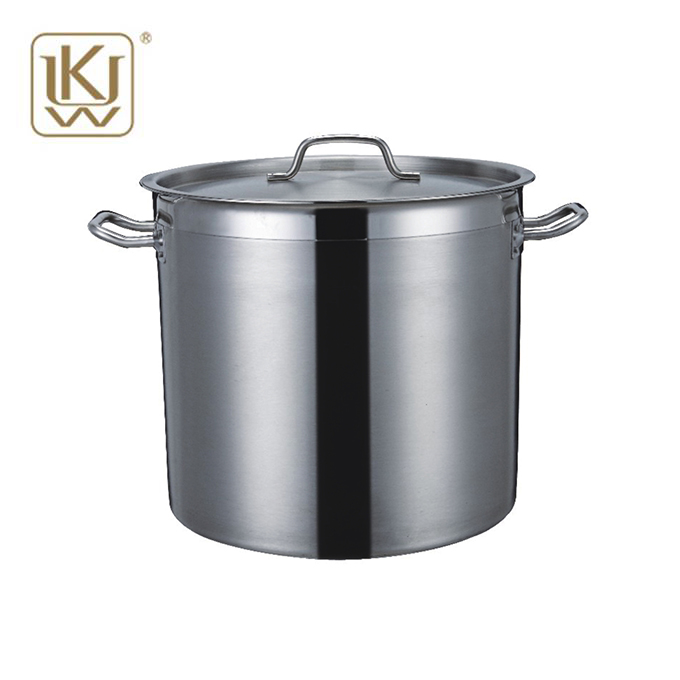
Many people estimate soup volume by servings alone, but soup batches are defined by liquid plus ingredients. A broth-only soup takes less space than a chunky soup with vegetables, beans, or bones. Cream soups can foam more during heating, and starchy soups can expand and thicken as they simmer.
A reliable approach is to estimate your finished soup volume first, then add headroom for stirring and simmering. In practice, most cooks do not fill a stockpot to the rim. Leaving space prevents boil-over and gives you room to move a ladle without splashing. As a working standard, plan to use about 70 to 80 percent of the pot’s stated capacity during cooking, especially when bringing soup to a boil.
Stockpots are labeled by total capacity, but usable capacity is lower once you factor in headroom. This is especially important for soup, because boiling and simmering create surface movement and steam pressure.
If you intend to cook 6 liters of soup comfortably, a 6-liter pot is usually too tight. A 8-liter pot gives more stable simmering space. If you are making bone broth with large bones, the pot must also accommodate vertical volume, not only liquid liters, because bones displace liquid and can create uneven heating if packed tightly.
The table below helps translate typical batch goals into a pot size that stays comfortable during boiling and simmering.
| Finished Soup Volume | Recommended Stockpot Size | Why It Works |
|---|---|---|
| 2 to 3 liters | 4 to 6 liters | Allows headroom for stirring and simmering |
| 4 to 6 liters | 8 to 10 liters | Reduces boil-over risk and improves circulation |
| 7 to 10 liters | 12 to 16 liters | Supports chunky soups and stock ingredients |
| 11 to 15 liters | 18 to 24 liters | Suitable for catering prep and batch cooking |
| 16+ liters | 28 liters and above | Designed for high-volume soup production |
This sizing logic is intentionally conservative. It prioritizes controllable boiling and easier handling rather than pushing a pot to maximum capacity.
Stockpots vary not only in liters but also in diameter and height. A tall, narrow pot can reduce evaporation and is useful for long simmering stocks, but it may heat more slowly on certain stovetops if the burner does not match the base. A wider pot increases surface area, speeds up reduction, and can improve stirring access, but it also increases evaporation and requires more storage space.
For induction and electric cooktops, base contact matters. Choose a pot with a base diameter that matches your burner or induction zone for efficient heat transfer. For gas, a wider base can distribute flame more evenly, but very wide pots may require a stronger burner for fast boil times.
Soup style changes pot needs. Brothy soups are forgiving and can be cooked in smaller pots relative to volume. Chunky soups need more clearance for stirring to prevent sticking. Starchy soups benefit from wider access so you can scrape the bottom and keep heat even. Bone broth and stock require extra vertical room to fully submerge bones while maintaining headroom.
If your soup routine often includes large ingredients such as corn cobs, poultry frames, or big vegetable cuts, choosing a slightly larger pot avoids cramped stacking and improves extraction and circulation during simmering.
A full stockpot becomes heavy quickly. One liter of water weighs about one kilogram, and soup often weighs more due to solids. A 12-liter pot can easily exceed 12 kilograms when filled, before you account for the pot’s own weight. This matters for lifting, pouring, and moving from stove to sink.
If you routinely cook larger batches, consider whether you will ladle and store soup rather than lifting and pouring. Handles should feel secure, and the pot should remain stable when partially full. For foodservice use, handling safety often becomes a reason to choose a pot that is slightly larger than necessary, so the batch can be cooked without filling to an unsafe level.
Soup requires long simmering and repeated cleaning. Stainless steel is widely chosen because it resists corrosion, handles temperature cycling, and maintains a clean surface for frequent use. For better heat distribution, many stockpots use a layered base that reduces hot spots and improves simmer control, especially on induction and electric cooktops.
When evaluating durability, look at wall thickness, base construction, handle attachment method, and lid fit. A durable stainless steel stock pot should hold shape under daily heating and remain stable with heavy contents.
If you are choosing for a home kitchen, start from the largest batch you realistically cook in a week, then select a pot that allows comfortable headroom. Many kitchens find that an 8 to 10 liter stockpot covers most soup needs without becoming difficult to store.
For catering, meal prep, or restaurant prep, sizing should match production rhythm. A slightly larger pot supports batch consistency and reduces downtime caused by boil-overs or uneven simmering. In these scenarios, a custom stockpot size strategy can make sense, especially when standardizing pot sets across multiple kitchen stations.
UKW provides stainless steel stock pot options designed for stable heating and practical handling. You can review sizes and specifications on our stainless steel stock pot collection.
Choosing the right stockpot size for soup starts with your finished batch volume, then adds enough headroom for boiling, stirring, and ingredient displacement. Most soup cooking works best when the pot is filled to about 70 to 80 percent of capacity, which improves control and reduces boil-over risk. Diameter, height, heat source matching, and handling weight all influence the best choice, especially for larger batches and long-simmer stocks.
If you are selecting stockpots for a kitchen program, catering prep, or bulk purchasing plan, contact UKW with your target batch volume, heat source type, and cooking style. We can provide guidance on suitable sizes and help you choose a practical configuration for consistent soup production.