kelley@u-kitchenwares.com
+86-15819924651
+86-0750-3719388

A Stainless Steel Heat Preserving Barrel is built to hold hot liquids safely and slow down heat loss, but the temperature that causes damage depends on what part you mean by damage. The stainless steel body can tolerate very high temperatures without melting, yet real-world damage usually happens much earlier due to surface oxidation and discoloration, loss of strength from overheating, distortion from uneven heat, or failure of non-metal components such as seals, bases, handles, coatings, and insulation layers. Understanding these temperature ranges helps you protect service life, keep the exterior finish clean, and avoid leaks or deformation.
This guide explains the practical temperature limits that matter for commercial kitchens, catering, beverage service, and facility operations, then shows how to choose and use a stainless steel heat preserving barrel correctly.
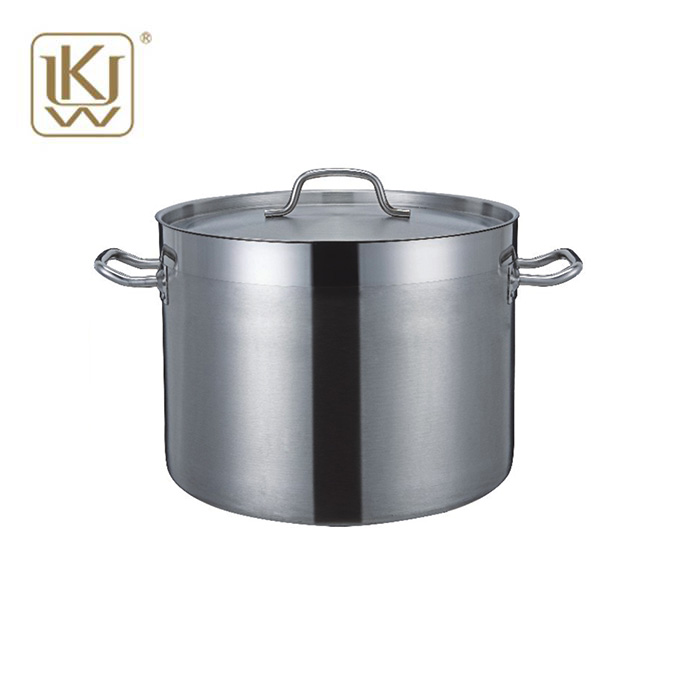
When people ask what temperature will damage a Stainless Steel Barrel, they are often mixing several different risks:
Cosmetic damage
Heat tint, yellowing, rainbow colors, or dark blue oxidation on the surface.
Performance damage
Warping, loosened joints, reduced rigidity, or reduced corrosion resistance over time.
Functional damage
Seal deformation, insulation breakdown, plastic part softening, base damage, or leakage.
Safety damage
Overpressure events in closed systems, scald hazards, and unstable handling.
Because a heat preserving barrel is typically a multi-material assembly, the safe operating temperature is usually limited by the lowest-rated component, not the stainless steel shell.
Most food and beverage stainless steel containers are made from austenitic stainless steels such as 304 or 316. From a material standpoint, stainless steel has strong oxidation resistance at high temperature, but long exposure to certain bands can change properties.
Key reference points for common austenitic stainless steels:
High-temperature oxidation resistance
Type 304 has good oxidation resistance up to about 870°C in intermittent service and up to about 925°C in continuous service. :contentReference[oaicite:0]{index=0}
Sensitization range that can reduce corrosion resistance after cooling
Chromium carbide precipitation can occur in roughly the 450°C to 850°C range, which is relevant for corrosion performance in some environments. :contentReference[oaicite:1]{index=1}
Melting is far beyond any kitchen scenario
Typical melting range for 304 stainless steel is around 1400°C to 1450°C. :contentReference[oaicite:2]{index=2}
These temperatures show that the steel will not melt in normal hot beverage service. However, that does not mean the barrel can be heated like cookware. A heat preserving barrel is designed for holding hot liquids, not for direct heating on a flame, hot plate, or oven.
In everyday operations, the earliest visible sign of overheating is surface discoloration from oxidation. This can occur at temperatures far below structural failure, especially when the exterior is dry and exposed to air.
A useful practical guideline is that noticeable heat tinting can begin in the few-hundred-degree range, and it becomes more pronounced as temperature climbs. Color change guidance is commonly used in industrial settings as a rough indicator of surface temperature exposure. :contentReference[oaicite:3]{index=3}
More importantly, strength and hardness changes can occur with sustained high temperature exposure. Industry grade sheets note that exposure above about 400°C can progressively remove work hardening effects, and by around 800°C strength can approach an annealed condition for some stainless grades. :contentReference[oaicite:4]{index=4}
For a heat preserving barrel used as intended, you should not approach these temperatures at all. If you do, it almost always means the barrel was placed on a direct heat source or subjected to industrial sterilization cycles without confirming ratings.
The table below summarizes realistic temperature bands and what can go wrong. The exact thresholds depend on the barrel structure, wall design, finishes, and any polymer or rubber parts, so use this as a professional planning guide, then confirm your model specifications.
| Temperature Band | What Usually Happens | What It Means For The Barrel |
|---|---|---|
| Up to 60°C | Normal warm holding | No material risk, focus on handling safety |
| 60°C to 100°C | Typical hot beverage, soup, hot water holding | Intended use range for many applications, keep lid management and scald control strong |
| 100°C to 120°C | Near-boiling fill, steam contact | Higher stress on seals and joints, avoid prolonged steam exposure unless rated |
| 120°C to 200°C | Overheating scenario for holding equipment | Many non-metal parts can deform, insulation systems can degrade, surface finishes may dull |
| 200°C to 400°C | Severe misuse, often from direct heating | Discoloration and oxidation likely, risk of distortion from uneven heating increases |
| 450°C to 850°C | Metallurgical risk zone for austenitic stainless | Corrosion resistance can be impacted after cooling in some environments due to sensitization effects :contentReference[oaicite:5]{index=5} |
| 870°C and above | Extreme industrial exposure | Steel oxidation resistance limits become relevant :contentReference[oaicite:6]{index=6} |
| 1400°C and above | Melting range | Not a realistic service condition :contentReference[oaicite:7]{index=7} |
For almost all foodservice workflows, the most important line is this: damage is usually driven by misuse above boiling range, not by normal hot-liquid holding.
A stainless steel heat preserving barrel is not designed to be heated from underneath like a stock pot. Direct heating creates steep temperature gradients, which can warp panels, stress welds, and degrade seals. If the barrel is double-wall insulated, direct heating can also damage the insulating layer and reduce heat retention permanently.
Common misuse patterns that lead to early failure:
Placing the barrel on a gas burner or induction surface
Using a hot plate under the barrel to keep liquid hot
Putting the barrel in an oven or near a broiler
Applying external heat guns to speed up warming
Filling with boiling liquid and then exposing to external flame or steam continuously
A better approach is controlled preheating with hot water, then filling with the target liquid, then letting the insulation do its job.
To protect the barrel, keep performance stable, and avoid premature wear, use a simple operational standard:
Keep fill temperature in a controlled hot-holding range
For most beverages and soups, staying below a near-boiling fill reduces stress on seals and improves long-term reliability.
Avoid dry heating
Stainless steel can handle heat, but a dry, externally heated shell is how discoloration and distortion start.
Use gradual temperature changes
Avoid thermal shock, such as rinsing a very hot barrel with cold water immediately after service.
Protect seals and closures
Seals typically age faster under higher temperature exposure and frequent cycles. Keep lids clean and avoid over-tightening.
Verify compatibility with sanitation processes
If your operation uses steam or high-temperature sanitation, confirm the barrel is specified for that protocol before standardizing it across a bulk order.
Temperature durability is not only about steel grade. It is also about structure and manufacturing control.
When you evaluate a heat preserving barrel for hot holding at scale, pay attention to:
Wall construction and insulation integrity
Better insulation reduces the need for reheating behavior that causes damage.
Lid and seal design
A stable lid interface reduces leak risk under hot cycles.
Bottom structure and anti-slip base
The base often sees the most stress from surfaces, impacts, and cleaning.
Surface finish
A consistent finish helps reduce visible heat tint and simplifies cleaning.
Quality consistency for repeatable deployment
For project rollout, consistent tolerances matter as much as headline material grade.
UKW can support OEM and ODM requirements for structural details, finishing, labeling, packaging, and project specification alignment, helping you standardize performance across multiple sites.
Stainless steel itself will not melt until extremely high temperatures, but a stainless steel heat preserving barrel can be damaged at much lower temperatures through surface oxidation and discoloration, loss of strength from overheating exposure, distortion from direct heat, and failure of seals or insulation. In practical hot-holding use, the safest approach is to treat the barrel as a holding vessel, not a heating vessel, keep temperatures in controlled hot-fill ranges, and avoid direct flames, hot plates, and oven exposure.
If you are unsure what temperature limits apply to your workflow, contact UKW with your use scenario, filling temperature, and cleaning process. We can recommend the right configuration, share handling guidance, and support customization for your project specifications.