kelley@u-kitchenwares.com
+86-15819924651
+86-0750-3719388

Sticking is the most common frustration people have with stainless steel cookware. The good news is that it usually comes from a few fixable causes: the pan was not at the right temperature, the oil was not heated correctly, the food surface had too much moisture, or the pan surface has built-up residue that behaves like glue. Stainless steel is designed to brown and build flavor, so it behaves differently than coated nonstick pans. Once you learn the correct heat and timing, sticking becomes predictable and manageable, and you can get clean sears and easy release.
UKW designs stainless steel cookware for consistent daily results, including frying pans built for stable heating and repeatable browning. The pan referenced in this guide is here: stainless steel frying pan.
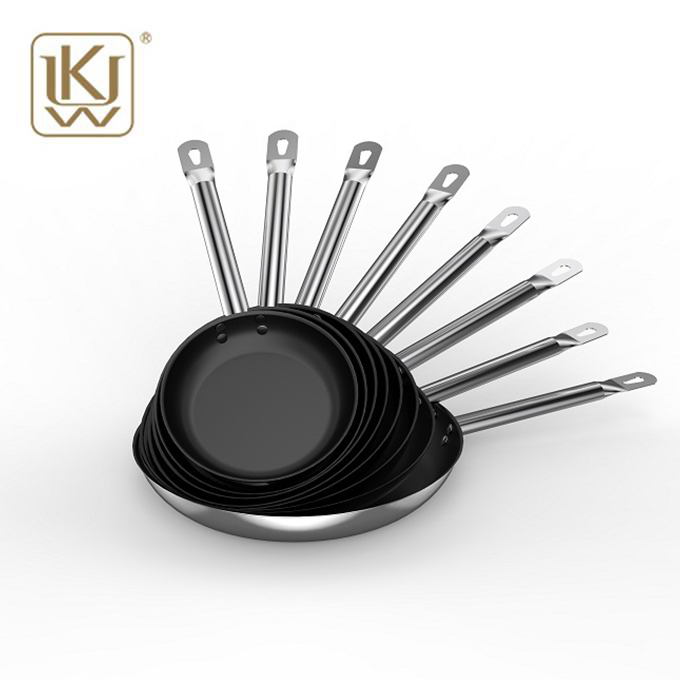
Stainless steel needs the right preheat to create a stable cooking surface for oil. When the pan is too cold, proteins bond tightly to the metal. When the pan is too hot, oil can break down fast and leave sticky polymerized residue that makes sticking worse.
What happens in a too-cold pan:
Food contacts metal before oil forms a stable film
Protein and starch stick immediately
You tear the surface when you try to move it early
What happens in an overheated pan:
Oil smokes quickly and breaks down
Sticky film forms and bonds to the pan surface
Food sticks to the residue rather than to clean stainless steel
A controlled preheat works better than maximum burner power. For most frying, medium to medium-high heat for a few minutes is more consistent than starting on high.
Oil is the heat-transfer layer that helps food brown and release. In stainless steel, you want the oil hot enough to flow smoothly and shimmer before food goes in. If you add food while oil is still cool, it acts like a glue layer. If you add oil into an overheated dry pan, it can burn and create residue.
A reliable routine:
Preheat the dry pan on medium heat
Add oil and swirl to coat the base
Wait until oil shimmers and moves quickly when you tilt the pan
Then add food
Oil amount also matters. A thin, continuous film is usually needed for pan-frying. Too little oil leads to dry contact points where food bonds. Too much oil can reduce browning and increase splatter, so aim for a controlled coating layer.
This is one of the biggest reasons everything sticks. With stainless steel, food often releases on its own once browning forms a crust. If you try to flip too soon, you pull the surface away and leave stuck patches behind.
What early flipping looks like:
You feel strong resistance when you slide a spatula under
The surface tears and leaves fragments in the pan
The food looks pale because the crust did not form yet
What to do instead:
Place the food and leave it undisturbed
Let browning develop, especially with proteins
Test gently by nudging, if it resists, wait longer
Flip only when it releases with light pressure
This technique is especially important for chicken, fish, tofu, and steak. The crust is the release mechanism.
Moisture is the enemy of release in stainless steel. Wet food creates steam at the surface, which interrupts browning and increases adhesion. Cold food also increases the time needed to form a crust, which tempts people to move it early.
Common moisture sources:
Meat not patted dry
Vegetables washed and not dried
Frozen or partially thawed food
Marinades left dripping onto the pan
Fixes that work:
Pat proteins and vegetables dry before cooking
Let refrigerated proteins rest briefly so the surface is not ice-cold
Add sauce and marinade components after searing, not before
Cook in batches to avoid steaming
Dry surface plus correct heat is the fastest path to browning and release.
Many users assume stainless steel becomes naturally nonstick over time. In reality, stainless performs best when the surface is clean and smooth. Burnt oil, polymerized layers, and carbonized residue create rough patches that grab food.
Signs you have residue buildup:
The pan looks dull or feels tacky after cleaning
Food sticks in the same spots every time
Oil beads unevenly and does not spread smoothly
You see brown or black patches that do not wash off
How to remove residue effectively:
Add water and bring to a gentle simmer to loosen stuck bits
Use a non-scratch scrubber for daily cleaning
For stubborn film, use a mild abrasive cleaner designed for stainless steel
Rinse thoroughly and dry completely
Once the surface is restored, oil spreads more evenly and sticking drops immediately.
Even a good stainless steel pan can stick if the burner creates hot spots. Hot spots can over-brown one area while another stays too cool to form a crust. The cool zone sticks because food is effectively cooking in a low-temperature glue phase, while the hot zone burns oil and creates residue.
How to reduce hot spot issues:
Match pan size to burner size so the base heats evenly
Preheat longer on medium rather than quickly on high
Rotate the pan periodically if your burner runs unevenly
Avoid overcrowding, since crowded food lowers surface temperature
If you are using induction, temperature rises fast. Lower settings often produce better release because you avoid overshoot.
Some foods are naturally higher risk in stainless steel, especially if technique is slightly off.
High sticking risk foods:
Eggs
Lean fish fillets
Tofu without proper drying
Starchy batters and delicate coatings
Sugary glazes added too early
Lower sticking risk foods:
Fatty cuts and skin-on proteins
Vegetables with higher oil contact
Foods that benefit from strong browning crust formation
A simple method is to sear first, then reduce heat and add delicate components later. This keeps the pan surface controlled and prevents glaze burn-on.
| What You See | Likely Cause | Fix That Works Next Time |
|---|---|---|
| Food sticks immediately and tears | Pan and oil too cool, food moved early | Preheat longer, wait for oil shimmer, do not flip early |
| Oil smokes as soon as it hits the pan | Pan overheated dry | Lower heat, let pan cool slightly before adding oil |
| Sticky patches that never go away | Polymerized residue buildup | Deep clean with simmer and stainless cleaner |
| Pale surface, watery cooking | Overcrowding or food too wet | Dry food, cook in batches, maintain heat |
| Sticking in one spot only | Hot spots or uneven base contact | Match burner size, rotate pan, avoid max heat |
This table helps home cooks and project buyer teams standardize troubleshooting guidance for consistent results.
Sticking becomes easier to control when the pan heats predictably and stays stable during cooking. UKW designs stainless steel frying pans to support repeatable preheating, consistent browning, and practical cleaning, so users can achieve strong sears without relying on coatings. You can view the product here: stainless steel frying pan.
For commercial-grade sourcing and bulk order programs, consistent performance across units matters. UKW supports stable production so kitchens can expect similar heat behavior and handling across repeated deliveries.
Everything sticks to stainless steel pans mainly because of temperature and timing: the pan was not preheated correctly, the oil did not reach the shimmer stage, the food was moved too early, or the food surface had too much moisture. Built-up residue and burner hot spots can also make sticking feel unavoidable, even when you are doing many steps right.
Once you control preheat, oil shimmer, moisture, and release timing, stainless steel delivers strong browning and reliable results. UKW stainless steel frying pans are designed to support that repeatable performance for daily cooking and scalable procurement needs.