kelley@u-kitchenwares.com
+86-15819924651
+86-0750-3719388

A stainless steel pan can handle very high temperatures compared with many coated pans, which is why it is widely used for searing, pan-frying, and high-heat sautéing. Still, the temperature you can safely use in real cooking is not determined only by the stainless steel itself. It is shaped by your heat source, whether the pan is empty or has oil and food in it, and which parts of the pan are exposed to heat, including the base, rim, and handle area.
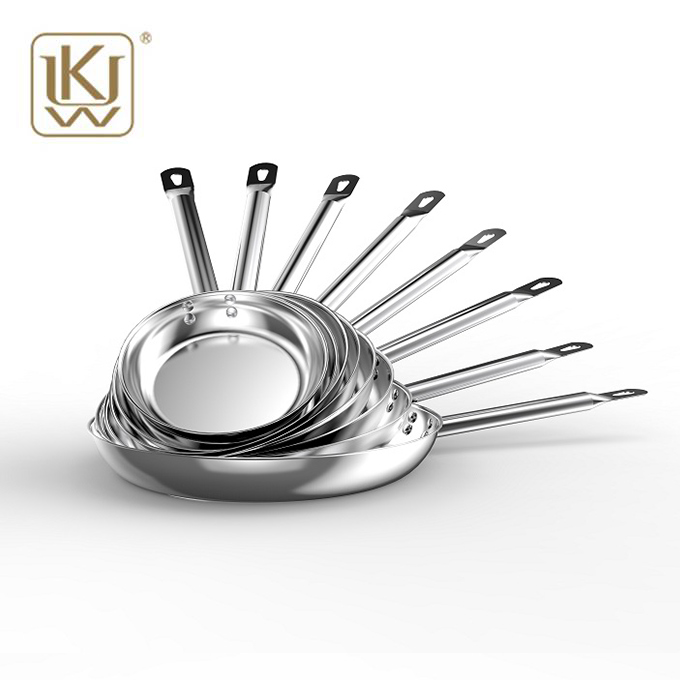
This guide explains realistic temperature ranges for Stainless Steel Frying Pans, what happens at different heat levels, and how to use high heat without warping, smoking out your kitchen, or creating stubborn residue. UKW designs stainless steel cookware for durable daily cooking and reliable high-heat performance. You can view the pan referenced in this article here: stainless steel frying pan.
Stainless steel as a material has a very high melting range, far above any kitchen stove or oven. That does not mean you should run cookware at extreme temperatures in daily use. In practice, the limiting factors are:
Cooking oils start smoking and breaking down at much lower temperatures than stainless steel can tolerate
Food proteins burn and carbonize when the pan surface is too hot
Overheating an empty pan can cause discoloration, rough residue buildup, and in some cases warping
Handles, lids, and bonded layers in multi-layer cookware may have different heat limits than the stainless body
So while stainless steel is high-heat capable, the best approach is to aim for the temperature needed for the cooking result rather than the highest temperature possible.
Most everyday stainless steel pan cooking happens in a narrow band compared with the maximum the material can tolerate. Use these ranges as a practical reference.
| Cooking Goal | Pan Surface Range | What You Will See | Best Use Cases |
|---|---|---|---|
| Gentle sauté, aromatics | 120–160°C | Oil flows easily, little to no smoke | Garlic, onions, soft vegetables |
| Standard frying | 160–190°C | Oil shimmers, steady sizzle | Cutlets, tofu, pan-fried vegetables |
| Strong browning | 190–230°C | Fast browning, higher splatter | Chicken thighs, burgers, stir-fry batches |
| Searing | 230–260°C | Quick crust formation, smoke risk rises | Steak sear, scallops, high-heat sear then lower |
| Overheated dry pan | 260°C and above | Discoloration, harsh smoke with oil, rapid residue | Usually avoid, can damage cooking experience |
These are surface estimates, not burner settings. Stovetops vary widely, and pan thickness affects how quickly the temperature climbs and how evenly it spreads.
A stainless steel pan can exceed typical searing temperatures quickly, especially when empty.
Gas delivers strong direct flame contact. The center of the pan can become much hotter than the edges if the flame is too large for the base. High heat can push a dry pan beyond searing range fast, so preheating should be controlled and timed.
These can create intense hot zones directly above the heating element. Stainless steel pans generally perform well, but overheating is common if the pan is left empty on a high setting. Temperature overshoot is a frequent cause of oil smoking instantly when added.
Induction can heat faster than many people expect because energy is delivered efficiently into the base. If you preheat on high for too long, the pan can reach excessive temperatures rapidly. Controlled preheat and lower settings often produce better results than maximum power.
The takeaway is consistent: stainless steel can get extremely hot on any modern stovetop. The skill is controlling how quickly it gets there.
Overheating is usually not dangerous in the sense of the metal failing, but it can shorten the pan’s best performance window and make cooking harder. Common effects include:
Color changes such as rainbow tint or darker heat marks
These are typically cosmetic, but they can indicate the pan was pushed beyond the useful cooking range.
Burned-on polymerized residue
When oil hits an overheated surface, it can create a tough film that feels sticky and increases future sticking until cleaned thoroughly.
Warping risk
Rapid heating, especially with thin cookware or intense hot spots, can contribute to slight warping. Warping affects contact on flat cooktops and reduces even heating.
More smoke and harsher flavors
When oil breaks down quickly, it produces smoke and bitter notes that can transfer into food.
A stainless steel frying pan performs best when heated gradually to the target range, not blasted empty on high heat for extended time.
You do not need guesswork. Use one of these practical methods depending on your kitchen setup.
After preheating the pan for a few minutes on medium to medium-high, add oil and watch for a smooth shimmer. When the oil moves quickly when you tilt the pan and looks glossy, you are in a productive frying zone.
Add a tiny drop of water to the dry pan during preheat. When the pan is ready for many frying tasks, the water tends to bead and glide rather than instantly evaporating. If it flashes off aggressively, the pan is likely too hot for controlled frying.
If you want repeatability, an infrared thermometer helps you track surface temperature and dial in your routine for different foods. Aim for the range that matches the result you want rather than the maximum number.
These methods reduce sticking and improve browning because you are matching the pan temperature to the food, not to the burner setting.
Stainless steel is excellent for high-heat cooking when you manage timing and heat transitions.
For steak, chicken skin, or scallops, bring the pan into the searing band, add oil, sear to build a crust, then reduce heat to finish. This approach gives strong browning without burning the fond.
Overcrowding drops surface temperature and creates steam, which reduces browning and increases sticking. Cook in batches so the pan stays in the correct range.
Stainless steel excels at building fond. After searing, lower heat and add a small amount of liquid to lift browned bits. This turns residue into flavor and keeps the pan easier to clean.
If you push into higher frying temperatures, choose oils that tolerate those temperatures better. Even with the best oil, avoid letting it smoke heavily, since that signals breakdown and off-flavor risk.
These are the same reasons many kitchens choose stainless steel for commercial-grade workflows where consistent browning and clean pan sauce development matter.
Many stainless steel frying pans can be used in ovens, but the real limit is often the handle design, lid materials, or any non-metal components. Without a specific temperature rating for your exact model, the safest approach is:
Treat stovetop searing temperatures as separate from oven use
Avoid broiler exposure unless the manufacturer confirms broiler suitability
Keep oven use within typical home baking and roasting ranges, and monitor handle heating
If you are specifying cookware for a project buyer team or planning a bulk order, confirm the exact oven-safe rating for the chosen model and handle type so performance expectations match real use.
High-heat success depends on even heating, stable handling, and a surface that stays easy to maintain after repeated browning cycles. UKW focuses on stainless steel cookware designed for durable daily use, including frying pans that support reliable preheating, searing, and pan-fry performance without relying on delicate coatings. You can review the product here: stainless steel frying pan.
For buyers sourcing cookware programs, UKW supports consistent production and specification stability for bulk order needs, helping maintain repeatable cooking performance across multiple units.
A stainless steel pan can reach very high temperatures, especially when preheated empty on powerful heat sources like induction or gas. In real cooking, the most useful temperature range is typically 160–260°C depending on whether you are frying or searing. Going beyond that range often creates smoke, burnt residue, and possible warping risk rather than better results.
If you control preheat, watch for oil shimmer, avoid prolonged empty high heat, and use sear-then-lower techniques, stainless steel becomes one of the most dependable tools for high-heat cooking. UKW stainless steel frying pans are designed to support that kind of repeatable performance in everyday kitchens and scalable sourcing programs.