kelley@u-kitchenwares.com
+86-15819924651
+86-0750-3719388

Stainless Steel Stock Pots are workhorses for boiling, simmering, blanching, and batch cooking. They are durable, easy to sanitize, and stable at typical kitchen temperatures. Still, there are a few cooking situations that can lead to unwanted sticking, metallic taste, surface staining, pitting, or difficult cleanup. Most of these issues are not about stainless steel being unsafe. They come from how certain ingredients behave under heat, acidity, salt concentration, or prolonged contact time.
This guide explains what to avoid cooking in stainless steel pots, why those situations can cause problems, and what to do instead so you still get excellent results. UKW designs stock pots for real everyday cooking and long service life, and you can see the product referenced here: stainless steel stock pot.
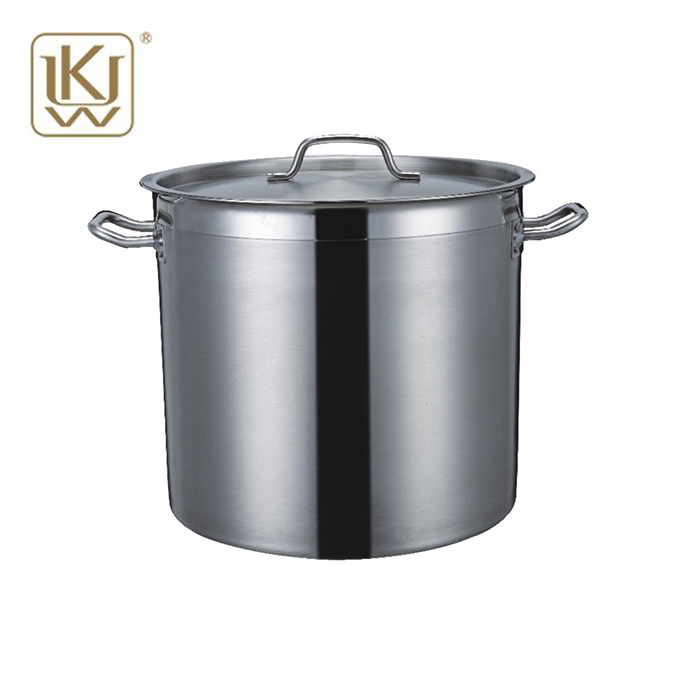
Stainless steel is generally fine for tomatoes, citrus, vinegar, and wine, especially for short cooks. The problems start when high-acid recipes simmer for hours, reduce heavily, or are left in the pot for long storage. Extended acidity can increase the chance of slight metallic flavor notes and may increase metal migration compared with neutral foods, especially if the pot is new or the surface has been aggressively scrubbed.
Examples to be cautious with:
Long-simmered tomato sauce that reduces for 2 to 4 hours
Vinegar-forward braises or pickling-style reductions
Citrus-heavy stocks or marinades heated for long periods
Better approach:
If you need a long acidic simmer, keep heat gentle and avoid over-reduction that exposes the bottom to dry scorching
Stir more frequently once the sauce thickens to prevent localized burning
Transfer leftovers to a non-reactive container after cooling rather than storing in the pot overnight
A stainless steel stock pot can still handle these recipes, but avoiding very long acidic contact is the simplest way to keep flavor neutral and surfaces clean.
Salt itself is not a problem in stainless steel when it is dissolved in liquid. The risk is letting dry salt crystals sit on the bottom of a heated pot before water fully dissolves them. This can contribute to pitting or tiny crater-like spots over time, especially if repeated frequently.
Situations that commonly cause this:
Adding salt to a warm pot with only a thin layer of water
Salting a pot before the water heats and stirring is delayed
Using very concentrated brine and letting undissolved salt settle
Better approach:
Bring water close to a simmer or boil first, then add salt and stir until fully dissolved
For brines, dissolve salt in warm water separately, then pour into the pot
Avoid leaving salty water in the pot for extended periods after cooking
This is a small habit change that can significantly reduce surface spotting and pitting over a long lifecycle.
Stainless steel transfers heat efficiently, which is helpful for boiling and stocks. But thick mixtures can scorch at the bottom if heat is too high or stirring is not frequent enough. Once scorched, residue becomes difficult to remove and can make the pot feel harder to use next time because polymerized residue creates rough zones.
High-risk foods in a stock pot include:
Thick porridge, grits, or polenta cooked too hot
Creamy soups that reduce heavily without frequent stirring
Jam, fruit preserves, caramel-like syrups, or heavy sugar reductions
Starchy pasta water boiled down too far, creating a gluey layer
Better approach:
Use lower heat once simmering begins and stir with full-bottom strokes
Consider a diffuser plate on gas burners for extra gentle heat distribution
If you need a thick reduction, switch to a heavier-bottom pot or a non-stick vessel for that specific task
Stop cooking before the mixture becomes so thick it exposes the bottom to dry heat
Stainless steel can cook these foods, but avoiding long unattended thick cooking prevents burnt flavors and hours of cleanup.
Many people avoid stainless steel for eggs or flaky fish because of sticking. The sticking is not inevitable, but the margin for error is smaller in a pot than in a frying pan, especially when the cooking surface is not preheated and oil is not at the right stage.
Common sticking scenarios:
Scrambling eggs directly in a stainless pot without proper fat and heat control
Poaching or gently cooking fish pieces that contact the bottom and tear
Cooking sticky proteins in a pot that is not evenly heated
Better approach:
Use stainless stock pots for what they do best: boiling, simmering, blanching, steaming, soups, and stocks
For delicate pan-fry tasks, use a dedicated frying pan with a wide base and better evaporation control
If you must cook delicate proteins in a pot, preheat properly, use enough fat, and avoid moving the food until it releases naturally
The key is matching the cookware shape to the technique. Stock pots are optimized for liquids and volume, not low-moisture searing.
A stock pot often has a large volume and is used on bigger burners. That combination can overshoot heat quickly, which is a problem for recipes that demand stable, gentle temperature control.
Recipes that can suffer if heat is too high:
Custards and milk-based sauces that curdle or scorch
Chocolate melting or delicate emulsions that break under heat spikes
Slow infusion recipes where a steady low simmer is needed without boiling
Better approach:
Use the smallest burner that matches the pot base
Keep heat low after reaching target temperature
Use a thermometer for recipes sensitive to temperature change
For very delicate work, switch to a double boiler setup
This is not about stainless steel being the wrong material. It is about the stock pot format being less forgiving when heat control is not tight.
Sometimes the issue is not the ingredient, but the behavior that damages the pot surface and affects future cooking performance.
Avoid these habits:
Preheating an empty stainless pot on high heat for long periods
This can cause discoloration and can bake on residues that are difficult to remove.
Shock-cooling a hot pot with cold water immediately
Sudden temperature changes can contribute to warping over time, especially in lighter pots.
Leaving acidic or salty leftovers in the pot overnight
Long contact time increases the chance of taste transfer and surface spotting.
Using harsh chlorine bleach soaks as routine cleaning
Chlorine-based cleaners can be tough on stainless steel if used incorrectly. If disinfection is needed, use proper dilution and rinse thoroughly.
These are easy to control and often make a bigger difference than the ingredient itself.
| What to Avoid | Why It Can Cause Problems | Better Method |
|---|---|---|
| Long-simmered tomato or vinegar-heavy reductions | Extended acidity can increase metallic notes and surface staining | Gentle simmer, stir after thickening, store leftovers in containers |
| Dry salt on the bottom before dissolving | Can contribute to pitting and spotting | Add salt to hot water and stir to dissolve fully |
| Thick porridge, creamy soups reduced hard | Scorching creates stubborn residue and burnt flavor | Lower heat, frequent full-bottom stirring, consider diffuser |
| Sticky eggs or delicate fish in the pot base | High sticking risk without precise preheat and fat control | Use a frying pan for low-moisture tasks |
| Custards, milk-based sauces on high heat | Scorches easily and creates difficult cleanup | Low heat, thermometer, or double boiler |
This table helps households and project buyer teams standardize usage guidance when outfitting kitchens for repeated, consistent results.
A well-designed stock pot reduces the most common failure points: uneven hot spots, unstable handles, and difficult-to-clean surfaces after heavy use. UKW focuses on stainless steel cookware that supports consistent simmering, reliable handling, and practical maintenance for everyday home kitchens.
For commercial-grade sourcing, consistency across batches matters. UKW supports stable production for bulk order programs, helping buyers maintain consistent performance and user experience across multiple kitchens and repeat deliveries. You can review the product here: stainless steel stock pot.
You do not need to avoid stainless steel stock pots for most cooking. The situations to avoid are mainly long, highly acidic simmering, undissolved salt sitting on the bottom, thick mixtures that scorch easily, and delicate proteins that stick when started with poor heat control. Just as important are habits that shorten cookware life, such as overheating empty pots, shock-cooling, storing acidic leftovers in the pot, or using harsh chlorine soaks.
With the right technique, a stainless steel stock pot remains one of the most dependable tools for boiling, simmering, soups, stocks, and batch cooking, and UKW designs its stainless steel stock pots to support that kind of long-term, repeatable performance.